
Lieferung heute & morgen

Qualitätsgarantie

Willkommens-Angebote freischalten: KOSTENLOSE Lieferung | Bis zu 80 % RABATT | Kostenlose 30-Tage-JoyPlus-Testphase
App herunterladen
A new sectional sofa is a cornerstone investment for your living room. A beige sleeper sectional, in particular, promises to be a stylish and practical centerpiece for family and guests alike. However, the search can quickly become overwhelming. While many models look great in photos, their flaws often don't surface until after months of use. As your Joybuy Product Recommendation Officer, I'm here to help you identify the common pitfalls and make an informed decision.
Before you choose a model, you should be aware of the three most common issues found in low-quality sectional sofas. Knowing what to look for will protect you from disappointment and unnecessary expense.
To avoid these problems, pay close attention to a few technical specifications. These are objective indicators of the durability and functionality of your new beige sectional sofa.
A solid foundation is essential. Look for a frame made of solid wood or a robust combination of engineered woods. For the sleeper function, various systems exist. A pull-out design, where part of the seat base lifts up, is often more stable than simple fold-out mechanisms. Check if the sleeping surface rests on a uniform support system (like sinuous springs) to ensure a consistent and comfortable bed. An L-shaped sofa with storage, often in the form of a corner sectional with a storage chaise, also offers practical space for bedding and pillows.
The choice of upholstery is not just about aesthetics; it's also about functionality.
Measure your room carefully before ordering. The "right-facing" or "left-facing" designation always refers to the orientation as you stand in front of the sofa looking at it. Some models offer a reversible design, where the sleeper sectional can be configured for either a left or right orientation during assembly. This provides maximum flexibility if you move or decide to rearrange your living room.
Based on these objective criteria, we have identified several models that offer excellent solutions for different needs and living situations.
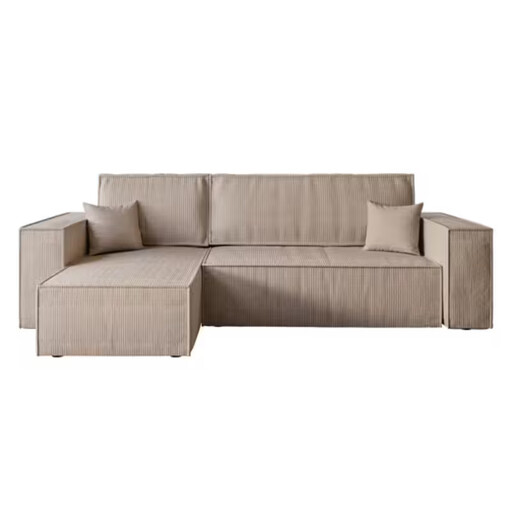
Why it's a great fit: Families need flexibility and durability. This sofa combines a reversible chaise with hard-wearing corduroy upholstery and integrated storage—ideal for toys, blankets, and the demands of daily life.
According to the manufacturer, the POSO corduroy fabric has an abrasion resistance of over 35,000 Martindale cycles (Grade A), making it highly durable. The frame's sinuous spring system and T30 foam prevent premature sagging.
The reversible chaise offers maximum layout freedom for your living room and for future moves. The combination of a sleeper function and storage compartment is extremely space-efficient.
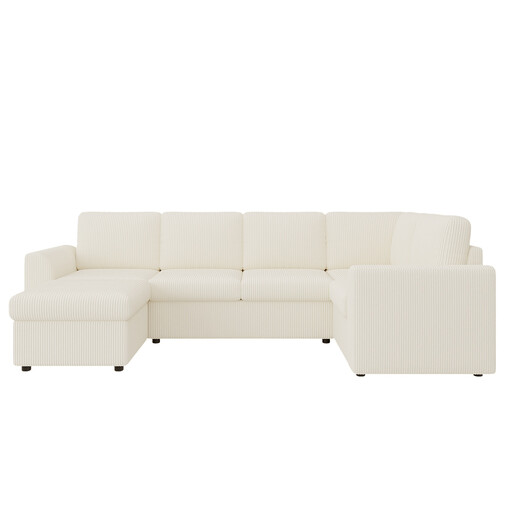
Why it's a great fit: For those who love to entertain and value a spacious, modern ambiance, this is an ideal solution. At 282 cm wide, it offers plenty of room, and the multifunctional ottoman serves as both storage and a coffee table substitute.
The upholstery combines pocket springs with high-density foam. This construction ensures a stable, shape-retaining seating and sleeping surface, effectively preventing the problem of sagging.
The separate but matching ottoman, featuring storage and a reversible lid that doubles as a tabletop, is an extremely versatile element that significantly enhances the functionality of the entire living space.
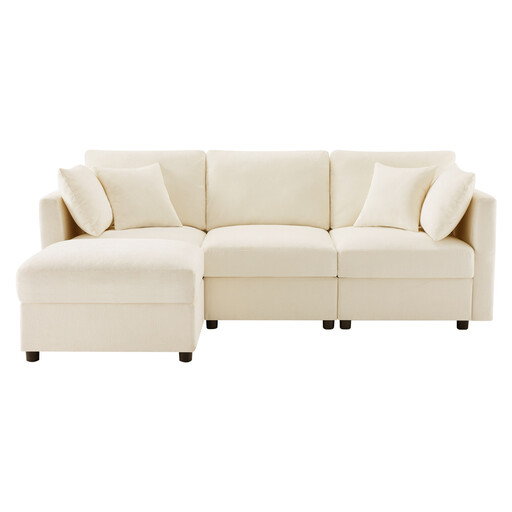
Why it's a great fit: In city apartments, space is often limited and must be multifunctional. This sofa, with its freestanding ottoman and adjustable armrests, adapts to any room layout and can transform from a sectional into a seating group.
Instead of a complex sleeper mechanism, this model relies on a modular design. The freestanding ottoman creates a sleeping surface without failure-prone mechanics. The seat cushions, with pocket springs and high-resilience foam, provide stable comfort.
The three-position adjustable armrests (90°, 120°, 180°) allow for ergonomic customisation for reading, lounging, or sitting—a detail that significantly enhances everyday comfort.
We've compiled a complete, up-to-date list of products that fully meet these strict selection criteria and rigorous safety standards.
Imagine you are standing in front of the sofa and looking directly at it. If the longer, chaise-style section is on your left, it is a "left-facing chaise." If it is on your right, it is a "right-facing chaise." Measure your space carefully and consider where the sofa will be placed to avoid obstructing walkways. Models with a reversible design offer the most security here.
The Martindale value indicates the abrasion resistance of a fabric. In a standardised test, the fabric is rubbed with a piece of worsted wool under pressure. The number of cycles the fabric withstands before the first threads break is the Martindale rating. For private use in a living room, the following guidelines apply:
Regular care is crucial to maintain the light colour. Vacuum the sofa weekly with an upholstery attachment to remove dust and crumbs from the grooves. Treat stains immediately. Blot liquids with an absorbent cloth rather than rubbing. For cleaning, a slightly damp cloth with a mild soap solution can be used. Always test any cleaning agent on an inconspicuous area first. Avoid harsh chemicals and direct sunlight to prevent the fabric from fading.