
Lieferung heute & morgen

Qualitätsgarantie

Willkommens-Angebote freischalten: KOSTENLOSE Lieferung | Bis zu 80 % RABATT | Kostenlose 30-Tage-JoyPlus-Testphase
App herunterladen
A children’s bed needs to suit your child’s age, the size of the room and your day-to-day needs. Many unsuitable purchases aren’t down to missing features, but to unclear product details. A bed may appear to grow with your child, for example, but need extra conversion parts later on. Or the sleeping area may not fit the mattress you already have. Even an attractive house bed may not be suitable if you haven’t considered the ceiling height, access or safety features.
A children’s bed that grows with your child can cover several stages. What matters, though, is which parts are included. According to the product description, the roba house bed with a 70 x 140 cm sleeping area can be converted into a junior bed or sofa using conversion parts sold separately. Make sure you factor in this additional cost when planning your purchase.
A cot supplied with bedding, a nest or a canopy may look fully equipped. Even so, the mattress must fit the sleeping area exactly. A 60 x 120 cm cot must not be used with a smaller or larger mattress. There should be no dangerous gaps between the mattress and the frame. Some models include a suitable mattress, while others require you to buy one separately.
A children’s bed with a slide, a high sleeper or a bunk bed makes use of the room’s height, but needs enough clear space around it. Make sure moving doors, drawers and pull-outs won’t be blocked by other furniture. For high sleepers, also check the recommended mattress depth, the height of the safety rail and whether the sleeping area can be reached safely.
Choose a size that suits your child’s current stage of development and how long you plan to use the bed:
A cot should be used with its sides closed for as long as your child can’t safely climb in and out unaided. Once they can climb over the rails, check the recommended conversion option or choose a suitable junior bed.
An adjustable-height cot makes it easier to line up with beds at different heights. When using a model as a bedside cot, it must be securely fixed to the adult bed using the straps or brackets provided. Before buying, check:
According to the product details, the roba models with sleeping areas of 60 x 120 cm and 45 x 90 cm have six height settings. The roba Roombed is designed to attach using adjustable metal brackets. The smaller roba 4-in-1 bed includes a fixing strap and can be assembled with or without castors.
Look for clear information on materials, maximum weight capacity, mattress size and safety standards. According to the manufacturer, the roba 4-in-1 bed is designed to comply with EN 1130. The roba multifunctional bed with a 60 x 120 cm sleeping area is described as being constructed in accordance with EN 716 and has a stated weight capacity of 50 kg.
This information doesn’t replace following the assembly instructions. Check screws, fixings, castors, ladders and safety rails regularly. Don’t continue using the bed if you notice any visible damage.
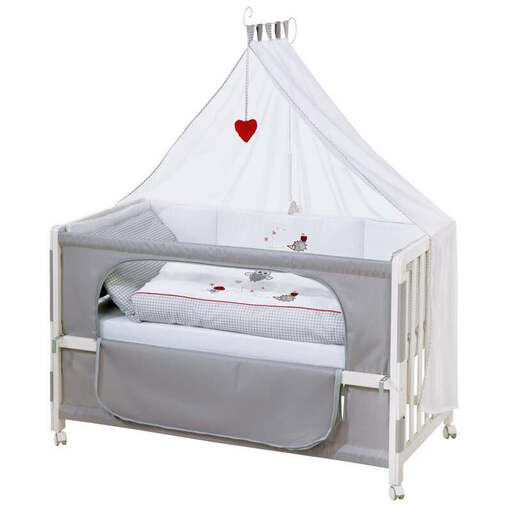
Why it’s a good match: This set combines a cot, a bedside cot and later use as a children’s or junior bed. According to the product description, a mattress, bedding, canopy and castors are included.
The 60 x 120 cm sleeping area and maximum weight capacity of 25 kg are clearly stated. The height can be adjusted to one of six settings.
Comprehensive set, side panel with zip fastening and adjustable metal brackets for attaching the cot to an adult bed.
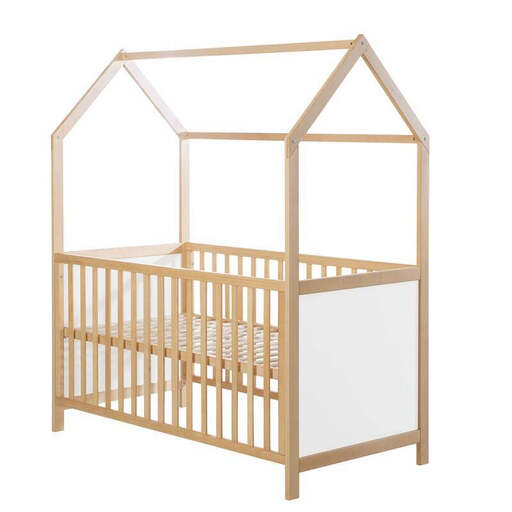
Why it’s a good match: This house bed for children has an adjustable-height sleeping area and, according to the product description, can later be converted into a junior bed or sofa.
The option to convert the bed later is clearly mentioned. However, the necessary conversion parts are sold separately, so remember to budget for them.
70 x 140 cm sleeping area, three height settings and three entry rungs; the stated maximum weight capacity is 50 kg.
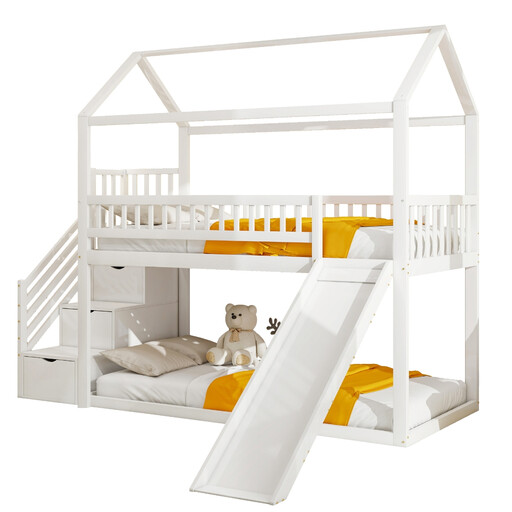
Why it’s a good match: This high sleeper makes use of the room’s height, freeing up space underneath for playing, reading or storage. The sleeping area measures 90 x 200 cm.
The recommended mattress depth of 12 to 15 cm, safety rails and maximum weight capacity of 150 kg are all clearly specified.
Storage ladder, slide and 90 x 200 cm sleeping area; assembly is designed to be carried out by two people.
We’ve put together a complete, regularly updated list of products that meet these strict selection criteria and fully comply with the safety regulations in force in the EU.
It depends on the size of the sleeping area, the weight limit and your child’s development. A 60 x 120 cm cot is often used until toddlerhood. If you have a cot with rails, switch to another bed once your child can climb out unaided or reaches the maximum weight limit.
Only use a mattress in the size specified by the manufacturer. For a 90 x 200 cm children’s bed, also check the recommended mattress depth, especially if you have a high sleeper or bunk bed. The specifications for the bed, slatted base and mattress all need to work together.
A model like this can be a good choice if you genuinely plan to use it through several stages. Compare the initial price with any potential costs for conversion parts, new mattresses and accessories. This will help you decide whether the extra features offer practical benefits for your family.