
Lieferung heute & morgen

Qualitätsgarantie

Willkommens-Angebote freischalten: KOSTENLOSE Lieferung | Bis zu 80 % RABATT | Kostenlose 30-Tage-JoyPlus-Testphase
App herunterladen
A freestanding freezer is a practical addition for households that stock up on supplies, buy in bulk, or want to preserve harvests from their own garden. But the selection is vast, and not every appliance is suitable for every purpose or location. Certain technical flaws or overlooked product features often lead to disappointment in daily use, higher-than-necessary energy consumption, or an appliance that simply won't function in the wrong environment. This guide will help you understand the crucial criteria and make an informed decision.
Before diving into the benefits, it's wise to know the most common pitfalls that can lead to dissatisfaction and unnecessary costs.
To avoid the mistakes mentioned above, you should check three core aspects before buying. These will determine whether a Beko freestanding freezer or another model fits your requirements.
The required usable capacity depends on your household size and storage habits. The rule of thumb is 50 to 80 litres per person. For a family of four that regularly batch cooks and buys in bulk, a freezer with 244L or more is a sensible size. Look for a practical layout with transparent drawers and flaps. This helps you keep track of your items and avoids leaving the door open for too long, which saves energy.
If you're looking for a freezer for the basement or garage, suitability for low ambient temperatures is a must. Some Beko models are explicitly designed to operate in temperatures as low as -15°C. This feature ensures the appliance works reliably even in the dead of winter, keeping your food safely frozen. Pay attention to the manufacturer's specifications for the minimum operating temperature.
Modern freezers offer features that make daily life easier and reduce operating costs.
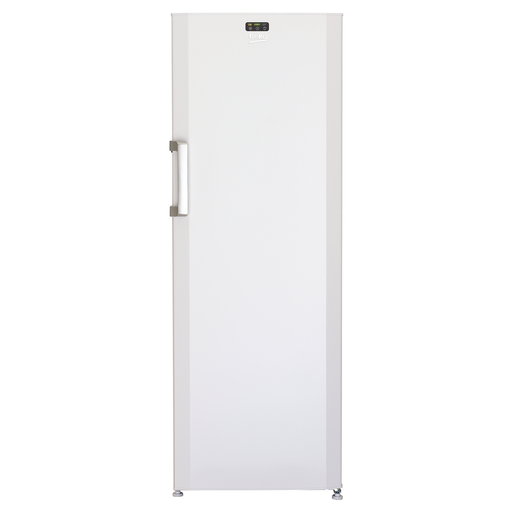
Why This Fits Their Persona: Ideal for families and bulk buyers who need a lot of space and want to place the appliance in a cool ancillary room like a basement or garage. The large 244-litre net capacity offers ample storage for bulk purchases or garden harvests.
This model is designed to operate in ambient temperatures down to -15°C, solving the problem of placement in unheated rooms. The MinFrost Technology reduces ice build-up and the associated maintenance and energy consumption.
Large 244L net capacity, suitability for cold rooms, Fast Freeze function, and quiet operation at just 36 dB.
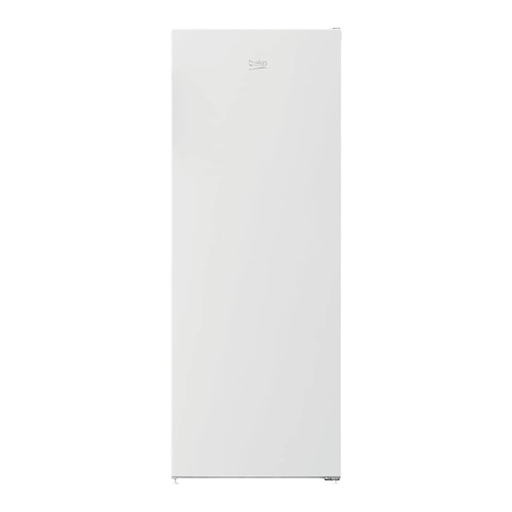
Why This Fits Their Persona: Suitable for households looking for a low-maintenance freezer with good capacity but who don't have space for a very large model. The NoFrost technology makes manual defrosting obsolete.
The NoFrost technology completely prevents ice formation, ensuring consistently low energy consumption and zero maintenance. This model is also suitable for operation in unheated rooms down to -15°C, making it flexible to place.
Complete NoFrost technology (no more defrosting needed), compact dimensions with a good 177-litre net capacity, and flexible placement options.

Why This Fits Their Persona: Perfect as a second appliance or for small households, offices, and bars. Its compact 60-litre capacity design fits under standard countertops while still providing reliable freezer space for the essentials.
This model is designed for use in normal residential or office environments. Its compact size and reversible door hinge avoid space issues and allow for flexible integration into existing kitchen units.
Very space-saving design, 4-star freezer rating, and an adjustable thermostat for flexible temperature control.
We have compiled a complete, up-to-date list of products that fully meet these strict selection criteria and all relevant safety regulations.
MinFrost Technology significantly reduces ice build-up, so manual defrosting is only necessary infrequently (about once or twice a year). NoFrost, on the other hand, is a circulating air system that actively removes moisture from the freezer compartment, completely preventing ice formation. With NoFrost, manual defrosting is eliminated entirely.
Following the 2021 rescaling of the EU energy label, Energy Efficiency Class E is now considered mid-range. The exact consumption depends on the size and features of the appliance and is specified in kilowatt-hours (kWh) per year on the energy label. For example, a model like the Beko FS127940N (244L) has a specified annual consumption that is often significantly lower than that of older appliances.
No. You must pay close attention to the climate class and the minimum ambient temperature specified by the manufacturer. Only appliances explicitly approved for operation in cold environments (e.g., down to -15°C) will work reliably in an unheated basement or garage during the winter. Standard appliances can fail at temperatures below +10°C.