Hosts short on time
You want to clean suitable bench cushions before guests arrive, while still allowing enough time for them to dry. Check the material is suitable before choosing an appliance.


First, check the care instructions for the cover and cushion filling. A water-based spot cleaner is only suitable if the specific cushion can be cleaned this way. For several or longer seat cushions, consider the upholstery tool, reach and tank capacities; a more compact appliance may be enough for individual stains. Allow plenty of time for the cushions to dry completely, and test the treatment on an inconspicuous area first.
You want to clean suitable bench cushions before guests arrive, while still allowing enough time for them to dry. Check the material is suitable before choosing an appliance.
You’re cleaning several or larger suitable seating areas, so you’ll want to pay particular attention to the upholstery tool, reach and tank capacities.
You tackle individual marks and want an appliance that’s easy to store away. Water marks may mean treating a larger area of fabric evenly.
Suitable if: The care instructions for the specific cover say it can be machine-washed.
Bear in mind: Check the care instructions for the cover and filling separately; not every bench cushion is washable.
Suitable if: You mainly need to clean individual marks and have limited storage space.
Bear in mind: Smaller tanks may need refilling and emptying more often when cleaning a larger area.
Suitable if: You need to clean several or longer cushions that are suitable for wet cleaning.
Bear in mind: Compare the tool, hose and cable lengths, and the capacity of both tanks. The appliance and its parts will need care and storage afterwards.
| What matters | What to check when buying | Who it matters most to |
|---|---|---|
| Material and drying | Care instructions for the cover and filling, a test on an inconspicuous area, and enough time to dry. | If I want to clean the cushions before guests arrive, material compatibility and allowing them to dry completely are crucial. Around 36% of consumers put these points first. |
| Larger seating area | Upholstery tool, hose and cable lengths, and clean- and dirty-water tank capacities. | When cleaning a long bench or several cushions, I want to work with as few interruptions as possible. Around 29% of consumers prioritise area, reach and tank capacity. |
| Individual stains and storage | Appliance size, tank capacity and a suitable upholstery tool; if water marks are a concern, consider treating a larger area of fabric. | If I only tackle individual marks from time to time, how easy the appliance is to store matters too. Around 21% of consumers prioritise this type of use. |
| Appliance care | How easy it is to access the tanks and brushes, any flushing or cleaning functions, and the manufacturer’s instructions for cleaning products. | After use, I want to be able to look after the tanks and accessible parts of the appliance easily. Around 14% of consumers pay particular attention to appliance care and consumables. |
Appliance specifications don’t take account of the care instructions or materials of your particular cover and its filling.
Check the care instructions and test the treatment on an inconspicuous area first.
BISSELL points out that spot wet cleaning can leave visible marks where the treated fabric meets the dry area.
If the fabric is suitable for wet cleaning, treating a whole, continuous area of the cushion evenly may help prevent marks. Allow extra time for it to dry.
A larger treated area of fabric takes longer to dry than a single small spot.
Smaller tanks may need refilling and emptying more often when cleaning a larger seating area. Cleaning the appliance is part of using it, too.
Compare the capacity of both tanks with the area you plan to clean, and check which cleaning products the manufacturer recommends for that appliance.
Kärcher describes the SE 3 Compact Home as a carpet and upholstery cleaner for medium-sized textile surfaces, and lists an upholstery cleaning tool.
The Clean-It XS and IN5011F0 models are designed for cleaning tasks of different sizes; both need to be plugged in.
Hoover describes the HS500 011 as suitable for upholstery and other surfaces, with spray, brush and suction functions.
Philips describes the 3000 Series XW3192/11 spot cleaner as suitable for soft surfaces, including sofas and car seats.
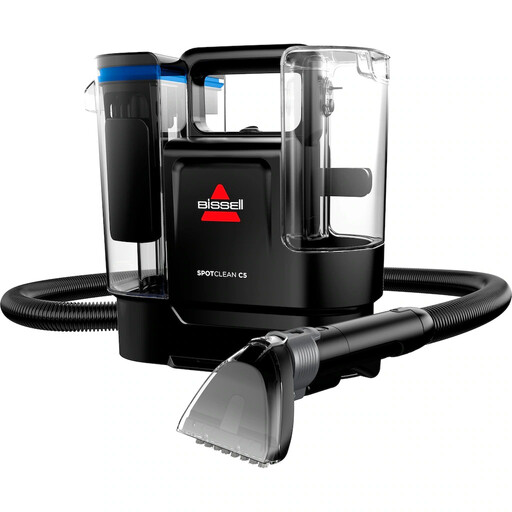
BISSELL offers compact spot cleaners. The description of the SpotClean Mini refers to a refurbished appliance.
This selection includes portable spot cleaners for suitable upholstery and cleaning tasks of varying sizes. Always check the care instructions for your specific cover before wet cleaning.
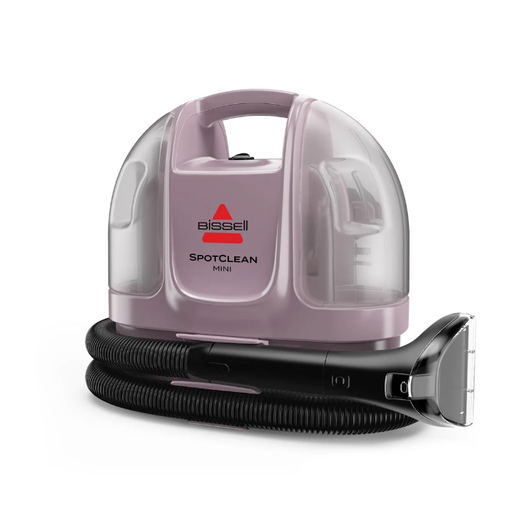 No image available
A compact, portable option for occasional upholstery cleaning, provided the care instructions allow wet cleaning.
Described in the product name as lightweight and compact; listed for carpets and upholstery.
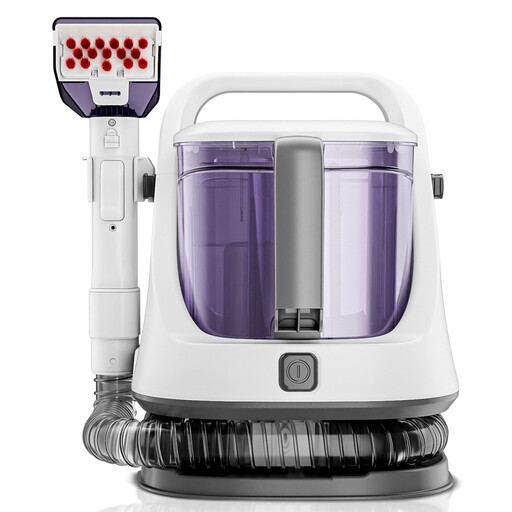 No image available
For suitable upholstery when you’re considering a portable appliance with separate tanks.
The product name lists 12 kPa suction power, two water tanks and a 3-m cable.
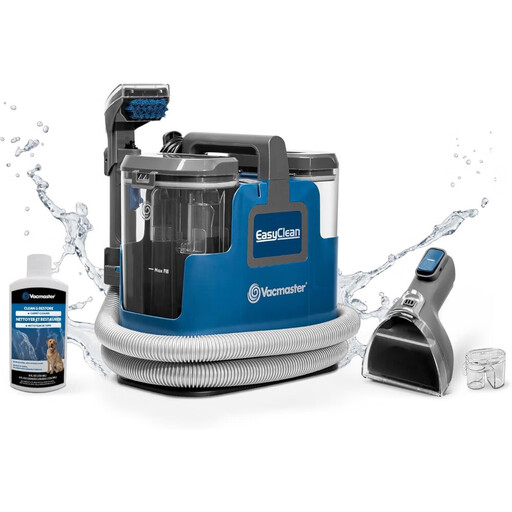 No image available
An option for suitable upholstery if you’re looking for a wet cleaner described as suitable for carpets and upholstery.
The product name lists 17 kPa suction power.
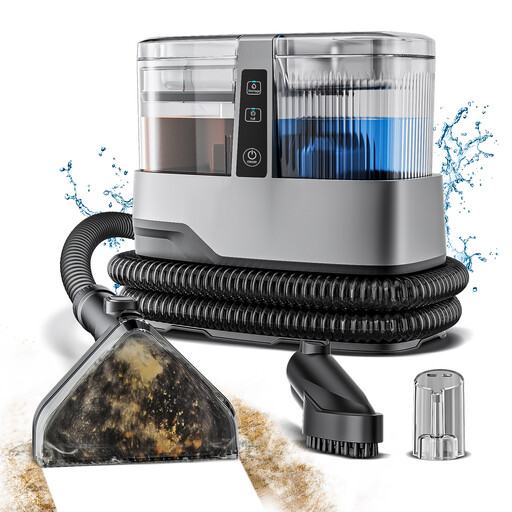 No image available
For suitable fabric upholstery and individual cleaning tasks when a portable spot cleaner is an option.
The product name lists 600 W and 17 kPa.
 No image available
For suitable upholstery and seating when you’re looking for a portable carpet and upholstery cleaner with two tanks.
The product name lists dual tanks and 15 kPa.
No. Check the care instructions for the specific cover and, where relevant, the filling before using water. The care label and a test on an inconspicuous area can help you decide whether this treatment is suitable.
Vacuum up loose crumbs first and test the treatment on an inconspicuous area. If wet cleaning is permitted, use as little water as possible and extract it with the appliance. Don’t use the cushions until they’re completely dry; there’s no single drying time that applies to every cushion. Afterwards, empty and clean the dirty-water tank and accessible parts of the appliance, following the instructions.
No. According to Your Europe, when you buy goods as a consumer in the EU, you’re entitled to a legal guarantee of at least two years from the date you receive them. An additional commercial guarantee doesn’t replace this; any extra cover is subject to its own guarantee terms.
Yes, if the specific appliance falls under the relevant EU product rules. The European Union describes CE marking as the manufacturer’s declaration that the applicable requirements have been met. It isn’t an independent quality mark for stain removal or fabric compatibility.