
Lieferung heute & morgen

Qualitätsgarantie

Willkommens-Angebote freischalten: KOSTENLOSE Lieferung | Bis zu 80 % RABATT | Kostenlose 30-Tage-JoyPlus-Testphase
App herunterladen
A bento box should transport meals safely, portion them neatly, and be easy to clean in everyday use. Yet some product claims can quickly lead to a bad purchase: a lunchbox might be described as "leak-proof", but only suitable for dry foods. Similarly, large capacity figures don't tell you whether the box will actually fit in your work bag or school rucksack.
Terms like "eco-friendly", "green" or "biodegradable" are hard to assess without a specific explanation. What matters is whether the box is made from stainless steel, plastic, bamboo fibre, sugarcane fibre or a mix of materials. For disposable products, it should also be clear under what conditions composting is possible.
The Rui Bamboo Disposable Bamboo Fibre Bento Box is described by the product information as being made from bamboo fibre and is stated to be compostable and biodegradable for disposal under suitable conditions. However, no specific environmental certification is provided for this product. The material is also not a solid wooden box.
A seal or closure can reduce the risk of leaking, but it doesn't replace a design that's genuinely suitable for liquid foods. So check the following:
A leak-proof lunchbox should be tested with water before you transport it. With new seals, it's also worth checking they're fitted correctly and haven't become misshapen.
A large bento box offers more space, but can be impractical in a small bag. Pay attention to the unit: 36 oz is roughly 1.06 litres, while the 61.2 fl oz stated for some products is significantly larger. For school and office use, it's not just the volume that matters, but also the footprint.
A stainless steel bento box is generally robust, doesn't retain odours, and is designed for repeated use. With stainless steel, you should look for the exact grade, such as 304 or 316 stainless steel. These grades describe the material class, but aren't the sole proof of overall product quality.
Bamboo fibre and sugarcane fibre boxes are interesting as compostable disposable lunchboxes for takeaways, catering or events. They're particularly suitable when returning and washing a reusable lunchbox isn't practical. You should follow local disposal instructions, as acceptance in composting facilities can vary.
A bento box with compartments separates, for example, your main course, side dish and fruit. This prevents dry and moist foods from mixing directly. With fixed, integrated dividers, the layout stays stable. Removable inserts can be more flexible, but require extra cleaning.
Clips should close evenly, and the lid must not be under tension. With glass lids, pay attention to any warnings about temperature changes. For microwaves, ovens, freezers and dishwashers, always follow the manufacturer's instructions. A box cannot automatically be used in all appliances just because it's made of stainless steel or glass.
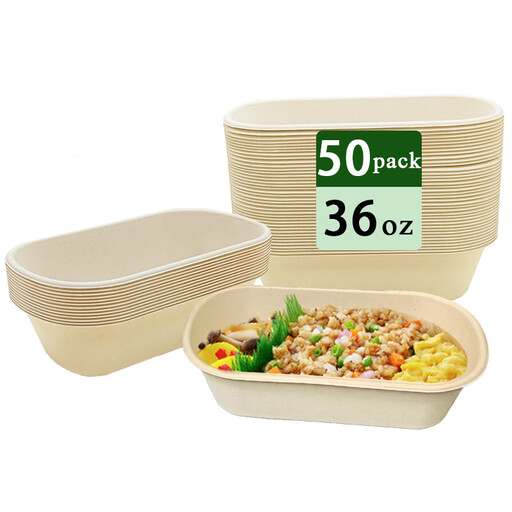
Why this product fits the profile: The pack of 50 units is suitable for occasional events, family gatherings, picnics, or getting started in the takeaway sector.
The material is explicitly stated as bamboo fibre, not solid wood. This makes the environmental claim easier to assess objectively.
36 oz capacity per box and 50 pieces per pack; intended for disposable takeaways, catering and food trucks.
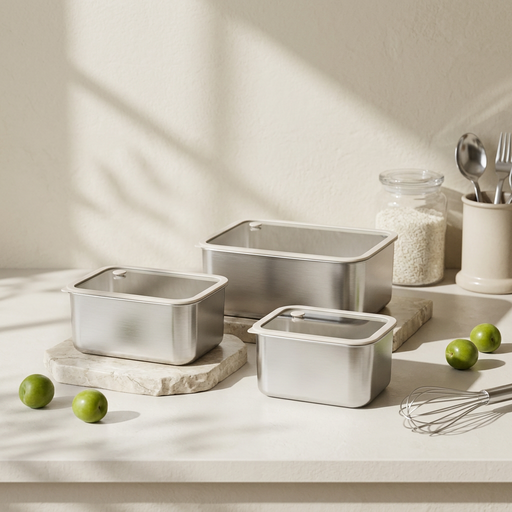
Why this product fits the profile: The set covers different sizes for meal prep, fridge organisation, picnics and daily use.
The three clearly stated volumes of 1,000 ml, 1,800 ml and 3,000 ml make it easy to choose based on portion size.
304 stainless steel, borosilicate glass lids and silicone seals according to product information; stackable design and dishwasher-safe.
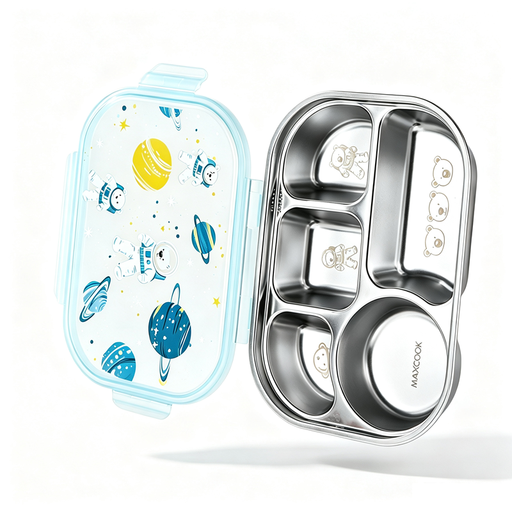
Why this product fits the profile: Five separate sections are practical for users who want to portion meals for work, school, sport or on-the-go.
The clearly stated five-compartment layout makes it obvious how the box is organised, rather than just using a generic "bento" label.
316 stainless steel and five compartments according to the product name; portable container for the office, picnics and daily meals.
We've put together a full, regularly updated list of products that fully meet these strict selection criteria and the safety regulations in force in the EU.
For work and school, compact dimensions, a secure lid and a clear compartment layout are particularly important. If you're taking salads, rice dishes or snacks, check whether the dividers can hold the portions you want.
For meal prep, several containers in different volumes can be more practical than a single large lunchbox. A stackable set saves space in the fridge. For fitness users, it's also important that the box offers enough room for a main meal and sides.
Hospitality businesses, catering companies and food trucks should pay attention to pack size, availability and disposal options. A 50-pack can be suitable for takeaway applications, while a reusable stainless steel box is better suited to private use or closed-loop return systems.
A box with a tightly sealing lid, clips and a silicone seal is generally more suitable than one with a loose-fitting lid. Even so, soups and sauces should only be transported if the manufacturer explicitly states this use. A quick leak test at home will show whether the closure is adequate for your journey.
The lifespan depends on the material, closure, seal and care. Stainless steel containers can last a long time with proper handling. Silicone rings are wear parts and should be replaced when they become porous, loose or permanently misshapen. Harsh cleaning agents and extreme temperature changes can shorten the life of seals and glass lids.
That depends on the product. With some containers, the stainless steel body is dishwasher-safe, while lids, seals or coatings should be cleaned separately. The manufacturer's instructions are what matter. Before first use, all removable parts should be thoroughly cleaned and then stored dry.