
Lieferung heute & morgen

Qualitätsgarantie

Willkommens-Angebote freischalten: KOSTENLOSE Lieferung | Bis zu 80 % RABATT | Kostenlose 30-Tage-JoyPlus-Testphase
App herunterladen
A bento box with compartments is designed to transport meals separately, safely and space-efficiently. For professionals, school pupils, university students and meal-prep enthusiasts, this sounds straightforward at first. In practice, however, leaky seals, impractical compartment layouts or misleading temperature ratings can quickly lead to a poor purchase.
This buying guide highlights which specifications for a lunchbox with compartments are genuinely relevant and which product features you should check for in everyday use.
A leak-proof lunchbox needs more than just a tight-fitting lid. What really matters is a continuous silicone seal, a sturdy closure and, for liquids, separate sealed inner containers wherever possible. On some boxes, the dividers don’t seal all the way up to the lid. Thin liquids such as soup, dressing or soy sauce can then seep between the compartments.
“Microwave-safe” on many plastic boxes doesn’t mean the closed container can be heated in its entirety. Often, the lid must be completely removed. Temperature limits also need attention. For the LocknLock models mentioned here, the stated limit is 120 °C; use in the oven, on the hob or over direct heat is not intended.
A lunchbox with compartments may look versatile, but it doesn’t automatically offer enough space for a full meal. Small compartments are fine for fruit, snacks or side dishes, while a large main section is more practical for rice, pasta or salad. Before buying, the actual layout should matter more than the total litre capacity stated.
For shorter breaks, 950 ml to 1.0 litre is often enough. A 1.2 litre lunchbox offers more room for a main course, side dish and snack. If you want to transport larger portions or a complete meal-prep dish, you could consider a 1.5 litre lunchbox.
Check the following:
Removable inserts make cleaning easier and allow flexible use. With fixed dividers, the box is often more compact but less adaptable.
A BPA-free lunchbox made from polypropylene (PP) is explicitly stated for the LocknLock models mentioned. For food contact, you should have traceable material details and manufacturer information. However, BPA-free alone doesn’t describe every property of the container.
Stainless steel is an alternative to plastic. With a box made from 316 stainless steel, you should still check whether the lid, seal and closures are suitable for the intended transport. Information about the dishwasher, microwave or freezer doesn’t automatically apply to every material.
A dishwasher-safe lunchbox saves time in daily use. Cleaning in the top rack is often recommended to put less strain on plastic parts and seals. Seals should be removed, freed from food residue and dried completely.
For a microwave-safe lunchbox, these basic rules generally apply:
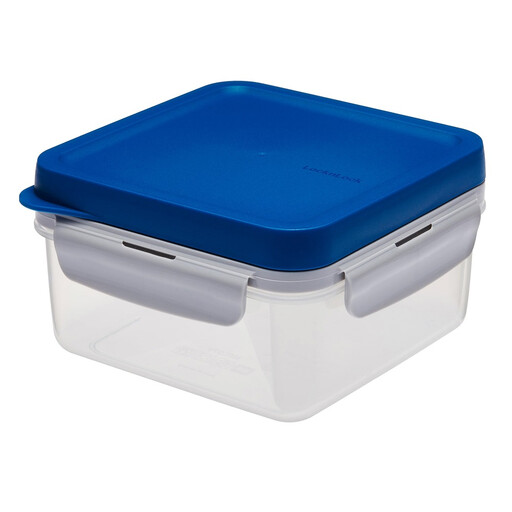
Why this product suits the profile: The 1.2-litre box combines three removable compartments with cutlery and a sauce pot. This makes it suitable for the office, school and trips, without needing to pack extra eating utensils.
The product information mentions a four-side closure, a silicone seal and air- and watertight transport. For the microwave, the lid must be removed.
BPA-free PP, temperature range from -20 °C to 120 °C, freezer and dishwasher suitability according to product information.
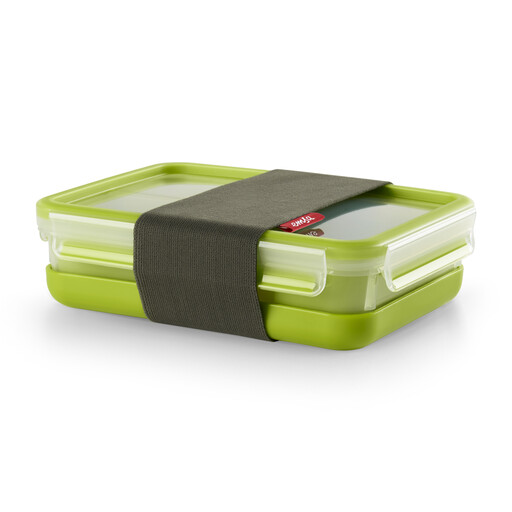
Why this product suits the profile: Three inserts, a separate plate and a freshness seal offer a structured solution for work, travel and picnics.
The information mentions a freshness seal and a security strap. Nevertheless, the box should only be filled up to the stated capacity and the lid fully closed.
According to product information, the box, lid and inserts are suitable for the dishwasher, microwave and freezer in the range of -40 °C to 110 °C.
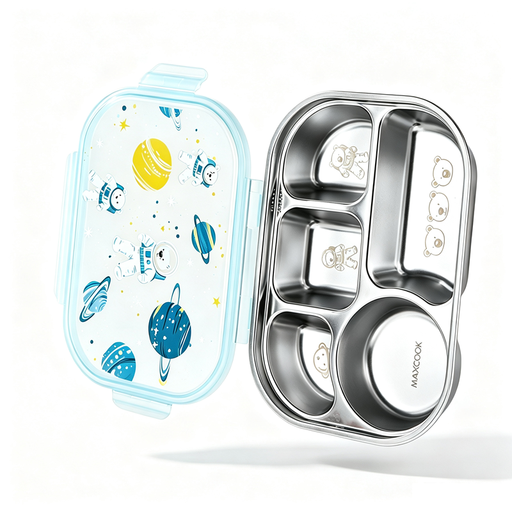
Why this product suits the profile: Five separate sections appeal to users who want to organise snacks, side dishes and main components clearly. The stainless steel concept is interesting for the office, picnics and repeated use.
The number of compartments is clearly stated. However, before buying, users should check the product information on the seal, closure and cleaning, as these details are not fully included in the short description.
316 stainless steel and five compartments according to the product name; the lid features an astronaut pattern design.
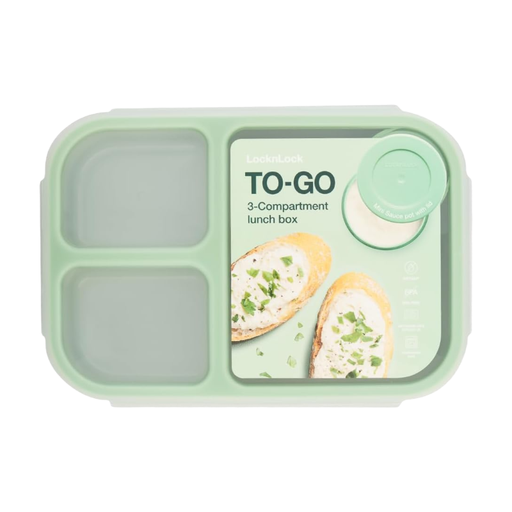
Why this product suits the profile: The 1.5-litre capacity is aimed at users who want to transport larger meals or pre-prepared portions. A sauce pot keeps dressings separate.
The three compartments and the sauce pot support separate transport. Important: according to the safety note, the dividers are not fully sealed against thin liquids.
1,500 ml capacity, freezer and dishwasher suitability, and microwave use without the lid according to product information.
We have put together a complete, regularly updated list of products that fully meet these strict selection criteria and the safety regulations in force in the EU.
Even an airtight food container will only remain reliable if the seal and closure are kept clean. After each use, food residue should be removed and all parts dried. Harsh abrasive cleaners or steel wool can damage surfaces and silicone seals.
Check the box regularly for:
If visible damage is present, the bento lunchbox should no longer be used for transporting food.
For snacks and shorter breaks, 950 ml to 1.0 litre is often sufficient. A 1.2 litre lunchbox is better suited to a full meal. 1.5 litres offers more volume for larger portions or meal prep, but also takes up more space in your bag and fridge.
That depends on the seal, closure and compartment construction. A continuous silicone ring and multiple closure points can help with transport. For dividers that are not fully sealed, thin foods should be transported separately in a sealable sauce pot.
It’s not possible to give a fixed lifespan. Frequent heating, strong temperature changes, abrasive cleaners and damaged seals can affect performance. Gentle cleaning in the top dishwasher rack, thorough drying and regular visual checks can help maintain its everyday usability.