
Lieferung heute & morgen

Qualitätsgarantie

Willkommens-Angebote freischalten: KOSTENLOSE Lieferung | Bis zu 80 % RABATT | Kostenlose 30-Tage-JoyPlus-Testphase
App herunterladen
A bento lunch box should keep food secure in transit, separate different items and be easy to clean. In practice, though, some models disappoint after only a short time: fastenings don’t close securely, seals absorb odours or the compartments don’t suit your everyday meals.
So before you buy, it’s worth looking at how the box is actually made rather than relying on bold marketing claims.
A leakproof lunch box isn’t automatically suitable for soup or for carrying in any position. What matters is a seal that runs all the way round, a secure fastening and the carrying position specified by the manufacturer. If you’re considering a box with clips or a twist-lock closure, check whether it can only carry liquids safely when upright.
A lunch box with compartments can be handy if you want to keep fruit, sides and your main meal separate. However, compartments that are too small or shallow can limit what you can pack. The overall dimensions matter too if you’re carrying a full lunch: a large lunch box with multiple compartments may not fit in every work bag or school rucksack.
“Microwave-safe” doesn’t mean you can heat the whole box, including the lid. Often, the lid needs to be removed. Seals, cutlery and inserts may also need special care when washing in the dishwasher. Check the manufacturer’s instructions before using the box for the first time.
Compact containers are often enough for snacks or a small break-time meal. For lunch, working professionals and students often choose a capacity of around 900 to 1,500 ml. A modular design with a removable insert is useful if you want to use the box for both salads and hot meals.
Look out for the following:
A BPA-free lunch box made from polypropylene (PP) is usually lightweight and often designed for use in the microwave, freezer and dishwasher. Even so, check the temperature limits and whether it must be used “without the lid”.
A stainless steel lunch box is less likely to retain odours and is suitable for hot or cold food. However, stainless steel models are generally not microwave-safe. If the box has a silicone seal and metal clips, check the seal regularly for cracks or signs of warping.
A good fastening should sit evenly against the seal. If you plan to carry liquids, try a quick test at home first: fill the box with water, close it and move it gently. This will help you check whether the container is suitable for the way you intend to carry it.
These details also matter:
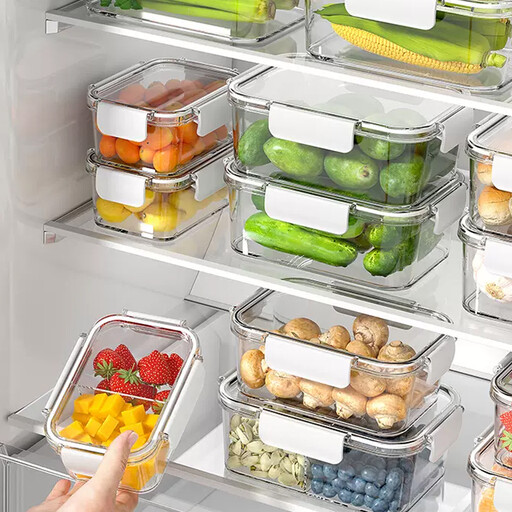
Why this product suits this profile: The set includes three containers with capacities of 450, 950 and 1,800 ml. You can choose the right size for snacks, meals or storing food in the fridge.
The different sizes mean you don’t need to use an oversized box for every portion. According to the product information, the lids have silicone seals and the containers are stackable.
Three sizes, transparent containers and, according to the product description, microwave and dishwasher compatibility.
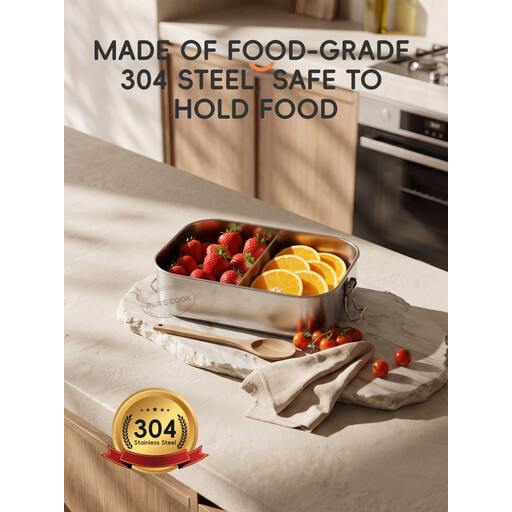
Why this product suits this profile: According to the product description, the container is made from uncoated 304 stainless steel and has two fixed compartments for a main meal and a side.
The design doesn’t use removable plastic dividers. For liquid food, the product description recommends carrying the box upright.
304 stainless steel, two compartments, a silicone seal and metal clips; listed as dishwasher-safe.

Why this product suits this profile: The box is designed for salads, sides and dressings. According to the product description, it comes with cutlery and a sauce container.
According to the product information, the removable insert keeps salad, sides and dressing separate. The lid must be removed completely before putting the box in the microwave.
950 ml capacity, BPA-free PP, cutlery, a sauce container and a stated temperature range of -20 to 120 °C.
A reusable lunch box will stay in good working order for longer if you open it, clean it and dry it thoroughly after every meal. Remove the seals if they’re designed to come out. A thorough wash with mild washing-up liquid will usually deal with odours; abrasive cleaners can damage the surfaces and seals.
For everyday use, it’s also worth following these tips:
We’ve put together a complete, regularly updated list of products that meet these strict selection criteria and fully comply with the safety regulations in force in the EU.
A small container is often enough for snacks. For a full lunch, around 900 to 1,500 ml is typical. What matters most is how much you actually eat and whether the box fits in your bag or rucksack.
That depends on the seal, fastening and design. A box may be leakproof when carried upright, but unsuitable for soup or other very liquid foods. Check the manufacturer’s specific guidance before buying.
Only models marked as suitable for microwave use. With plastic boxes, you’ll often need to remove the lid. Stainless steel lunch boxes should never go in the microwave.