
Lieferung heute & morgen

Qualitätsgarantie

Willkommens-Angebote freischalten: KOSTENLOSE Lieferung | Bis zu 80 % RABATT | Kostenlose 30-Tage-JoyPlus-Testphase
App herunterladen
A bento lunch box should keep your meals safe in transit, separate different foods and be easy to clean. In practice, the right choice isn’t about eye-catching colours or a large capacity. It comes down to details such as the closure, seals, material and internal layout.
If you’re working, you may need a compact bento box for adults, while pupils and students often value a lightweight design with separate sections for snacks. For families and meal prep, several sizes or a lunch box with compartments can be more practical. Before you buy, check for these three common pitfalls.
A leakproof lunch box needs more than a close-fitting lid. It also needs a suitable silicone seal and closure system. A lid that simply rests on top may not be secure enough for soup, dressing or moist foods.
Look for specific details such as:
Even if a model is described as “leakproof”, it’s best to carry it upright in your rucksack unless the manufacturer says otherwise.
A lunch box with dividers can keep bread, fruit, vegetables and sides separate. But check whether the dividers are fixed in place or removable. Removable inserts make the box more versatile; fixed compartments can be easier to clean, provided they don’t create extra crevices.
Also check whether the sections are actually sealed off from each other. A divider won’t necessarily stop liquid from flowing from one compartment into another.
“Microwave-safe” doesn’t mean you can heat the whole box, including the lid. With many food containers, the lid must be removed completely before heating. Metal containers should only go in the microwave if the instructions for both the appliance and the product explicitly say they’re suitable.
“Dishwasher-safe” and “suitable for the dishwasher” can also mean different things for different parts. Seals, cutlery and lids may each have their own care instructions.
A stainless steel lunch box is uncoated, doesn’t retain odours easily and can last a long time. However, stainless steel containers aren’t automatically microwave-safe. Models with a PE or plastic lid may also have limited suitability for liquids.
Polypropylene, or PP, is lightweight and often used for meal-prep boxes. For BPA-free products, check that the manufacturer clearly states this. A BPA-free lunch box describes a material and product characteristic; it doesn’t in itself imply any additional health benefit.
Glass is transparent and works well for storing food in the fridge. However, it’s heavier and can be damaged by knocks. With glass containers, check the lid material, seal and temperature guidance separately.
A practical capacity for a single meal is often around 700 to 1,200 ml. Smaller models work well as a snack box for yoghurt, muesli, fruit or nuts. Larger containers are better suited to main meals or more extensive meal prep.
Capacity in millilitres isn’t the only thing to consider: check the external dimensions too. A 1.2-litre box may be too tall for a work bag, while a flatter container may fit better in the fridge or rucksack.
Removable compartments, detachable seals and smooth interiors make cleaning easier. For food containers described as dishwasher-safe, check whether this applies to every part and whether the manufacturer recommends using the top rack.
Before you buy, run through this quick checklist:
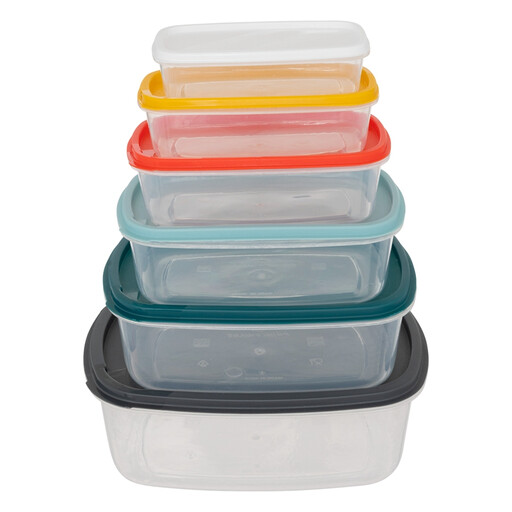
Why this product suits this profile: The set includes several sizes, from 0.3 to 2.8 litres, making it suitable for snacks, ingredients and prepared portions at home.
The different capacities mean you don’t need to use the same size box for every purpose. The product details state that it’s suitable for the microwave and freezer.
Six PP containers in different sizes; the largest holds 2.8 litres and measures 25.5 × 19 × 9 cm.
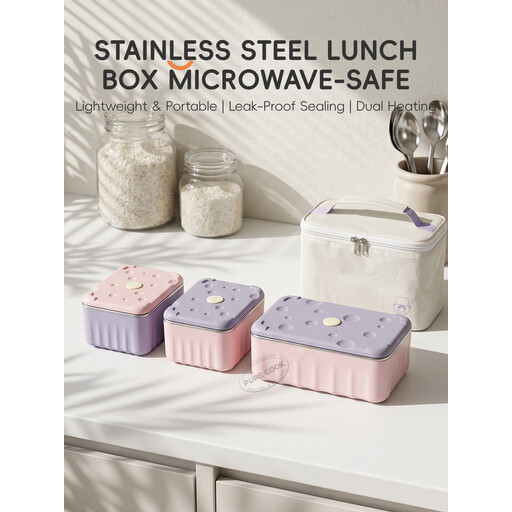
Why this product suits this profile: Two 600 ml containers and one 1,200 ml container let you pack separate portions of a main meal, sides and snacks.
The containers can be used individually, so you’re not tied to a single compartment layout. According to the product details, they should be carried upright when filled with liquids.
304 stainless steel inner containers, a PP outer shell, silicone seal and insulated carry bag.

Why this product suits this profile: A good option if you want to take a complete meal and accessories to work, school or on a day out.
Three removable compartments and a separate sauce pot keep food and dressing apart. According to the product details, it should only be used in the microwave without the lid.
1.2-litre capacity, BPA-free PP, cutlery set, sauce pot, and guidance stating it’s suitable for the freezer and dishwasher.
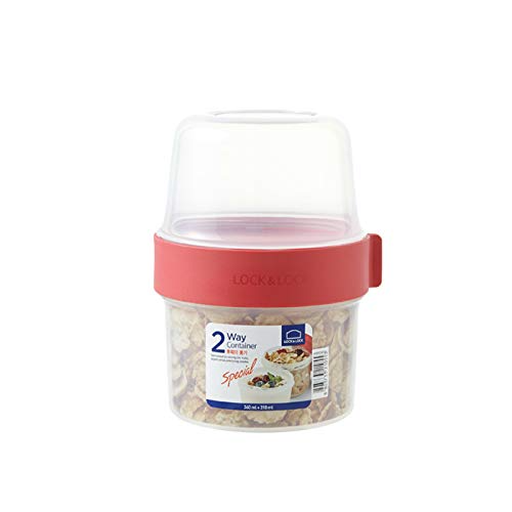
Why this product suits this profile: This compact option is ideal for yoghurt and muesli, fruit and vegetables, or small snacks at school, in the office or on the go.
The two sections, with capacities of 360 and 310 ml, keep dry and moist snacks from mixing directly. The lid can be removed for cleaning.
BPA-free PP, screw-top lid with divider, 670 ml total capacity, and microwave and dishwasher suitability according to the product details.
We’ve put together a complete, regularly updated list of products that meet these strict selection criteria and the safety regulations in force across the EU.
For work and school, models with a capacity of around 700 to 1,200 ml and several sections are practical. A lunch box with compartments keeps your main meal, sides and snacks separate. If you’re packing liquids, check the seal, closure and recommended carrying position.
It depends on the material and the manufacturer’s guidance. Plastic boxes often need to be heated without the lid. Stainless steel and glass models have their own instructions. Unless explicitly stated otherwise, lids, seals, cutlery and carry bags should never go in the microwave.
Its lifespan depends on the material, closure, cleaning and how often you use it. Silicone seals can become brittle over time. Regularly check the box, lid and closures for cracks, warping or a loose fit. Don’t continue using damaged containers for food.