
Lieferung heute & morgen

Qualitätsgarantie

Willkommens-Angebote freischalten: KOSTENLOSE Lieferung | Bis zu 80 % RABATT | Kostenlose 30-Tage-JoyPlus-Testphase
App herunterladen
A bento lunchbox should transport meals safely, keep ingredients separate, and be easy to clean. In practice, however, unclear product descriptions, unsuitable closures or misunderstood temperature ratings often lead to the wrong purchase. If you are looking for a lunchbox for work and school, a meal-prep box or a compartment lunchbox, you should not just focus on colour and capacity.
The term leakproof lunchbox is only meaningful when the closure, seal and intended use are described. A simple compartment lunchbox can separate dry foods, but it is not automatically suitable for yoghurt, dressing or sauce. Look for:
Even a tightly sealing box should be transported upright in a rucksack, unless the manufacturer states otherwise.
A compartment lunchbox can be practical when you want to keep a sandwich, fruit and side dish separate. However, compartments that are too small or fixed in place can limit your meal choices. For a packed sandwich, a compact box is often sufficient. If you take salads, side dishes or complete meals, you will benefit more from removable dividers.
The total volume alone says little about how usable the box actually is. Also check the length, width and height. A shallow 1.2-litre box may fit better into a work bag than a taller model with a similar capacity.
With a microwave-safe lunchbox, the approval often only applies to the container without the lid. Closures and seals can become deformed by heat, or pressure can build up inside. Before heating, you should therefore follow the manufacturer's instructions, remove the lid completely and, if necessary, cover the food.
Equally important: dishwasher-safe lunchbox, freezer suitability and microwave approval are different properties. A box may be suitable for the dishwasher but not for the freezer.
For daily use, food-contact materials with verifiable information are sensible. With plastic models, a BPA-free lunchbox can be a desirable product feature. Check whether the claim applies to the container, lid and inserts, or only to individual components.
Polypropylene, or PP for short, is used in several of the models on offer. Stainless steel is shape-stable and generally absorbs fewer odours, but depending on the design it may not be microwave-safe. What matters is not just the material, but also the seal: silicone rings should fit snugly, be removable and be checked regularly for cracks.
For snacks or a packed sandwich, around 700 to 1,000 millilitres is often enough. A larger lunchbox with compartments is better suited to complete meals, salads and side dishes. For adults with a longer working day, a capacity of 1.2 to 1.5 litres can be sensible, while children benefit from more compact dimensions and easy-to-use closures.
Also pay attention to the arrangement of the compartments:
The statement “dishwasher-safe” should ideally apply to all relevant parts. With removable seals, hand washing can sometimes be advisable to avoid residue in the grooves. For the microwave and freezer, the permitted temperatures must be taken into account. None of the boxes described are intended for use on a hob, open flame or in the oven, unless the manufacturer expressly states otherwise.
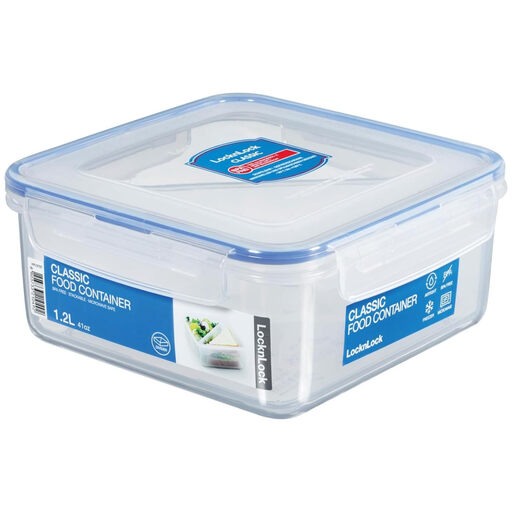
Why this product fits the profile: The transparent, rectangular box with a 1.2-litre capacity is aimed at users who mainly want to transport sandwiches, snacks or simple meals.
The integrated divider keeps sandwich components separate. According to the product information, the container is airtight and leakproof; the lid must be removed for heating.
BPA-free plastic, dishwasher-safe and microwave-safe without lid; dimensions: 16.5 × 16.5 × 7.6 cm.
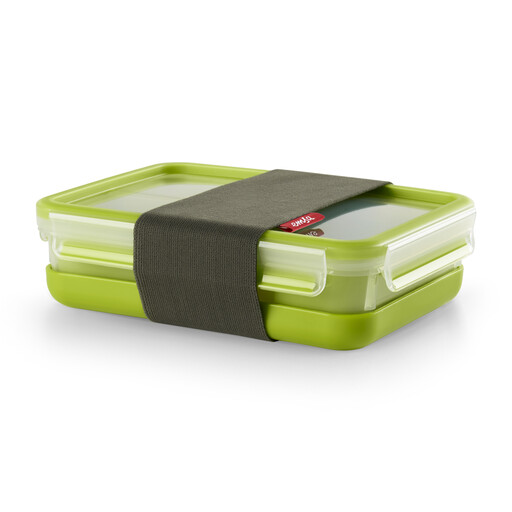
Why this product fits the profile: The box is suitable for professionals, families and travellers who want to transport several foods separately and simplify cleaning.
The freshness seal and three inserts address the risk of mixed foods. The lid must be fully closed before transport.
Three inserts, additional plate and, according to the product information, suitability for dishwasher, microwave and freezer from −40 to +110 °C.
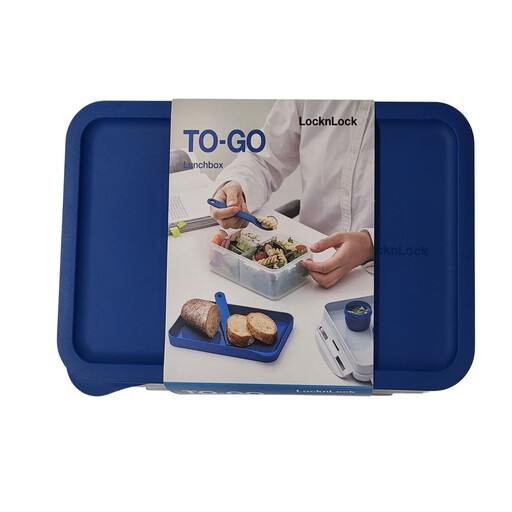
Why this product fits the profile: For meal prep, salads and liquid side dishes, this model offers three removable compartments plus cutlery and a sauce container.
The separate inserts reduce contact between dressing, salad and side dishes. The manufacturer's information mentions a four-sided closure and a silicone seal.
1.0 litre capacity, cutlery set and sauce pot; according to the product information, suitable for microwave without lid, freezer down to −20 °C and dishwasher.
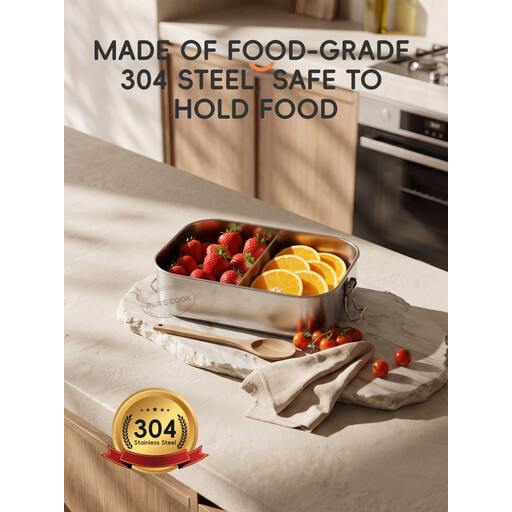
Why this product fits the profile: This model is aimed at users who want a metal box with two sections for work, travel or regular meal prep.
The removable silicone seal can be cleaned separately and checked for damage. Before purchasing, the specific temperature rating should be verified.
304 stainless steel, two compartments, closure clips and, according to the product description, a capacity of 61.2 fl oz.
We have put together a complete, regularly updated list of products that fully meet these strict selection criteria and the safety regulations in force in the EU.
For the office, around 900 to 1,500 millilitres is sensible, depending on portion size and how you travel. Removable inserts make it easier to combine a main course, side dish and snack. If you transport salad with dressing, you should choose a model with a separate sauce container and a verified seal.
That depends on the individual model. For the plastic boxes mentioned, the microwave approval applies without the lid, according to the product information. Stainless steel boxes are generally not suitable for the microwave, unless there is an explicit approval. Always observe the temperature limits and safety instructions from the manufacturer.
It is not possible to give a reliable fixed lifespan. Closures, seals and plastic can wear out through frequent cleaning, knocks or extreme temperature changes. Check the box regularly for cracks, deformation and leaks. Damaged parts should not continue to be used for transporting food.