
Lieferung heute & morgen

Qualitätsgarantie

Willkommens-Angebote freischalten: KOSTENLOSE Lieferung | Bis zu 80 % RABATT | Kostenlose 30-Tage-JoyPlus-Testphase
App herunterladen
A bento lunchbox is designed to keep meals separate, stay secure in your bag, and be easy to clean. In practice, though, it’s often only after you’ve bought one that you discover whether a partitioned lunchbox really suits your daily routine. Working professionals typically need more capacity for a full lunch, while schoolchildren and younger kids tend to require compact compartments for snacks, fruit and sandwiches.
The term leak-proof lunchbox is only meaningful when the seal and closure design are explained in detail. A simple flip-top lid may be fine for dry foods, but it won’t necessarily be suitable for soups, sauces or yoghurt. Look for a continuous silicone seal, multiple locking points, and clear instructions about use with liquids.
A lunchbox with compartments can keep different foods separate. However, sections that are too small can limit your choice of meals. Removable inserts offer more flexibility than fixed internal dividers, because you can adjust the internal volume to suit different portion sizes.
With a lunchbox that is microwave-safe, the rule is often that the lid must be removed before heating. Some materials are suitable for the microwave but must not go in the oven or on a direct heat source. Even “dishwasher-safe” can have limitations, such as being placed only on the top rack. Always check the manufacturer’s instructions before buying and before first use.
For a meal at the office or school, practical sizes are often between around 900 millilitres and 1.5 litres. What matters isn’t just the total volume, but also how the space is divided:
An integrated sauce pot is handy if you want to keep dressings or dips separate. Even so, with liquids you should check whether the seal is designed for the intended transport.
Polypropylene (PP) is relatively lightweight and, depending on the product, may be approved for microwave, freezer and dishwasher use. Temperature ranges do vary significantly, though. According to LocknLock’s specifications, the model mentioned is designed for a range of -20 °C to 120 °C; microwave use is without the lid.
A stainless steel lunchbox is robust and generally absorbs fewer odours or stains. However, stainless steel models are often not suitable for the microwave. With a product that has a silicone seal, you should also check whether it is removable. This makes cleaning easier and reduces residue in the seal grooves.
A secure closure should fasten evenly and not be under tension. Before buying, it’s worth considering:
With a lunchbox for work and school, compact external dimensions are just as important as the internal volume. A large box can hold more, but it may take up too much space in your bag.
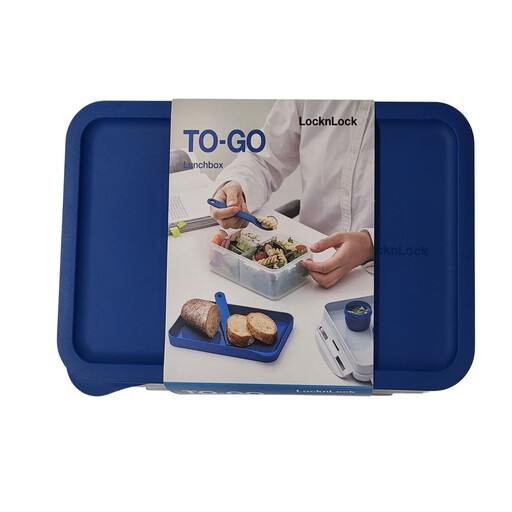
Why this product suits the profile: The 1-litre box combines three removable compartments with a cutlery set and a sauce pot. This covers the typical requirements for the office, school and days out.
According to LocknLock’s specifications, this model has a continuous seal and a four-sided closure. The lid must be completely removed for heating.
1,000 ml capacity, three removable inserts, cutlery and sauce pot; according to product details, suitable for freezer and dishwasher.
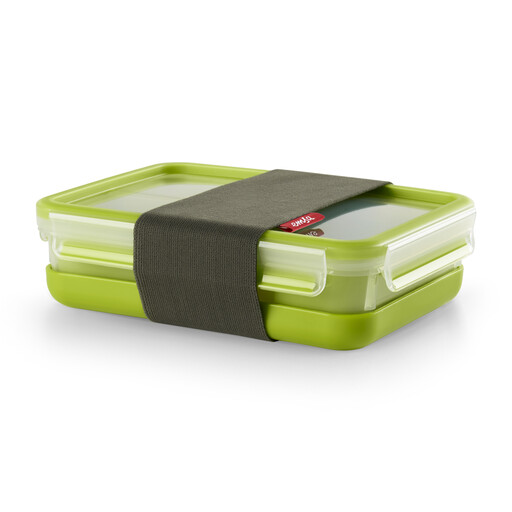
Why this product suits the profile: The 1.2-litre box is designed for regular use with multiple inserts and an additional plate. It is suitable for pre-prepared meals, work and travel.
The product details mention a freshness seal and three inserts. It also advises fully closing the lid before transport.
Three compartments, an additional plate and, according to the product description, use in microwave, freezer and dishwasher within the specified temperature range.
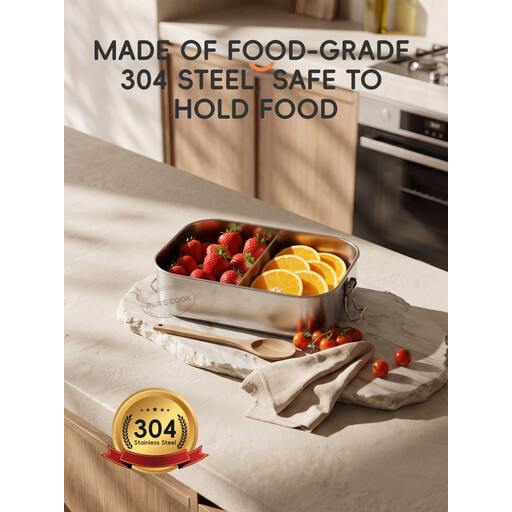
Why this product suits the profile: This stainless steel model is aimed at users who want a reusable box with two sections and a removable silicone seal for work, school or travel.
The design uses closure clips and a removable seal. Before use, you should check whether the box is suitable for your intended method of transport and the amount of liquid.
304 stainless steel, two separate sections, rectangular format and, according to product details, a dishwasher-safe design.
Even a sturdy bento box will only stay leak-proof if the seal is clean and undamaged. After use, clean the lid, inserts and silicone ring separately and dry them thoroughly. Check the box regularly for cracks, warping and loose closures.
For the microwave, the general rules are:
A lunchbox set with multiple sizes can be practical for families and meal prep. For children, on the other hand, a lighter weight is often more important than maximum capacity. If you mainly take dry snacks, you don’t necessarily need a liquid-tight design.
We have put together a complete, regularly updated list of products that fully meet these strict selection criteria and the safety regulations in force in the EU.
Look for an explicitly described seal, secure closure clips and information about leak-proofing. For soups and sauces, you should also check whether the manufacturer mentions this use. A separate sauce pot can reduce the risk of leaks in the main compartment.
The service life depends on the material, cleaning and how much it is used. Plastic can change through discolouration or warping, while stainless steel can last a long time with careful handling. Replace a box if the seal, lid or closure is damaged.
Only models with the appropriate approval may be used in the microwave. In many cases, suitability applies only to the container without the lid. The decisive factor is always the information provided with the specific product, not just the material or the term “bento”.