
Lieferung heute & morgen

Qualitätsgarantie

Willkommens-Angebote freischalten: KOSTENLOSE Lieferung | Bis zu 80 % RABATT | Kostenlose 30-Tage-JoyPlus-Testphase
App herunterladen
A bento lunchbox needs to keep meals separate, seal tightly and be easy to clean in everyday use. For professionals, students, schoolchildren and families, the details that matter go far beyond flashy colours or bold marketing claims. A lunchbox with compartments for a packed sandwich, for example, requires a different layout to a meal-prep box for salad, sides and dressing.
The label leak-proof lunchbox is only genuinely useful when the closure, seal and insert all work together. A lid with a loose divider insert can separate dry foods, but it is not automatically suitable for liquid sauces. Look for specific details such as a silicone seal, four-sided locking clips or a securely closing twist-lock mechanism.
Before transporting, make sure the seal and lid are fully fitted. Even a damaged seal can cause liquid to leak out, even if the product was originally described as leak-proof.
A lunchbox with dividers may seem flexible, but narrow compartments are often unsuitable for whole sandwiches or larger portions. What really matters is not just the litre capacity, but the internal layout, dimensions and shape. A 900 ml box can be enough for a snack or a light lunch, whereas for a full meal, 1.2 to 1.5 litres is usually more sensible.
Many plastic boxes are described as microwave-safe, but often only without the lid. Sealed containers can build up pressure when heated. Always check the instruction manual and remove the lid before reheating. “Microwave-safe” also does not automatically mean the box is suitable for the oven, hob or direct heat.
Food containers are made from materials including polypropylene (PP), polystyrene, ABS, TPE and stainless steel. PP is particularly common among the products listed and may, depending on the model, be suitable for storage, the dishwasher or the microwave. Stainless steel is rigid and is used, for example, in a lunchbox made from 304 or 316 grade steel; details about the seal and cleaning method still remain important.
If you are looking for a BPA-free lunchbox, look for an explicit statement from the manufacturer. This property cannot simply be assumed from the term “plastic”. Likewise, suitability for food contact should be clearly stated. If in doubt, rely on the product description, packaging and manufacturer’s instructions.
A lunchbox with compartments is ideal for bread, fruit, vegetables and sides, without everything mixing together directly. Removable inserts make cleaning easier and allow for more flexible use. For salads, separate containers for toppings or dressing are useful, as delicate ingredients can be combined just before eating.
Check whether the dividers are fixed or removable. Fixed dividers can improve stability, but they limit the ability to fit larger food items.
For lunchboxes for work and school, the external dimensions are crucial: the box needs to fit in your bag, rucksack or fridge. A large capacity can increase the weight, especially if glass or stainless steel parts are included.
Also check:
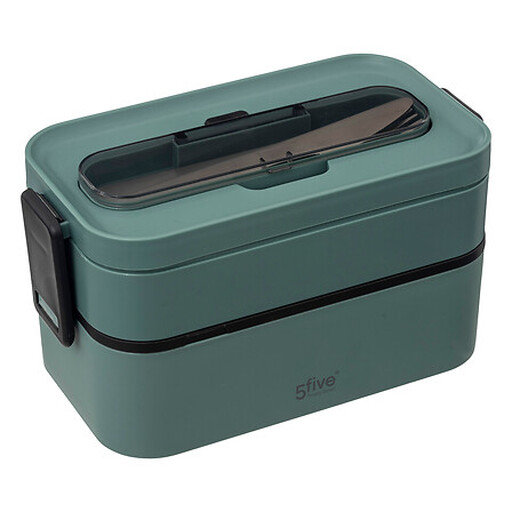
Why this product fits the profile: The 1.4-litre box offers two compartments and comes with removable stainless steel cutlery. This makes it suitable for the office, school, travel and leisure when a straightforward basic set-up is needed.
The two clearly described compartments replace a confusing array of small inserts. The cutlery can be removed separately and does not have to rattle around loose in your bag.
1.4 litre capacity, two compartments, integrated stainless steel cutlery and a microwave vent according to the product details.
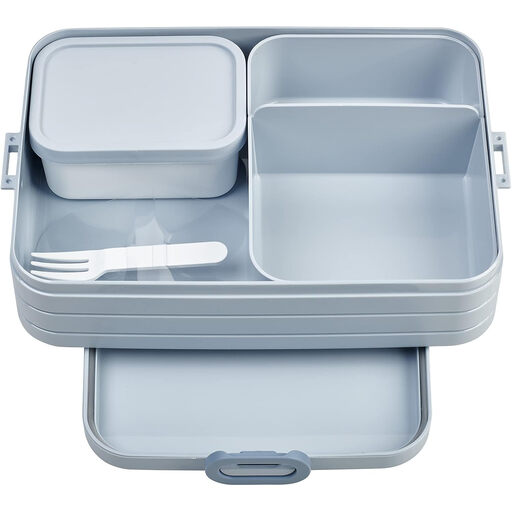
Why this product fits the profile: With 1.5 litres, two separate sections and an additional box with a fork, this model is designed for larger meals and regular use.
The product details mention removable bento boxes as well as clear guidelines for microwave and freezer use. This makes it easier to plan how you will use it.
1.5 litre capacity, dishwasher-safe, BPA-free according to the product information and a fork in a separate accessory compartment.

Why this product fits the profile: The combination of three sections, a sauce container and complete cutlery set is aimed at people who frequently take salads, dressings and sides separately.
The separate sauce compartment reduces the risk of dressing mixing with the salad before eating. The product details also mention a four-sided locking system and a silicone seal.
950 ml volume, BPA-free PP according to the product information, knife, fork, spoon and sauce container included.
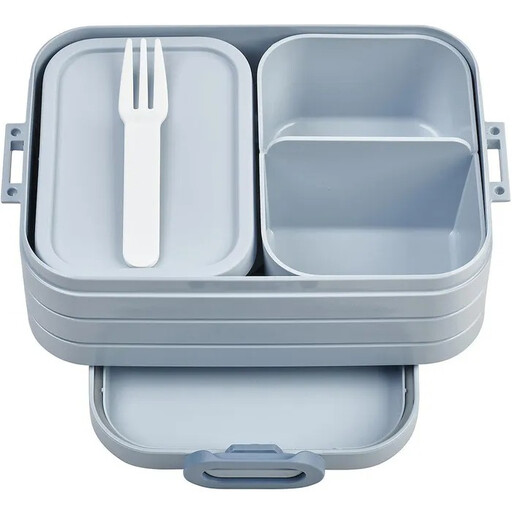
Why this product fits the profile: The Midi size with 900 ml and compact external dimensions suits smaller portions, school rucksacks or workdays with limited storage space.
The product data specifies the volume and dimensions clearly. This means you can check before buying whether the box fits your bag and your usual portion size.
900 ml capacity, removable inserts, fork in the accessory compartment and dishwasher-safe components according to the product information.
We have put together a complete, regularly updated list of products that fully meet these strict selection criteria and the safety regulations in force in the EU.
Even the right box will only stay hygienic and functional if used correctly. Allow hot food to cool down first, unless the manufacturer’s instructions say otherwise. Liquid foods should only be placed in containers whose closure is designed for that purpose.
For cleaning, we recommend:
The lifespan depends on the material, usage, cleaning and condition of the seal. A fixed time frame is therefore not meaningful for every model. Visible damage, persistent odours or a lid that no longer closes securely are signs that it is time for a replacement.
For snacks and smaller meals, around 900 ml can be sufficient. If you want to transport a main course, fruit and a side together, 1.2 to 1.5 litres gives you more flexibility. Your personal portion size and the bag you use remain the deciding factors.
No. Compartments and dividers only prevent food from mixing together initially. For liquids, you need a suitable lid, an intact seal and a closure that is designed for leak-proof transport according to the product description.
Generally not, unless the instructions specify heating without the lid. Remove the lid completely and follow the temperature and safety guidelines for the specific product.