
Lieferung heute & morgen

Qualitätsgarantie

Willkommens-Angebote freischalten: KOSTENLOSE Lieferung | Bis zu 80 % RABATT | Kostenlose 30-Tage-JoyPlus-Testphase
App herunterladen
A bento lunchbox needs to transport meals safely, keep different foods separate, and be easy to clean in everyday use. In practice, however, some marketing claims can lead to disappointment: a container with lots of compartments isn't automatically leak-proof, stainless steel doesn't necessarily mean a dishwasher-safe construction, and "microwave-safe" often applies only to the container – not the lid.
This buying guide shows what adults, parents and students should look for when choosing a lunchbox for school and the office, travel or outdoor activities.
A lunchbox with compartments can neatly organise sandwiches, fruit and snacks. What really matters, though, is whether the dividers are fixed in place or just loose inserts. For dry foods, a simple partition is often sufficient. Liquid items like yoghurt, dressing or sauces, on the other hand, need separate, tightly sealed containers.
A lunchbox with several compartments is therefore not automatically a leak-proof lunchbox. Terms like "airtight", "leak-proof" or "liquid-tight" should refer to the actual construction – for example, seals and locking clips.
With a microwave-safe lunchbox, you need to check which parts can be heated. Plastic containers may be suitable, while lids, cutlery inserts or metal parts must be removed. The note "without lid" is especially important for safe use.
For stainless steel, the rule is: a stainless steel bento box generally does not belong in the microwave. If you want to heat meals directly in the container, choose a plastic model designed for that purpose and follow the manufacturer's instructions.
Rounded corners and removable inserts make cleaning easier. However, a dishwasher-safe lunchbox must be explicitly labelled as dishwasher-safe. Different care instructions may apply to seals, locking mechanisms and cutlery. If these parts are regularly cleaned incorrectly, odours, discolouration or a loss of sealing performance can occur.
For a packed sandwich, fruit and small snacks, a compact sandwich box may be enough. If you're transporting a full meal with several components, a lunchbox with 1.2 l to 1.4 l offers more flexibility. However, capacity alone doesn't tell you much about usability: a tall, narrow container is filled differently from a flat box.
An integrated divider is practical when you want to keep dry foods separate. For liquid components, additional sealable inner containers should be included.
Polypropylene (PP) is commonly used for reusable food containers. The 5five model lists PP and PS; the product is described as suitable for food contact. Stainless steel grade 316, as stated for the Maxcook models, is corrosion-resistant and robust. Even so, you should also check the lid material, seals and care instructions.
Look for complete product details on material, manufacturer, capacity and cleaning. A label like "BPA-free" is a specific material claim, but it doesn't replace checking the other components.
For transport in a rucksack, sturdy closures and a suitable seal are important. With a sandwich box with divider, a tight-fitting lid protects against crumbs falling out and reduces the risk of the contents spreading through your luggage. For soups or liquid foods, the container should be explicitly designed for that purpose.
Additional everyday considerations are dimensions, weight and accessories. A lunchbox with cutlery can be handy on the go if you don't want to carry separate cutlery. For children, closures should be easy enough to operate but still close reliably.
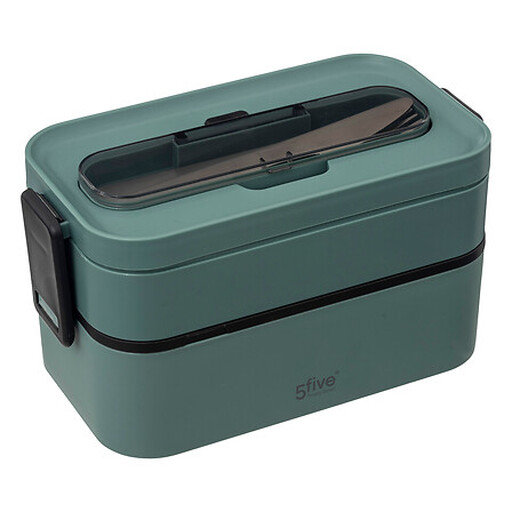
Why this product fits the profile: The 1.4-litre box offers two compartments and a removable stainless steel cutlery set. This makes it suitable for school, the office, travel and simple meals on the go.
The compartment layout is clearly specified. For reheating, the box has a microwave vent; the relevant usage instructions should be followed.
1.4 l capacity, two compartments and integrated stainless steel cutlery at a weight of 0.492 kg.
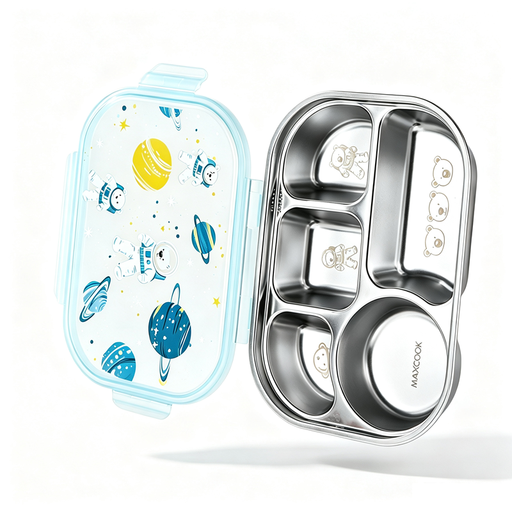
Why this product fits the profile: The stated construction from 316 stainless steel and five separate sections is aimed at users who want to portion their food in a differentiated way.
The five sections are part of the product name, not just a general marketing claim. Before buying, you should also check the capacity and sealing properties.
316 stainless steel according to the product name and five separate compartments for structured meal portioning.
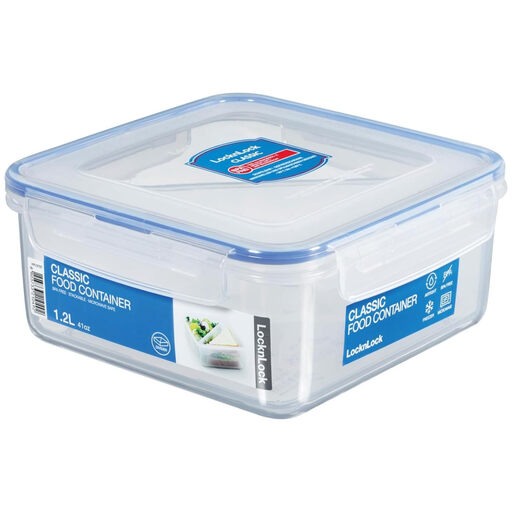
Why this product fits the profile: The flat box is designed for sandwiches and features an integrated divider. It is described as suitable for use at school, in the office and on the go.
Leak-proofing and an airtight seal are listed as product features. For reheating, the lid must be removed.
1.2 l capacity, BPA-free plastic, integrated divider, and suitability for dishwasher and microwave (without lid).
We've put together a complete, regularly updated list of products that fully meet these strict selection criteria and the safety regulations in force in the EU.
For a sandwich with sides, around 1.2 l is often enough. If you're transporting several snacks or a full meal, you can choose a lunchbox with 1.2 l to 1.4 l. The external dimensions and shape of the container are also crucial.
Stainless steel must not go in the microwave. For plastic models, the manufacturer's instructions apply. Even if the container is suitable, the lid often has to be removed. Metal cutlery inserts also do not belong in the appliance.
Food residues should be removed promptly and all individual parts cleaned according to the care instructions. Seals must be completely dry before the box is closed. If you notice visible cracks, deformation or a damaged seal, replace the affected part or stop using the container for transporting liquids.