
Lieferung heute & morgen

Qualitätsgarantie

Willkommens-Angebote freischalten: KOSTENLOSE Lieferung | Bis zu 80 % RABATT | Kostenlose 30-Tage-JoyPlus-Testphase
App herunterladen
A bento lunchbox with compartments should keep food separate, stay securely closed when you’re out and about, and be easy to clean. In practice, however, poor purchases are not caused by material and capacity alone. Closures, care instructions and unclear information about microwave use also determine whether a lunchbox remains genuinely practical for everyday use.
This buying guide explains what parents and working adults should look for in a lunchbox with compartments, and which models suit different requirements.
The description leakproof lunchbox should not automatically mean that every type of liquid can be transported safely. Key factors include a continuous seal, the lid design and the closure mechanism. A box may also behave differently with soup, very runny dressings or an incompletely closed fastening than it does with dry snacks.
You should therefore check:
Several small compartments may look well organised, but they can be impractical for a complete lunch. Children often need smaller portions with separate sections for fruit, bread and snacks. Adults, on the other hand, often need a larger main compartment for salad, side dishes or a meal-prep portion.
Pay attention to the total capacity, not just the number of compartments. A model with five sections may offer less space for a filled sandwich than a bento box with two larger compartments.
‘Microwave-safe’ often applies only to the container and not the lid. With some products, the lid, cutlery or seal must be removed before heating. The description dishwasher-safe lunchbox should also be checked against the care instructions: despite being fundamentally suitable for dishwasher use, some manufacturers recommend washing by hand to protect seals and surfaces.
For a lunchbox for school and work, around 900 ml to 1.5 litres are typical guide values when choosing a product. The right capacity depends on age, portion size and intended use:
Removable inserts offer greater flexibility when arranging the compartments. Fixed dividers, on the other hand, keep food permanently separate but offer less scope for adjustment.
A stainless-steel lunchbox is often resistant to scratches and odours. However, it should not automatically be placed in the microwave. Plastic models made from PP, or polypropylene, are widely used for lunchboxes. The manufacturer’s information on food contact, temperature range, dishwasher use and microwave use is particularly important here.
You should also look for:
For children, a closure that is easy to open without much force but still closes securely is a sensible choice. A single fastening can make the box easier to use, while several fastenings distribute the pressure around the lid. For adults, capacity, leak resistance and straightforward cleaning are often the main priorities.
Also check the dimensions before buying. A lunchbox needs to fit inside a school bag, work bag or refrigerator compartment. A removable insert makes cleaning easier, while permanently fitted seals should be checked carefully.
The following models meet different requirements. The information is based on the respective product details and should be checked again on the product page before purchase.
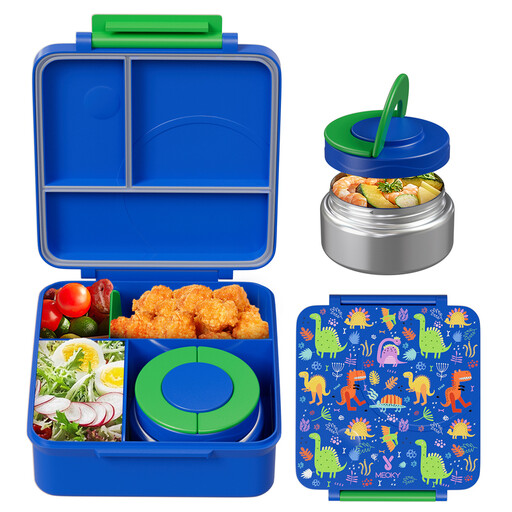
Why this product suits the profile: With a stated capacity of 54 oz and a divided design, this lunchbox is suitable for anyone looking for a clearly organised box with a single fastening. The design is particularly appealing to children.
The compartment layout is stated in the product name. Nevertheless, you should check the exact dimensions as well as the information on leak resistance and cleaning before buying.
54 oz capacity according to the product name; divided design; single-latch fastening.
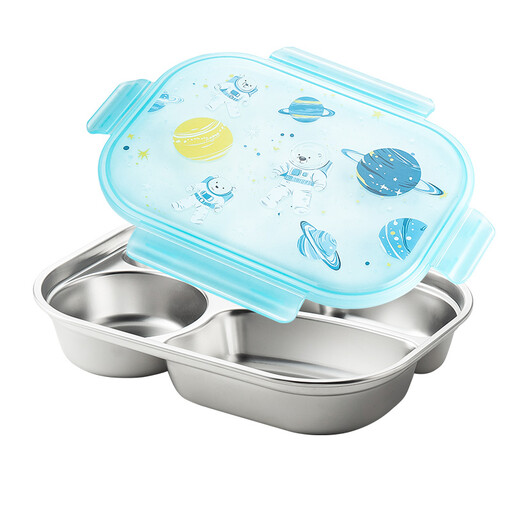
Why this product suits the profile: The product name specifies 316 stainless steel and four separate compartments. This makes it an interesting option for anyone seeking a stainless-steel lunchbox with an organised layout for the office, picnics or meals on the go.
The material is clearly specified rather than simply described as ‘high quality’. Stainless steel is not generally suitable for microwave use; the manufacturer’s information is decisive.
316 stainless steel according to the product name; four separate compartments; portable format for the office and picnics.
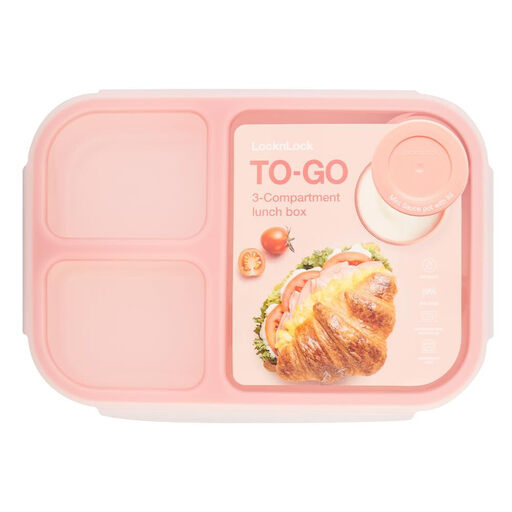
Why this product suits the profile: With a capacity of 1.5 litres and two compartments, this lunchbox is aimed at adults who want to carry larger portions for work, school or meal prep.
The product information explicitly states that it has a leakproof closure and can be used in the microwave without the lid. Hand washing is recommended for cleaning.
1.5 l capacity; two compartments; PP plastic; twist closure; microwave use according to the manufacturer’s information only without the lid.

Why this product suits the profile: The removable insert with three sections and the included cutlery are ideal for salads, side dishes, snacks and dressings at work or while you’re out and about.
The product description mentions a silicone sealing ring, a leakproof closure and clearly defined temperature limits. The lid must be removed completely before heating.
950 ml capacity; three removable compartments; cutlery and sauce container; according to the product information, suitable for microwave, freezer and dishwasher use.
We have put together a complete, regularly updated list of products that fully meet these strict selection criteria and the safety regulations applicable in the EU.
A lunchbox remains functional when it is handled in line with the manufacturer’s instructions:
For children, a compact lunchbox with compartments is generally easier to handle. The key factors are not just the capacity in millilitres, but also the weight, external dimensions and whether the child can operate the closure independently. Two to five separate sections can neatly accommodate bread, fruit and snacks.
That depends on the seal, lid design and closure. A box with a separate sauce container or continuous silicone seal is more practical for moist foods than a simple lunchbox without a seal. Liquid foods should only be transported if the manufacturer expressly states that this is suitable.
Only if the manufacturer has approved it for this use. Often, only the container is microwave-safe, while the lid must be removed. Stainless steel must not generally be placed in the microwave. Also check the temperature limits and warning notices before every use.