
Lieferung heute & morgen

Qualitätsgarantie

Willkommens-Angebote freischalten: KOSTENLOSE Lieferung | Bis zu 80 % RABATT | Kostenlose 30-Tage-JoyPlus-Testphase
App herunterladen
A bento lunchbox should transport meals safely, keep food separate and be easy to clean without unnecessary hassle. In practice, unclear manufacturer information, unsuitable closures or misjudged sizes can quickly lead to disappointing purchases. This applies equally to professionals, school pupils, students, families and anyone who prepares meals to take with them.
As a Joybuy Product Recommendation Officer, I assess the most important product features objectively. What matters is not a flashy marketing claim, but whether the lunchbox suits your usual journeys, food and cleaning routine.
A leak-proof lunchbox can retain liquids when the lid is closed correctly. However, that does not mean it will remain fully sealed during every movement, when overfilled or if it is cleaned incorrectly. Soups, dressings and very runny foods place greater demands on the seal and closure than dry snacks.
You should therefore look for:
A lunchbox with compartments or divided lunchbox is practical when you want to keep side dishes, fruit and a main meal separate. However, dividers reduce the usable space. Fixed compartments are also less flexible than removable inserts.
Smaller models are often enough for a filled sandwich and snacks. If you want to carry a complete meal or a meal-prep portion, compare the total capacity and dimensions with your rucksack or work bag.
A dishwasher-safe lunchbox is not automatically suitable for the microwave or freezer. With plastic boxes, the lid often needs to be removed as well. Stainless steel containers should never be put in the microwave. A thermal lunchbox with vacuum insulation must not be heated either.
The relevant instructions are always those provided by the individual manufacturer. Temperature limits may apply particularly to seals, valves and closures.
A stainless steel lunchbox keeps its shape and is less likely to absorb odours during normal use. According to the product information, the PURECOOK models are made from 304 stainless steel and feature removable silicone seals. However, stainless steel is not microwave-safe and may be heavier, depending on the design.
Plastic models are often lighter and offer more design flexibility with compartments and inserts. When buying, look for information about BPA-free materials, food contact and the temperature range. The LocknLock box, for example, is specified as being made from polypropylene; microwave use is intended without the lid and up to the stated temperature limit.
The following guide values can be helpful for everyday use:
Capacity alone says little about how practical a lunchbox will be day to day. An elongated shape may fit into a bag better than a tall container. For a rucksack, bicycle basket or hiking trip, you should also consider the weight and reliability of the closure.
Seals can retain residue if they are not completely removed and dried. Check whether the seal can be taken out and whether all individual parts are approved for dishwasher use. For a microwave-safe lunchbox, it should also be clear whether the lid needs to be opened, removed or used with a valve.
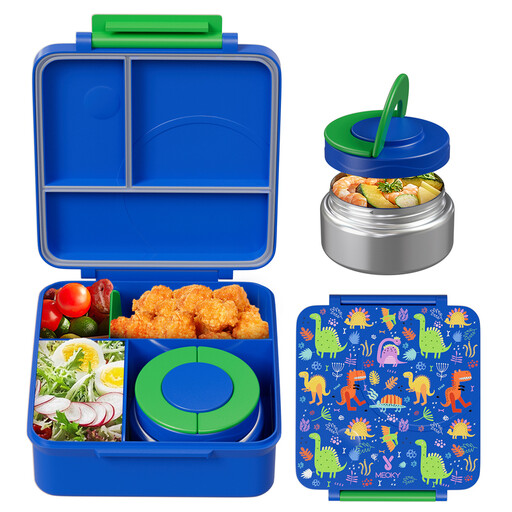
Why this product suits this profile: The divided design is aimed at people who want to carry snacks or simple meals separately without needing an extensive set of accessories.
The compartments help prevent food from mixing. Before carrying it, make sure the single closure is fully closed and do not overfill the box.
Divided design and a simple click-lock closure for carrying snacks and meals every day.
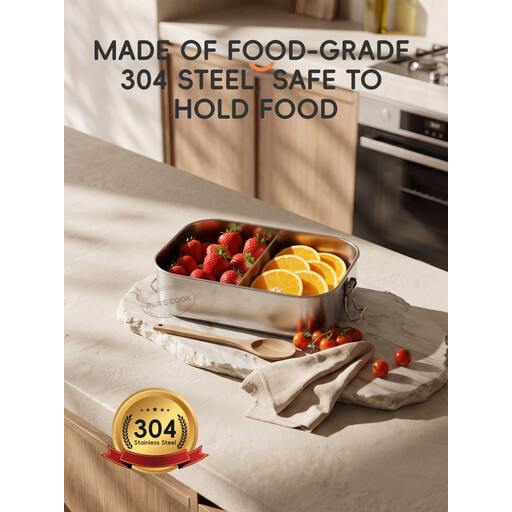
Why this product suits this profile: This model combines 304 stainless steel, two compartments and a removable silicone seal. It is well suited to people who value clear material information and easy-to-maintain cleaning.
According to the product information, the seal can be removed and cleaned separately. Stainless steel also prevents it being confused with microwave-safe plastic.
304 stainless steel, two compartments, clips and silicone seal according to the product description.
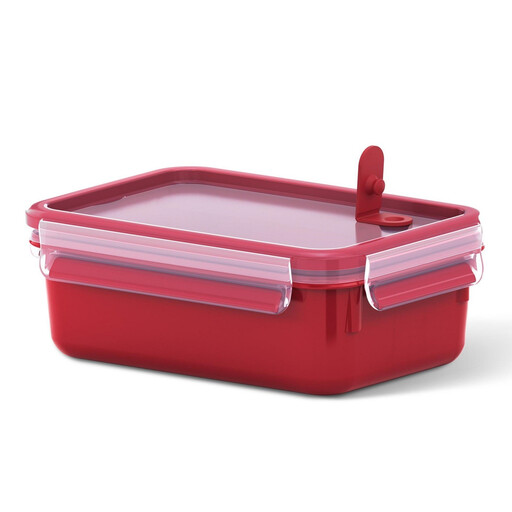
Why this product suits this profile: The 1-litre container is suitable for prepared meals and, according to the product information, has a valve for heating food in the microwave.
The valve makes the heating process straightforward. According to the instructions, it must be closed again before carrying; microwave use takes place with the valve open.
1-litre capacity, clip closure, freezer and dishwasher suitability according to the manufacturer’s information.
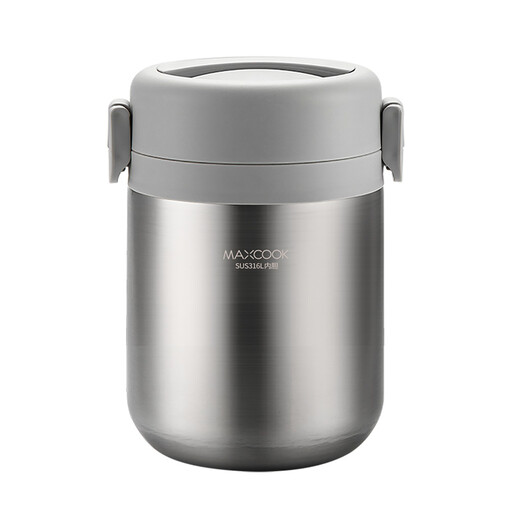
Why this product suits this profile: With its wide opening, this insulated container is suitable for soups, stews and larger hot or cold meals at work, while travelling or during outdoor activities.
The product information explicitly highlights the vacuum insulation, secure closure and lack of microwave suitability. This clearly distinguishes its intended use from that of a flat bento box.
1.5-litre capacity, 316 stainless steel, wide opening and vacuum insulation according to the product description.
We have put together a complete, regularly updated list of products that fully meet these strict selection criteria and the safety regulations applicable in the EU.
For work and school, a box holding around 900 ml to 1.2 litres is often sufficient. Removable inserts make it easier to adapt the box to different meals. If you want to heat your food before carrying it, you need a clearly labelled microwave-safe lunchbox and must follow the instructions concerning the lid, valve and temperature.
For meal prep, stackable containers with clearly defined dimensions are a sensible choice. A reusable lunchbox should be allowed to dry completely after every use before being stored closed.
For soups and hot food, a thermal lunchbox with a wide opening is more suitable than a traditional bento box. With insulated food jars, preheating, carrying the jar upright and avoiding microwave use are important points to bear in mind.
For a single meal, 900 ml to 1.2 litres is a typical range. Smaller models are suitable for snacks or children’s portions, while 1.4 to 1.5 litres is intended for large meals or several components. The external dimensions and weight are also important.
No. Stainless steel containers must not be put in the microwave. To heat food, you need a model made from suitable plastic or glass that is expressly approved for this purpose. With many plastic boxes, the lid must be removed or a steam valve opened.
The lifespan depends on the material, closure, exposure to temperature and care. Seals can become brittle or absorb odours over time. Check the box, lid and seal regularly for cracks, distortion and reduced grip. If there is visible damage, the container should no longer be used.