
Lieferung heute & morgen

Qualitätsgarantie

Willkommens-Angebote freischalten: KOSTENLOSE Lieferung | Bis zu 80 % RABATT | Kostenlose 30-Tage-JoyPlus-Testphase
App herunterladen
A Bento lunchbox should keep food separate, secure and easy to carry without taking up too much space. In everyday use, though, the differences often only become clear over time: liquid foods leak, clasps are awkward to use or the compartments are the wrong size for your planned portion. Whether you need one for school, nursery, the office, travel or camping, it’s worth taking a closer look at the design and care instructions.
The description leakproof lunchbox doesn’t automatically mean you can carry any soup or sauce safely in any position. What matters is a seal that goes all the way round, secure fastenings and a suitable internal layout. Even a well-sealed lunchbox should be kept upright in your bag where possible. For hot or liquid foods, check whether the lid is designed for that type of food.
A lunchbox with compartments can keep different foods separate. Very small compartments work well for nuts, pieces of fruit or dips, but won’t fit a sandwich or a large portion of salad. Removable dividers offer more flexibility than fixed compartments.
Not every plastic lunchbox is automatically suitable for the microwave or dishwasher. With microwave-safe models, you’ll often need to remove the lid, seal and cutlery. Before heating, always follow the information on the product and the manufacturer’s instructions. If you’re choosing a lunchbox for a child, also check for small parts and make sure they can open and close the fastenings independently.
The capacity should suit how you plan to use the lunchbox:
The capacity in millilitres shown on the product describes its theoretical total volume. Dividers, inserts and the space needed at the top can reduce the amount you can actually fit inside.
Many models are made from polypropylene (PP). The three-tier Bento lunchbox in our range is listed as PP-5 and comes with a silicone seal. PP is lightweight and suitable for many food-storage uses. Even so, check the manufacturer’s instructions for temperature limits, microwave use and cleaning.
Also check that the lunchbox has:
Side clips, a snap-close mechanism and a silicone seal can help keep food secure in transit. However, they don’t guarantee that the lunchbox will never leak in every situation. Make sure the fastenings are fully closed when you use it. It’s best to put liquid dressings or sauces in a separate container, such as a dressing pot.
A stackable lunchbox saves storage space, but may be taller than a flat lunchbox. Check the dimensions of your bag before you buy. If you’re choosing a lunchbox with cutlery, check that the knife, fork and spoon attach securely to the container rather than being loose among the food.
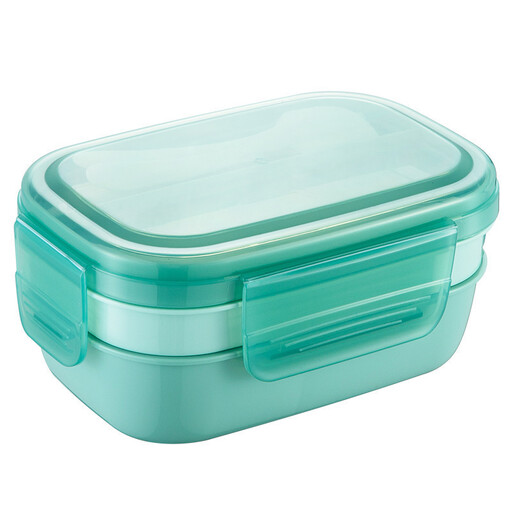
Why this product suits this profile: This two-tier Bento lunchbox has four main compartments, a cutlery compartment and a stated capacity of 1400 ml. It’s a practical choice for everyday use, school, the office and days out when you want to keep foods separate.
The layout is clearly described, and the cutlery is stored separately. Remove the lid and cutlery before heating, and make sure the side fastenings are properly closed when carrying the lunchbox.
1400 ml capacity, four inner compartments, a cutlery set and a stackable design.
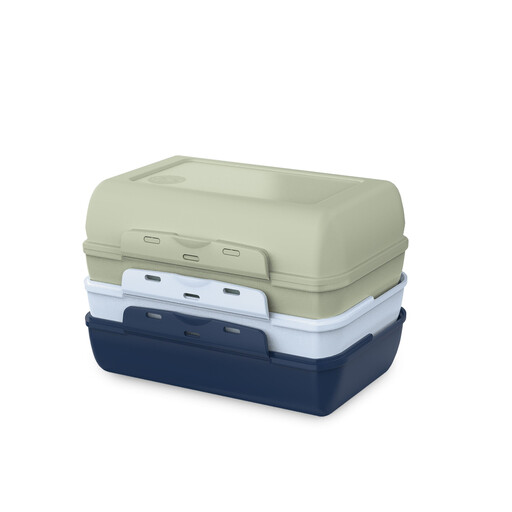
Why this product suits this profile: The four pieces make up two complete containers. Removable dividers let you adjust the layout for sandwiches, snacks or foods of different sizes.
Instead of relying solely on fixed compartments, you can adjust the internal layout. The product information states that the components are dishwasher-safe; check the container to confirm whether it’s suitable for microwave use.
Removable dividers, clip fastening, a stackable design and dishwasher-safe components.
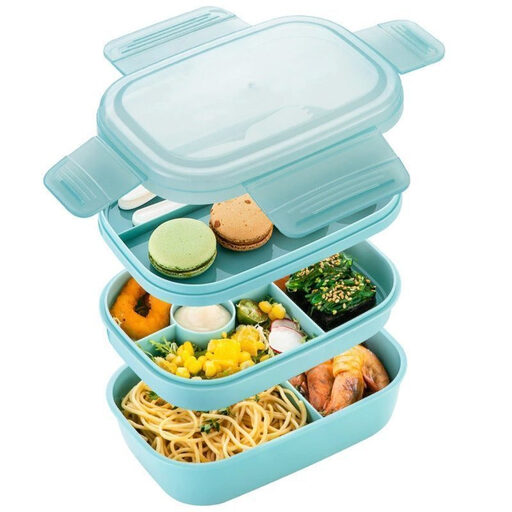
Why this product suits this profile: Three stackable tiers, with capacities of around 950 ml, 700 ml and 250 ml, keep a main course, sides and snacks separate. It’s designed for anyone who wants to carry several parts of a meal when they’re out and about.
The capacity of each tier is clearly stated. Side fastenings and a silicone seal help keep food secure in transit, but the lunchbox should still be carried upright.
Total capacity of around 1900 ml, three tiers, PP-5 plastic, a silicone seal, plus a knife, fork and spoon.
We’ve put together a complete, regularly updated list of products that meet these strict selection criteria and fully comply with the safety regulations in force in the EU.
Your Bento lunchbox will stay in good working order for longer if you take it apart completely and clean it after every use. Pay particular attention to the seals, clip areas and gaps. Mild washing-up liquid and a soft sponge are suitable for many models. If the product is dishwasher-safe, follow the manufacturer’s instructions about where to place it in the dishwasher.
These tips are useful for school and nursery:
A compact model is often enough for snacks and sandwiches. Adults taking a full meal will generally prefer a capacity of 1400 to 1500 ml. A 1900 ml lunchbox is suitable if you want to carry several foods or larger portions separately.
No. It depends on the specific material and the manufacturer’s approval. Even with suitable containers, you’ll often need to remove the lid, seal and cutlery. Only use components that are explicitly approved for microwave use.
How long it lasts depends on the material, cleaning and how heavily it’s used. Check the seals, clips and container walls regularly. Replace the lunchbox if you notice cracks, warping or a lid that no longer closes securely.