
Lieferung heute & morgen

Qualitätsgarantie

Willkommens-Angebote freischalten: KOSTENLOSE Lieferung | Bis zu 80 % RABATT | Kostenlose 30-Tage-JoyPlus-Testphase
App herunterladen
A Bento lunchbox should keep meals separate, transport them safely and be easy to clean without unnecessary hassle. For schoolchildren, students, professionals, parents and meal-prep users, suitable dimensions, reliable fastenings and clear usage information matter more than eye-catching design features.
Many disappointing purchases are caused by three common pitfalls:
The capacity should suit both the meal and the journey. A Bento lunchbox with around 700 to 1,000 ml is often suitable for a compact main meal with snacks. For larger portions or more extensive meal prep, a 1.5-litre meal-prep box may be more practical.
Don't just consider the overall size. Also check:
Although more compartments reduce the mixing of different foods, they can reduce the available space for large pieces of food.
A reusable lunchbox should be expressly suitable for contact with food. Commonly used materials include polypropylene, or PP, and stainless steel. PP boxes are usually lightweight and can be used in the microwave if approved by the manufacturer. Stainless steel focuses on durability and low odour absorption; microwave use is generally not intended for metal containers.
Also check:
A stainless steel lunchbox is not automatically leakproof. The key factors are the lid design, silicone seal and locking mechanism.
With a leakproof lunchbox, the supplier should provide specific information about the seal or fastening system. Double fastenings or side clips can secure the lid evenly. However, for soups, yoghurt or sauces, you need a box that is expressly designed for liquids. Liquids should be avoided in containers that, according to the product information, are intended only for dry foods.
A dishwasher-safe lunchbox saves time in everyday use. Check whether individual inserts, seals and lid components can be removed. After washing, all components should be allowed to dry completely before the box is closed. This helps prevent trapped moisture and odours.
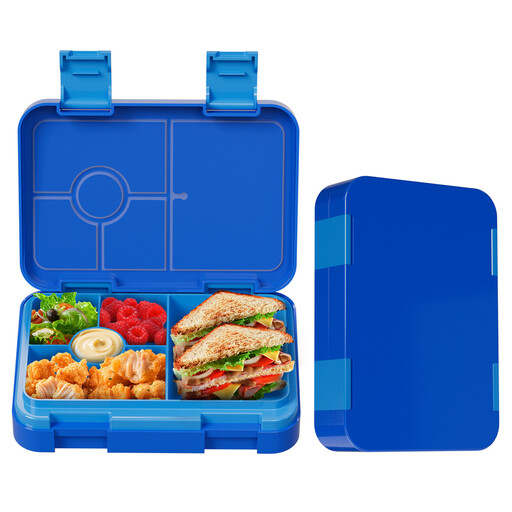
Why this product suits the profile: The five-section layout is ideal for users who want to transport their main meal and snacks separately. The double latches are designed for everyday use at school, university or work.
The five compartments help limit the mixing of different foods. Before buying, check the capacity, seal and suitability for liquids in the current product information.
Five separate sections and two fastenings according to the product name; available in blue.
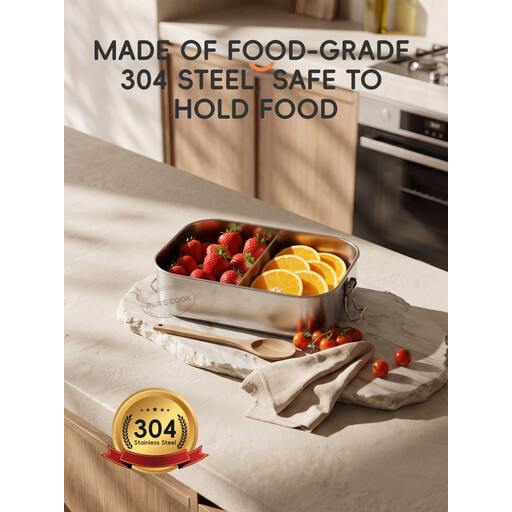
Why this product suits the profile: The 304 stainless steel construction is designed for users who prefer a metal container for work, travel and meal prep.
The product description mentions a removable silicone seal and locking clips. Before use, the lid, seal and compartments should be fitted correctly.
304 stainless steel, two compartments, silicone seal and dishwasher-safe according to the product information.
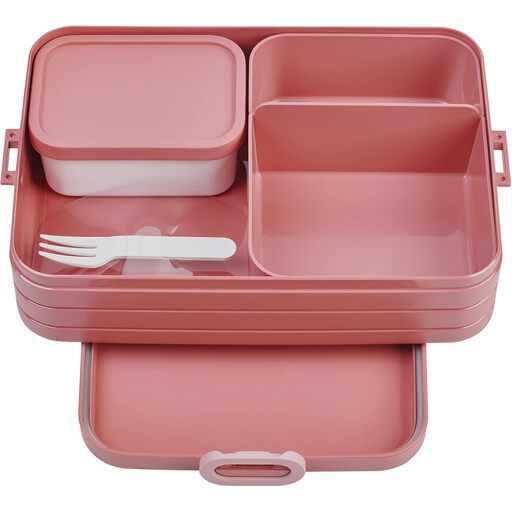
Why this product suits the profile: With a capacity of 1.5 litres and two separate containers, this box is suitable for larger portions at work, leftovers and prepared meals.
The removable Bento containers keep foods separate. According to the instructions, the product may only be used in the microwave without the lid; it is not suitable for the freezer.
1.5-litre capacity, two separate containers, an additional box with fork and dishwasher-safe components according to the product information.
We've put together a complete, regularly updated list of products that fully meet these strict selection criteria and the safety regulations applicable in the EU.
Compare these points before placing your order:
For dry snacks, a transparent plastic box with several sections may also be sufficient. According to the product information, the Samba Compartmentalised Plastic Box 1.5L is intended for dry foods and small items, but not for liquids. It should therefore not be considered equivalent to a leakproof lunchbox.
For smaller meals and snacks, 700 to 1,000 ml is often sufficient. If you take larger portions, leftovers or several components with you, you may prefer a lunchbox of around 1.5 litres. The external dimensions and weight are also important considerations.
No. Separate compartments primarily prevent foods from mixing. Leak protection depends on the seal, lid design and fastenings. Liquid foods should only be added when the manufacturer expressly states that the box is suitable for this purpose.
Its lifespan depends on the material, wear to the seals and clips, and how it is cleaned. Check regularly whether the lid has become misshapen, the seal is sitting correctly or the fastenings are damaged. If you notice visible cracks or the fastening remains permanently leaky, the box should be replaced.