
Lieferung heute & morgen

Qualitätsgarantie

Willkommens-Angebote freischalten: KOSTENLOSE Lieferung | Bis zu 80 % RABATT | Kostenlose 30-Tage-JoyPlus-Testphase
App herunterladen
A bento lunchbox should transport meals safely, keep food separate and be easy to clean. In practice, however, poor purchases are not caused solely by capacity or colour. The closure, compartment layout and actual suitability for the microwave, freezer and dishwasher are equally important.
Our selection from the Joybuy Product Recommendation Officer objectively assesses the key product features and shows which design is best suited to different daily routines.
Calling a lunchbox leakproof is only practically meaningful when the lid, seal and closures work together. Clip closures on several sides can distribute the contact pressure more evenly. With removable inserts, you should also check whether liquids stay within one compartment or can seep between the insert and the outer container.
For soups, dressings and moist foods, a continuous silicone seal and clearly described closure system are more important than a simple marketing claim.
A lunchbox with compartments is handy for fruit, bread, side dishes or snacks. However, very small compartments can limit the available space. If you want to transport a complete meal with pasta, salad or rice, you will often need a larger main compartment or removable containers.
With a storage container with a divider, it is therefore worth checking the dimensions of the individual sections rather than looking only at the total capacity.
For many plastic boxes, “microwave-safe” means remove the lid or open a valve. The permitted temperature range may also be limited. With dishwasher-safe products, only the top rack is often recommended. Seals, valves and loose inserts should be cleaned separately and then dried thoroughly.
For an adult lunchbox or a lunchbox for work and school, capacities of around 900 millilitres to 1.5 litres are often suitable. The ideal capacity depends on whether you want to transport one meal, several snacks or a complete meal prep.
More important than the litre capacity alone are:
For a children’s lunchbox, smaller, easy-to-reach compartments and a lower weight can be useful. For long working days or larger portions, however, 1.4 to 1.5 litres provide more room.
Polypropylene, or PP for short, is used in many food containers. Look for clear information confirming that the product is suitable for food use, as well as labels such as BPA-free. According to the product information, the Tefal MasterSeal Micro is BPA-free in accordance with the EU 10/2011 test method.
Stainless steel is an alternative to plastic if you are looking for a robust individual container without microwave use. Stainless-steel boxes are generally not suitable for the microwave. The seal should be removable so that moisture and food residue cannot collect underneath it.
A lunchbox set with several containers can be practical for planning meals throughout the week. Nevertheless, check whether each container has its own lid and how replacement parts can be obtained. With a meal-prep box, tightly closing lids, clear care instructions and a well-designed compartment layout are particularly important.
For a dishwasher-safe lunchbox, the manufacturer’s information should specify which parts can go in the machine. With a microwave-safe lunchbox, you need to observe the instructions for the lid, valve and temperature limits. Damaged boxes or brittle seals should no longer be used.
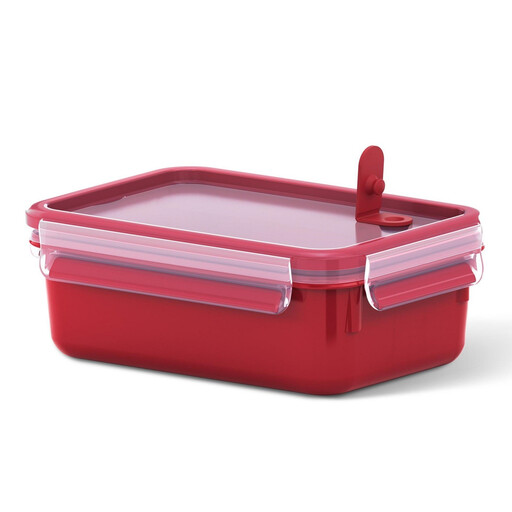
Why this product suits this profile: The rectangular 1-litre container is suitable for individual meals at the office, college or while travelling. The stated weight is 210 grams.
According to the product information, the Click-Lock system and integrated valve are designed to provide a secure seal and allow food to be heated with the lid closed and the valve open.
According to the product data, it is dishwasher-safe on the top rack, suitable for microwave and freezer use, and BPA-free.

Why this product suits this profile: This 3-in-1 container with a removable insert is designed for people who want to transport salad, side dishes, dressing and cutlery separately.
The described silicone double-chamber seal and four-sided safety closures help address the risk of liquids escaping. For microwave use, the lid must be removed completely.
950 millilitres of capacity, three removable compartments, plus a knife, fork, spoon and sauce container according to the product description.
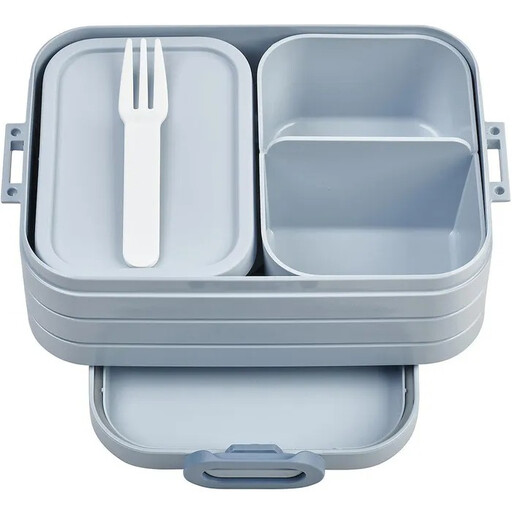
Why this product suits this profile: With 900 millilitres, two separate sections and an additional box with a fork, it is ideal for varied packed lunches and leftovers.
The removable bento boxes keep different foods separate. According to the instructions, the boxes can be placed in the microwave without their lids; the complete container is not suitable for the freezer.
BPA-free material according to the product data, dishwasher-safe and with a modular internal layout.
The lifespan of a bento lunchbox depends largely on how it is treated each day. To maintain reliable sealing performance, you should:
With children, small parts such as valves, forks and loose inserts also need to be taken into account. For a suitable children’s lunchbox, you can also browse our selection of children’s lunch boxes.
We have put together a complete, regularly updated list of products that fully meet these strict selection criteria and the safety regulations applicable in the EU.
For one main meal, 900 millilitres to 1 litre is often sufficient. If you also take fruit, bread or snacks with you, you can choose a model with 1.4 to 1.5 litres or a lunchbox set with several containers.
That depends on the individual model. In many cases, microwave use is permitted only without the lid. An integrated valve may allow a different method of use, but it must be opened correctly before heating. The product instructions take priority.
All parts should be dried thoroughly after cleaning. Seals must be clean and fitted correctly. Strongly coloured or heavily scented foods can stain plastic or leave odours behind; damaged containers and lids should be replaced.