
Lieferung heute & morgen

Qualitätsgarantie

Willkommens-Angebote freischalten: KOSTENLOSE Lieferung | Bis zu 80 % RABATT | Kostenlose 30-Tage-JoyPlus-Testphase
App herunterladen
A Bento lunchbox should transport meals safely to work, school, university, on trips or for meal prep. In practice, however, problems are often caused not by capacity, but by unsuitable compartments, seals that are difficult to clean, or unclear information about use in the microwave and dishwasher.
That is why it is worth looking beyond marketing terms and checking the actual construction before buying. The following points will help you choose a lunchbox with compartments based on objective criteria and avoid common buying mistakes.
A leak-proof lunchbox is not automatically suitable for every type of liquid or transport position. Key features include a continuous sealing ring, a securely closing lid and sufficient closing pressure. Correctly fitting the seal is also essential.
For soups, dressings or very runny foods, you should also check whether the manufacturer explicitly states that the box is suitable for liquids. The box should be fully closed before transport and should ideally be kept upright in your bag.
A lunchbox with compartments can keep different foods separate. However, small or permanently integrated sections are not practical for every meal. If you want to carry larger portions, leftovers or pasta, you will often need a more spacious main compartment.
Removable inserts offer greater flexibility, but require additional cleaning and storage space. When choosing a Bento box for adults, it is therefore not just the number of compartments that matters, but also their size and layout.
“Microwave-safe” does not necessarily mean that the entire box, including the lid, may be heated. For several models, this only applies to individual inserts and only without the lid. Temperature ranges, freezer suitability and placement in the dishwasher may also vary.
You should therefore always follow the product-specific instructions before use. Damaged seals, cracks or deformed plastic parts are reasons to stop using the lunchbox.
A smaller box is often sufficient for snacks or a filled sandwich. For a complete meal, models holding approximately 900 millilitres to 1.5 litres are worth considering. The external dimensions must fit your work bag, schoolbag or rucksack.
One example of a larger version is the PURECOOK Bento Lunch Box with 61.2 fl oz and the stated dimensions of 18 × 15 × 6.7 centimetres. The dual-compartment version divides the interior into two sections. The single-compartment version, on the other hand, provides one continuous compartment.
A stainless steel lunchbox is dimensionally stable and generally absorbs fewer odours than some plastic surfaces. However, stainless steel containers are not automatically suitable for microwave use. Before heating, check whether the material is approved for this purpose.
Plastic models can be lighter and may offer additional features such as removable compartments, cutlery or microwave-safe inserts. Information such as BPA-free status, suitability for food contact and the specific temperature range should be clearly stated and verifiable in the product description.
With a reusable lunchbox, a small number of easily accessible individual parts are often easier to care for than a complicated lid with numerous gaps. Simply describing a lunchbox as dishwasher-safe is not enough information on its own: it is important to know whether this applies equally to the lid, seal, inserts and cutlery.
If you regularly take rice, salads or hot food with you, look for a design that is easy to dismantle. A lunchbox with removable compartments can make cleaning easier and allow the layout to be adapted to different meals.
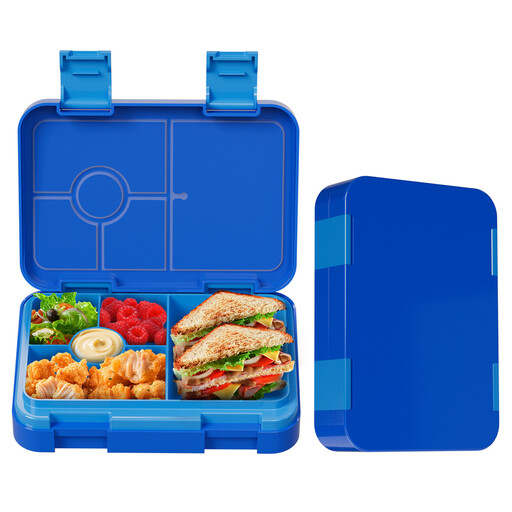
Why this product suits this profile: The five-section layout is ideal for anyone who wants to keep bread, fruit, snacks and side dishes separate.
The fixed compartment layout makes portion planning straightforward. Before buying, check whether the five sections are large enough for the types of food you intend to pack.
Five separate sections and two closures, according to the product name.
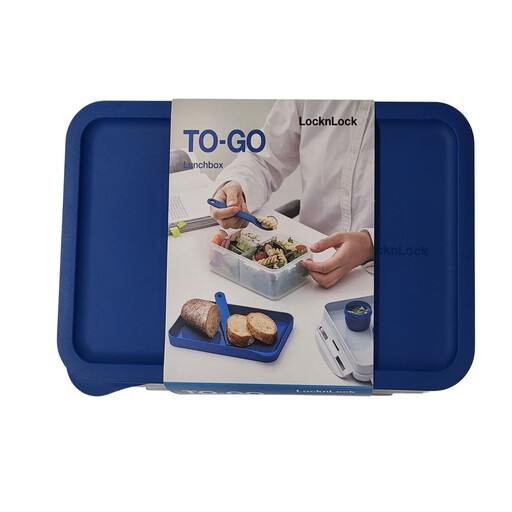
Why this product suits this profile: The box combines three removable compartments with a four-sided locking system and accessories for a complete meal.
The description lists separate compartments, a silicone seal and suitability for liquid foods. For microwave use, the lid must be removed completely.
1.0-litre capacity, three removable compartments, cutlery and sauce container; according to the product information, dishwasher- and freezer-safe.
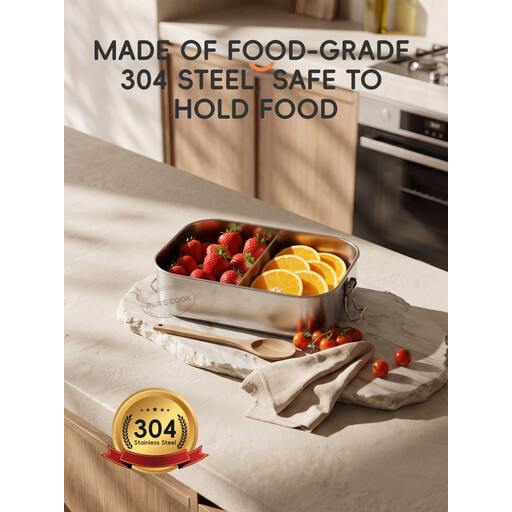
Why this product suits this profile: The metal container is designed for regular use in the office, at school, when travelling or for meal prep.
The stated silicone seal is removable and can be cleaned separately. Stainless steel is not suitable for microwave use, so this box is primarily intended for cold or already cooled food.
304 stainless steel, two compartments, clip closures and removable silicone seal, according to the product name.
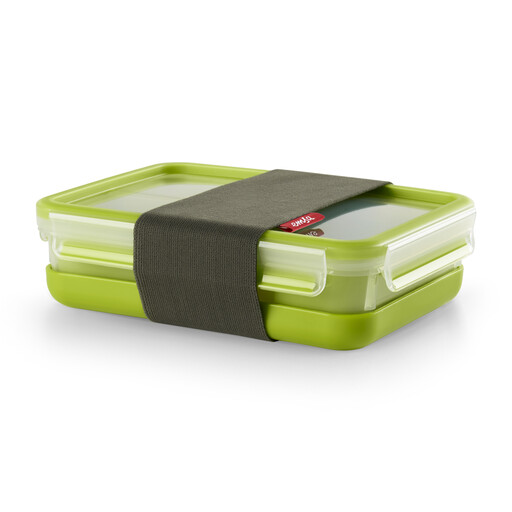
Why this product suits this profile: Three inserts, a separate plate and a carrying strap make this box suitable for different meals and everyday transport.
The product description mentions a freshness seal and three separate inserts. The stated capacity limit of 1.2 litres should not be exceeded.
1.2-litre capacity, three inserts, separate plate and, according to the product information, suitable for the dishwasher, microwave without the lid and freezer.
We have put together a complete, regularly updated list of products that fully meet these strict selection criteria and the safety regulations applicable in the EU.
For a complete meal, models holding approximately 900 millilitres to 1.5 litres are often suitable. The right size depends on portion size, your bag and the type of food. A considerably smaller box may be sufficient for small snacks.
The seal and closures must be clean, undamaged and fitted correctly. Liquid foods should only be transported if the product description states that this is suitable. Even closure pressure and upright transport help reduce the risk of leaks.
There is no single standard lifespan. Regular cleaning, observing the recommended temperature limits and avoiding damaged parts can help maintain the box’s usability. Seals should be checked and replaced when worn, in accordance with the manufacturer’s instructions.