
Lieferung heute & morgen

Qualitätsgarantie

Willkommens-Angebote freischalten: KOSTENLOSE Lieferung | Bis zu 80 % RABATT | Kostenlose 30-Tage-JoyPlus-Testphase
App herunterladen
A bento lunchbox should transport meals safely, keep food separate and be easy to clean. In practice, however, it is not just the material and capacity that can lead to a disappointing purchase. Details such as the fastening, unsuitable compartments or misunderstood temperature specifications are often the real issue.
This guide explains what employees, schoolchildren, students, parents and meal-prep users should look for when choosing a lunchbox, a meal-prep box or another food container.
Calling a lunchbox leakproof says little about how it is actually designed. The key features are:
A lid that simply rests on top is more suitable for dry snacks. For soups, dressings or sauces, a four-sided locking system with a silicone seal provides a more reliable technical basis.
A bento box with compartments may appear versatile at first glance. However, if the compartments are permanently very small, complete portions or larger slices of bread often will not fit. Removable inserts offer greater flexibility than permanently integrated dividers.
For a snack, a capacity of around 500 to 900 ml is often sufficient. For a complete lunch or larger salads, 1.2 to 1.5 litres may be more suitable. Large storage containers with a capacity of 2 litres or more are better suited to several portions or transporting food from the shop to the fridge.
“Suitable for microwaves” does not mean that the entire container can be heated with the lid closed. With many plastic boxes, the lid must be removed completely or opened. Information about freezer and dishwasher use should also be considered separately.
Look out for:
A BPA-free lunchbox made from polypropylene is usually lightweight and often designed for use in the microwave, freezer and dishwasher. For plastic products, the manufacturer’s specific instructions on temperature and cleaning are decisive. A stainless-steel lunchbox, by contrast, is robust and, when used correctly, absorbs fewer odours. However, it is not automatically suitable for microwave use.
Stainless-steel containers are well suited to dry foods, snacks and meal prep. For models with a plastic lid or silicone seal, these individual parts should be cleaned separately and checked regularly for cracks.
For carrying in a bag, a food container with a continuous silicone seal and several clips is more practical than a simple push-fit lid. Check whether the seal can be removed. This makes cleaning easier and prevents residue from building up in the seal grooves.
The term “leakproof” should always be considered in relation to the filling capacity and fastening. Overfilling can deform the lid or cause liquid to escape around the fastenings, even with a technically suitable container.
Choosing a dishwasher-safe lunchbox reduces the daily cleaning effort. Even so, seals and removable inserts should be allowed to dry completely before the box is stored closed. For use at work or school, weight, external dimensions and a suitable bag shape are also important.
If you want to heat up meals, you need a microwave-safe lunchbox. The rule is simple: lids, cutlery and separate sauce containers should only be heated if the product information expressly allows it.

Why this product suits this profile: The 950 ml box combines three removable sections with cutlery and a sauce container. It is suitable for school, the office and smaller main meals.
The removable insert prevents a rigid layout. According to the product information, the box has a four-sided locking system and silicone seal for airtight and watertight transport.
950 ml capacity, BPA-free polypropylene, cutlery and sauce container; according to the product information, suitable for microwave use without the lid, the freezer and the top dishwasher rack.
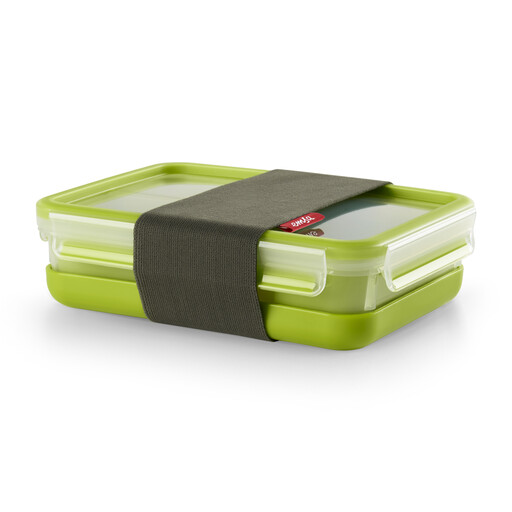
Why this product suits this profile: The box offers a 1.2-litre capacity, three inserts, an additional plate and a carrying strap. This makes it suitable for regular meals and varied meal plans.
The seal and securing tab are identified as key components of the fastening system. The stated maximum capacity of 1.2 litres should be observed.
Three inserts, separate plate, seal and stated suitability for use in the microwave, freezer and dishwasher at temperatures from -40 to +110 °C.
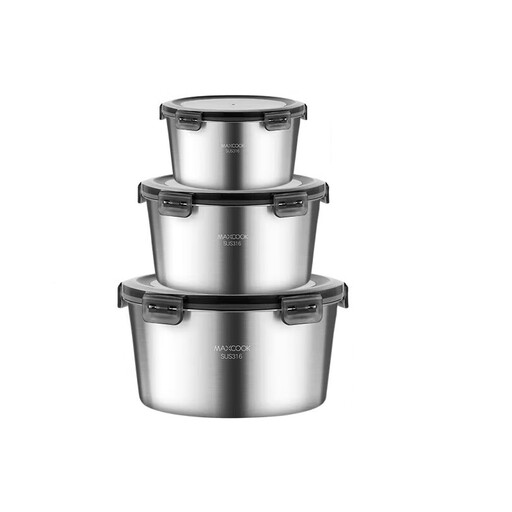
Why this product suits this profile: Three sizes of 600, 1,100 and 2,200 ml cover snacks, individual meals and larger meal-prep portions.
The different capacities mean you do not need to use an oversized container for every portion. Stainless steel is not intended for microwave use.
316 stainless steel, three capacities, lids and, according to the product information, suitable for the freezer and dishwasher.
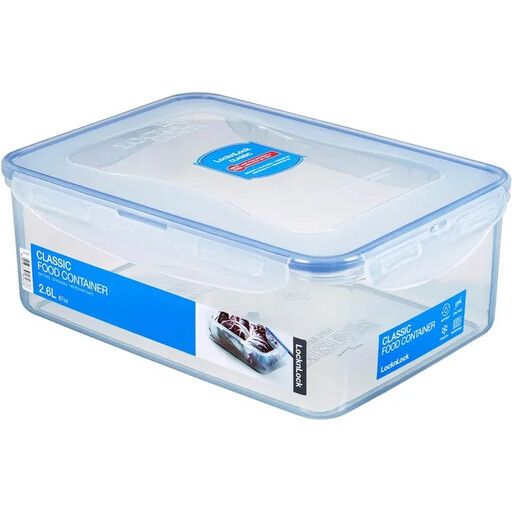
Why this product suits this profile: The large rectangular format with an integrated handle is suitable for several portions, picnics, camping or transporting prepared food.
The product information states that it has a four-sided locking system with a double-chamber silicone seal and is suitable for liquids. The container must still not be overfilled.
2.6-litre capacity, integrated handle, BPA-free polypropylene and, according to the product information, suitable for microwave use without the lid, the freezer and the top dishwasher rack.
We have put together a complete, regularly updated list of products that fully meet these strict selection criteria and the safety regulations applicable in the EU.
Around 500 to 900 ml is usual for snacks and smaller breaks. A bento lunchbox with a capacity of 1.2 to 1.5 litres offers more space for a complete lunch. The external dimensions are also important, so that the box fits in your rucksack or work bag.
Only fill the box up to the stated capacity at most, and close all clips fully. The seal and lid should be clean, dry and undamaged. For soups or sauces, choose a model whose product information expressly states that it is suitable for transporting liquids.
There is no single standard lifespan. Check the box, lid and seal regularly for cracks, deformation and loose fastenings. If damage becomes visible or the lid no longer closes evenly, the food container should be replaced.