What should you look for when buying?
First decide whether you want to keep the compote hot until serving or chill it for later storage. Then choose cooking zones, pan compatibility and controls to suit the way you’ll use it.
| What matters when buying |
What to check |
Who is it important for? |
| Serving at different times |
Keeping food hot or cooling it quickly; if keeping it hot, check the temperature of the food. |
If meals are served at different times, I want to know whether to keep the compote hot under controlled conditions or chill it for later. Around 33% of consumers prioritise serving at different times. |
| Adjustable simmering |
Compare the controls and settings; check whether a temperature probe is included and how to use it. |
If I want to adjust the heat while bringing food to the boil and simmering it, the controls are essential. Around 27% of consumers prioritise controllable simmering. |
| A suitable pan and hob footprint |
Match the pan’s base material and diameter to the appliance specifications; check the appliance dimensions. |
If you want to use a pan you already own and fit the hob on a clear worktop, both are important. Around 20% of consumers prioritise pan and space compatibility. |
| Cooking several dishes at once |
Check the number of usable cooking zones and, for built-in models, the cut-out and electrical connection. |
If you want to cook compote and another dish at the same time, a single cooking zone won’t accommodate both pans. Around 20% of consumers prioritise having several cooking zones. |
Joybuy product selection
Portable induction hobs for single pans and for cooking on two zones at the same time.
 No image available
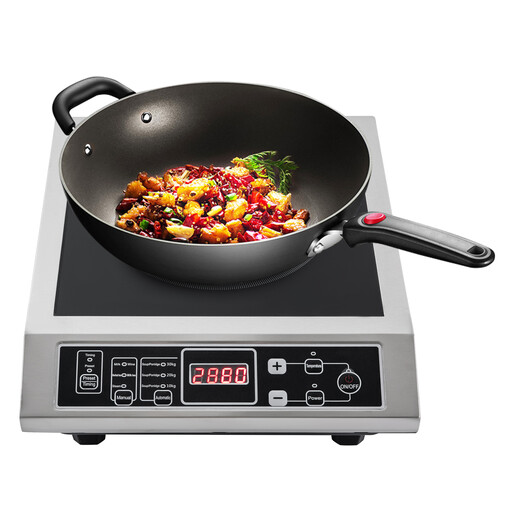
Induction hob with IGBT technology, 3500 W
Consider this tabletop hob for cooking away from a permanently installed hob.
The description lists a power range of 800–3500 W, eight temperature settings and a timer. The stated temperature range is 80–270 °C.
The description specifies an EU plug and cookware made from cast iron and stainless steel.
View at Joybuy
 No image available
IsEasy portable induction hob, 2100 W, 28 cm
Consider this portable hob for a single pan, provided its base is suitable for induction.
The description lists suitable magnetic pans with diameters of 12–26 cm, nine heat settings and an 8-hour timer. It states that the appliance weighs 1,9 kg.
View at Joybuy
 No image available
Induction hob with two cooking zones
Consider this hob if you want to cook compote and another dish at the same time on separate zones.
The zones can be controlled independently, according to the description, which lists five temperature settings. The stated power ratings for the hobs are 1500 W and 1000 W.
Appliance dimensions: 48 × 23,5 × 7,5 cm.
View at Joybuy
 No image available
Portable single-plate induction hob, 1000 W
Consider this hob for one pan if five heat settings and a rotary control suit the way you like to cook.
Appliance dimensions: 21,5 × 21,5 × 4,7 cm.
View at Joybuy
 No image available
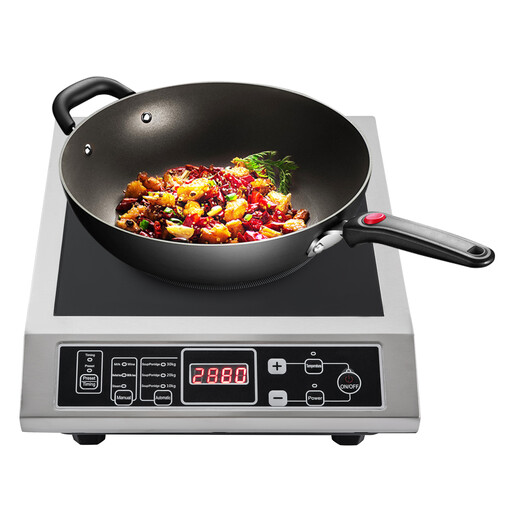
Microcrystalline glass induction hob, 3500 W
Consider this portable induction hob for cooking away from a permanently installed hob; your pan must be suitable for induction.
The description lists eight temperature settings, a timer, automatic switch-off and a power range of 800–3500 W.
View at Joybuy
Frequently asked questions
Is a keep-warm function enough for compote served later?
No. The function name doesn’t prove that the food is at a particular temperature. The BfR recommends keeping food at a minimum of 60 °C throughout when hot-holding it. For longer storage, the BfR recommends cooling hot food quickly to below 7 °C.
Can I use any pan I already own on an induction hob?
No. Check that the pan’s base is suitable for induction and that its diameter matches the specifications for the particular model. For the TC 2400, CASO lists pans with diameters of 12–26 cm. If your pan isn’t suitable for induction, an electric radiant hob is another option.
What should I bear in mind when connecting and cleaning the hob?
Follow the instructions for the specific appliance, and have a built-in hob connected by a qualified professional if this is specified. Siemens explicitly states that the EX975LXC1E must be connected by a qualified electrician. Let the hob surface cool before cleaning it; induction ceramic glass can also absorb heat from the pan.
Does an electric hob in Germany need to carry an EU energy label?
According to the European Commission, hobs aren’t subject to energy labelling requirements. An oven energy label therefore doesn’t describe the energy efficiency of its cooking zones.
What should I compare when it comes to ongoing costs and servicing?
Check whether your pans are suitable for induction, whether a built-in model needs to be professionally connected, and what repair and warranty terms apply to the specific appliance. The rated power alone isn’t enough to reliably calculate the electricity cost of making your compote.


