For single servings and limited worktop space, a compact personal blender is a natural choice. If you’re making smoothies for several guests, the usable capacity of a jug model matters. If you’re using frozen berries, check the manual for your specific model to confirm it’s suitable for frozen ingredients. A high wattage alone is no guarantee of good results, as CHIP’s practical test also highlights. Whichever appliance you choose, the German Federal Institute for Risk Assessment recommends heating frozen berries thoroughly and evenly before eating them.
Which type of blender is right for you?
For fans of frozen berries
If you want to use frozen berries, check the manual for your specific model to make sure it’s explicitly approved for frozen ingredients. The German Federal Institute for Risk Assessment recommends heating frozen berries thoroughly and evenly before eating them.
For single servings
If you’re short on worktop space and want to blend straight into your drinking cup, cup size and how easy the individual parts are to clean are important things to consider.
For groups at a holiday home
If you’re making smoothies for several guests, compare the amount you need per blending cycle with the usable capacity of the container, and factor in the cleaning involved.
What to look for when buying
Compact personal blender
A good fit if: you usually make one serving and want to drink straight from the blending cup.
Things to consider: A small cup may mean extra blending cycles when you’re serving several guests. Cleaning instructions can also vary from part to part.
Jug blender
A good fit if: you want to make larger quantities for several people in one go. Braun lists a usable liquid capacity of 1,25 l for the JB1050WH; Bosch specifies a 1,5-litre glass jug for the MMB4194S.
Things to consider: A jug needs space on your worktop and in the sink. Not every model comes with a drinking cup.
| What you need |
What to look for |
Who is it important to? |
| Frozen berries |
Check the manual to see whether frozen fruit is approved, whether you need to add liquid and what the maximum fill level is. For frozen berries, also follow the German Federal Institute for Risk Assessment’s advice to heat them thoroughly before eating. |
If frozen berries are a regular part of your smoothie plans, the specific approval for those ingredients is crucial. Around 36% of consumers rank this as their top priority. |
| Single servings and limited space |
Compare the appliance’s dimensions, cup capacity and lid, as well as what’s included with the exact model. |
If you’re short on space at your holiday home and want to blend straight into the cup, a compact design is particularly important. Around 29% of consumers prioritise this. |
| Several servings |
Check the difference between the container’s total size and its usable liquid capacity, and make sure the jug will fit in the space you have. |
If you’re making smoothies for several guests, the amount you can blend in one go is key. Around 21% of consumers rank this as their top priority. |
| Cleaning |
Check the instructions for each part, including whether the blade assembly needs to be washed by hand. |
If you want to keep hand-washing to a minimum after blending, check the instructions for the cup, lid and blade. Around 14% of consumers rank this as their top priority. |
Common misconceptions
-
High wattage guarantees a smooth berry smoothie
CHIP’s practical test found that results and ease of use varied depending on the blending task. Wattage alone therefore doesn’t tell you how a particular blender will handle frozen berries.
Compare the ingredients the appliance is approved for and the serving size you need. If available, look for a test involving a similar blending task.
-
A travel cup is big enough for several guests
The compact Bosch and WMF models considered each come with a 0,6-litre cup. That capacity may mean several blending cycles if you’re serving a larger group.
Decide how much you want to make in one go, then compare it with the usable capacity of the specific model.
-
Blending makes frozen berries safe to eat raw
A blender is no substitute for heat treatment. The German Federal Institute for Risk Assessment recommends heating frozen berries thoroughly and evenly before eating them.
Consider the appliance’s ability to blend the ingredients separately from how to prepare the berries safely.
Brands to consider
Bosch
The models considered range from a compact personal blender to a jug blender.
- Bosch lists a 0,6-litre travel cup and frozen fruit as a suitable ingredient for the MMB2111S. The MMB4194S comes with a 1,5-litre glass jug.
- Approval for particular ingredients on one model doesn’t automatically apply to other models from the same brand.
WMF
The Kult X Mix & Go is a compact blender with a 0,6-litre container that WMF says can also be used as a drinking bottle.
- WMF lists a drinking lid and a safety cut-off if the container isn’t fitted correctly.
- Check the instructions for the specific version before using frozen berries.
Braun
The PowerBlend 1 JB1050WH is a jug blender designed for making larger quantities.
- Braun lists a usable liquid capacity of 1,25 l, two speed settings and a pulse/ice-crush function for this model.
- These are the manufacturer’s specifications, not an independent comparison of blending results.
nutribullet
The Original 600 NB606DG is designed for smaller servings and comes with containers in different sizes.
- nutribullet lists a 700-ml cup and an additional 525-ml travel cup.
- According to the manufacturer, the cups and other accessories are dishwasher-safe, while the detachable blade should be cleaned with soap and water. These specifications don’t confirm any particular performance with frozen berries.
Joybuy products
This selection includes compact personal blenders and jug blenders for single smoothies or several servings.
 No image available
Ninja BlendBoss with 710-ml travel cup
For individual smoothies on the go; frozen fruit is listed as a suitable ingredient.
710-ml cup, three automatic modes and removable, dishwasher-safe parts.
View at Joybuy
 No image available
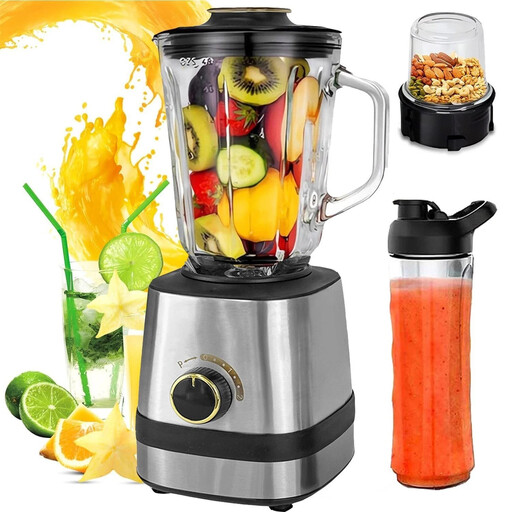
3-in-1 jug blender with 1,500-ml jug and 600-ml travel bottle
For smoothies in multiple servings; frozen fruit is listed as a suitable ingredient.
800 W, 1,500-ml blending jug, 600-ml travel bottle, 300-ml chopper and six stainless steel blades.
View at Joybuy
 No image available
3-in-1 jug blender with 1.5-litre container and 600-ml bottle
The jug is designed for larger quantities, while the extra bottle gives you a separate option for single servings.
1.5-litre container, 600-ml bottle, six blades, two speeds and pulse function.
View at Joybuy
 No image available
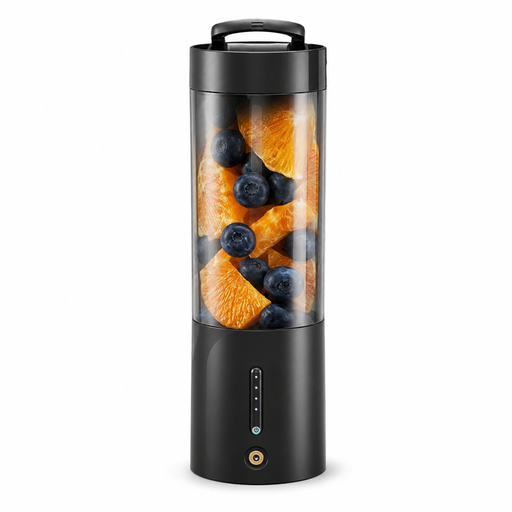
Portable smoothie maker with 450-ml PCTG container
For individual smoothies on the go; check the manual if you want to use frozen berries.
450-ml container, six stainless steel blades and magnetic charging port.
View at Joybuy
 No image available
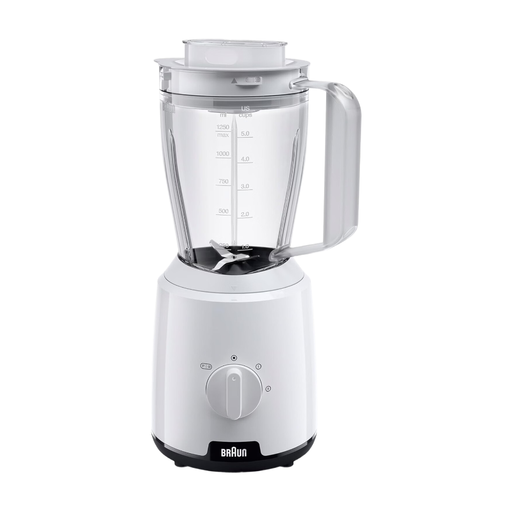
Braun PowerBlend 1 JB1000WH with 1.5-litre blending jug
The 1.5-litre blending jug is designed for larger quantities. If you want to use frozen berries, check the instructions for this version.
Two speeds, ice-crush function and 600 W.
View at Joybuy
Frequently asked questions
Can I blend frozen berries straight into a cold smoothie?
Check the manual for your specific model to see whether it’s suitable for frozen ingredients. Separately, the German Federal Institute for Risk Assessment recommends heating frozen berries thoroughly and evenly before eating them. Simply blending them isn’t a heat treatment.
Can I put the cup and blade assembly in the dishwasher together?
Not necessarily. For the nutribullet Original 600 NB606DG, the manufacturer says the cups and other accessories are dishwasher-safe, but recommends cleaning the detachable blade with soap and water. Check the instructions for your exact version.
Who is responsible if there’s a fault: the retailer or the manufacturer?
Your statutory rights are against the seller; a manufacturer’s guarantee is an additional, voluntary service subject to its own terms. If there’s a fault, the first step may be to ask for a repair or replacement. The Verbraucherzentrale (German consumer advice centre) explains the difference.


