
Lieferung heute & morgen

Qualitätsgarantie

Willkommens-Angebote freischalten: KOSTENLOSE Lieferung | Bis zu 80 % RABATT | Kostenlose 30-Tage-JoyPlus-Testphase
App herunterladen
Choosing the right filament is crucial for the success of any 3D printing project. Yet, the market for PLA Filament 1.75mm is flooded with marketing promises that often create more confusion than clarity. Many users invest in material that leads to clogged nozzles, poor print quality, and ultimately, frustration. As your Joybuy Product Recommendation Officer, I'm here to help you identify these pitfalls and make an informed decision.
This guide focuses on the objective criteria that truly matter, showing you how to avoid common problems from the outset.
Before we dive into the technical details, let's highlight the most common issues that can arise when selecting 3D Printer Filament.
To avoid the problems mentioned above, you should focus on three verifiable quality characteristics. These form the basis for reliable and repeatable print results.
A consistent filament diameter is essential for a smooth printing process. A reliable tolerance of ±0.02mm ensures that the extruder always feeds the exact same amount of material. Look for manufacturers known for their precise manufacturing, such as Anycubic Filament.
Equally important is the winding of the Filament 1kg spool. Neat, tangle-free winding prevents the filament from tangling during printing and interrupting the process—a common frustration during long print jobs.
The choice of material depends directly on the application of your printed object.
Filament, especially PLA, is hygroscopic, meaning it absorbs moisture from the air. Moist filament leads to bubbling during printing (visible and audible as a crackling sound at the nozzle), poor layer adhesion, and brittle objects. High-quality packaging is therefore essential. Ensure the filament is vacuum-sealed and supplied with a sachet of desiccant (silica gel).
Based on the criteria above, we have compiled a selection of filaments suitable for different user profiles.
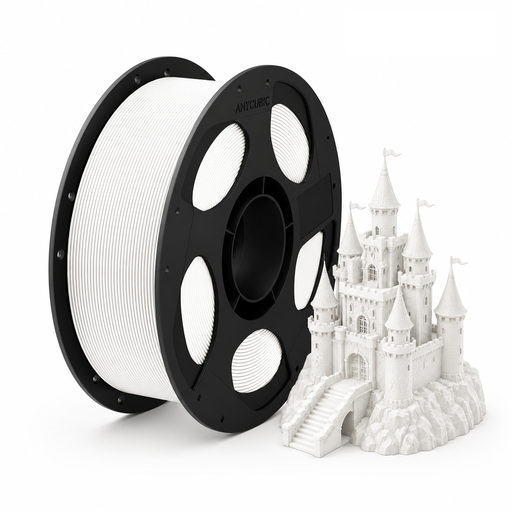
Why it fits the profile: Ideal for users seeking a reliable and straightforward material for their first projects. Standard PLA is easy to handle, and the ANYCUBIC brand is known for its consistent quality, which lowers the barrier to entry.
This filament addresses the pitfall of "misleading tolerance claims" with a verifiably tight manufacturing tolerance of ±0.02mm. This minimises the risk of nozzle clogs, a common problem with cheaper, no-name products.
High print reliability and ease of use, leading to fewer failed prints and less wasted material.
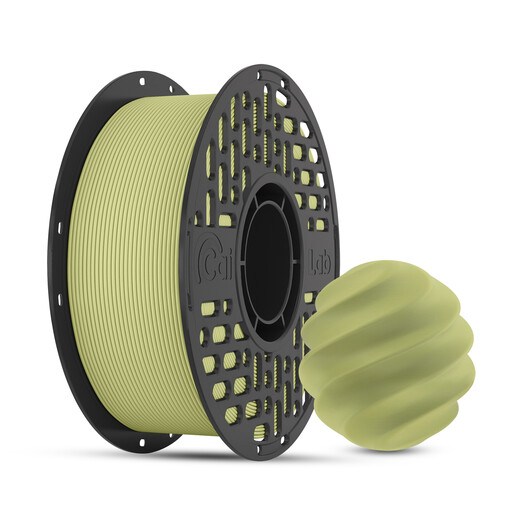
Why it fits the profile: For creatives aiming for a high-quality, non-glossy finish. Matte PLA effectively hides layer lines and gives objects a professional, almost ceramic-like appearance.
This filament addresses the pitfall of "inconsistent finishes." Its special formula is designed to produce a consistently matte texture without unwanted glossy spots, ensuring a uniform appearance.
Creates a uniform, low-reflection surface that highlights fine print details while minimising layer lines.
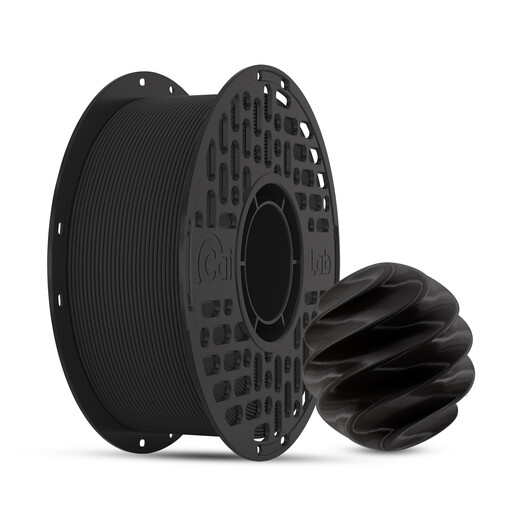
Why it fits the profile: For users printing prototypes or components with enhanced mechanical strength. PLA+ offers greater toughness and impact resistance than standard PLA, without the complexity of printing with PETG.
This material avoids the pitfall of "vague material designations." Instead of an unclear marketing term, PLA+ offers a clear, functional improvement over standard PLA, providing a reliable intermediate step for more demanding applications.
Increased toughness and improved layer adhesion for more robust and durable printed objects compared to conventional PLA.
We have compiled a comprehensive, up-to-date list of products that meet these strict selection criteria.
Proper storage is crucial to preserve the material's properties. Keep your filament in a cool, dry place away from direct sunlight. Once opened, the spool should be stored in a resealable bag, ideally with the included desiccant sachet. An airtight storage container is a worthwhile investment for those who print infrequently or own multiple spools.
PLA+ Filament is a modified version of standard PLA. The addition of specific additives achieves higher impact resistance, better flexibility, and stronger adhesion between individual print layers. This makes it more resistant to breaking. While standard PLA is often sufficient for decorative purposes, PLA+ is the better choice for parts that must withstand a certain amount of mechanical stress.
As long as your 3D printer is designed for 1.75mm filament, you can, in principle, use any material with this diameter. However, it is crucial that you adjust the print settings for the specific material. For example, PETG Filament 1.75mm requires a higher nozzle and print bed temperature than PLA. Always check the temperature settings recommended by the filament manufacturer and adjust them in your slicer software to achieve optimal results.