
Lieferung heute & morgen

Qualitätsgarantie

Willkommens-Angebote freischalten: KOSTENLOSE Lieferung | Bis zu 80 % RABATT | Kostenlose 30-Tage-JoyPlus-Testphase
App herunterladen
A well-organised child's room not only promotes tidiness but also fosters your child's independence and creativity. A key element in this is the children's bookshelf. It not only serves to store books but can also function as a toy shelf and encourage a love of reading. However, choosing the right model can be a challenge given the variety of designs, materials, and safety considerations.
This guide is designed to help you navigate the options. We'll outline the key criteria for selection and present various models that stand out for their functionality and child-friendly design.
Before you make a decision, there are a few fundamental aspects to consider. These will help you find a shelf that is safe, practical, and durable.
Safety in a child's room is the top priority. Look for rounded corners and edges to minimise the risk of injury. A stable construction is just as crucial. Models with a wide base or the option for wall anchoring provide additional stability. The materials used should be robust and non-toxic for children. Many modern pieces of children's furniture are made from MDF (medium-density fibreboard) panels with a melamine coating, which is known for being easy to clean and durable.
Consider how the shelf will be used. Is it exclusively for books, or will it also serve as a toy shelf? A Montessori shelf is characterised by its front-facing book display. This makes it easier for young children to recognise their favourite books and choose them independently. Low-profile shelves allow children to access their belongings on their own and put them away, which is a key step in fostering independence. A well-designed storage solution for a child's room often combines open compartments for books with bins or larger sections for toys.
The choice of materials ranges from solid wood to painted MDF panels. A freestanding white shelf is a timeless classic that fits into almost any room design. Carefully measure the available space in the child's room to ensure the shelf fits without cluttering the area. Also, consider the maximum load capacity of the compartments, especially if you plan to store heavy books or toy boxes.
Here is a selection of shelves that meet different needs in terms of design, space, and functionality.

Why it stands out: This shelf combines high storage capacity with a playful element. Thanks to its 360° rotating base, children can effortlessly access all compartments, which minimises its footprint while encouraging interaction. The house shape adds a charming touch to any child's room decor.
Pros:
Who is it for? Parents looking for a maximum storage solution in a limited space and who want an interactive piece of furniture that encourages children to read and tidy up.
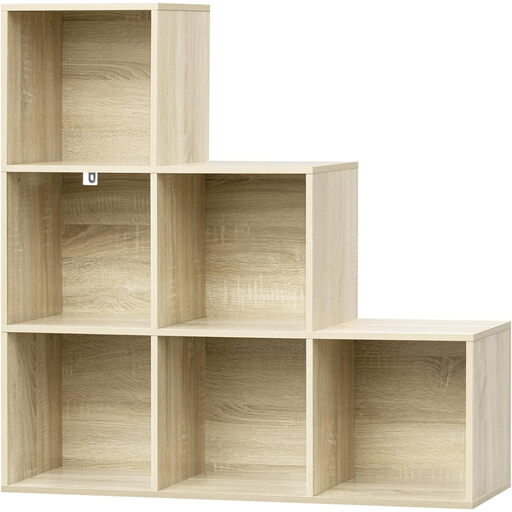
Why it stands out: The simple and modern design of this step shelf makes it a versatile piece of furniture. It can be used not only in a child's room but also in other living areas. The open cube structure offers flexible storage space for books, decorative items, and storage bins.
Pros:
Who is it for? Families looking for a sturdy and adaptable bookshelf for the child's room that can grow with their child and later be used in a teenager's room or home office.
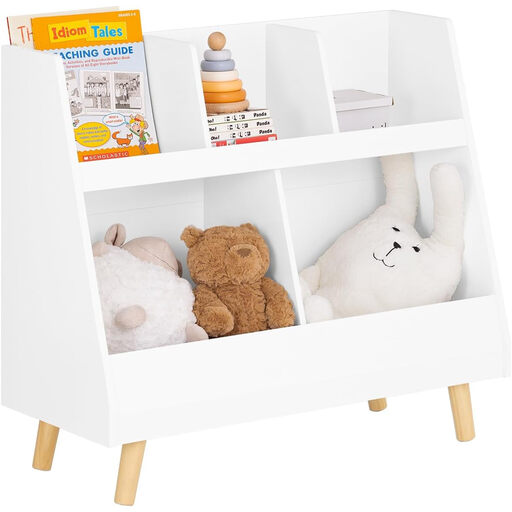
Why it stands out: This shelf is specifically tailored to the needs of toddlers and preschoolers. It combines slim compartments for a front-facing display of picture books with larger, deep compartments for toys and stuffed animals.
Pros:
Who is it for? Parents of younger children looking for an all-in-one storage solution for the child's room that creates order while incorporating the principles of a Montessori shelf.
The models featured here already cover a wide spectrum. However, if you're looking for different styles, sizes, or materials, there are many more options to explore. From narrow wall shelves to large shelving systems, the right solution for your home is often just a few clicks away.
Discover More Shelves and Bookshelves in Our Collection
A Montessori shelf is designed to foster a child's independence. Its key characteristics are a low height, which allows the child to access all items without help, and a front-facing book display. When children can see the book covers instead of just the spines, they are more encouraged to read and can make their own choices.
The ideal height depends on the child's age and size. As a general rule, the child should be able to see and reach the books on the top shelf while standing, without needing to climb. For toddlers and preschoolers, a height between 75 cm and 125 cm is usually a good fit.
Most manufacturers include an anti-tip kit with a freestanding shelf. This accessory is used to secure the piece of furniture to the wall and prevent it from tipping over. It is strongly recommended to install this safety feature according to the assembly instructions, especially for taller or narrower shelves. Additionally, always place the shelf on a level and solid surface.