Joybuy Insights

Baby Crib Buyer's Guide: Essential Selection Tips

Choosing the first baby crib is a major decision for many expectant parents. The market offers a wealth of options, but not all of them deliver on their promises. As your Joybuy Product Recommendation Officer, I'll help you distinguish essential features from superfluous ones and make an informed choice.

The Most Common Pitfalls When Buying a Baby Crib

Before we dive into the important features, let's look at the three most common mistakes that lead to dissatisfaction and unnecessary expenses.

  1. The Short-Lifespan Trap: Many multifunctional cribs are marketed as an "all-in-one" solution for the first few years. In practice, however, some models prove to be impractical after just a few months. A bedside sleeper that doesn't convert to a standalone crib loses its utility as soon as the baby becomes more mobile.
  2. Lack of Ergonomics: A crib without adequate height adjustment can quickly become a strain for parents. Constantly lifting your baby in and out of a sleeping surface that is too low puts significant stress on your back. A height-adjustable crib is therefore not a luxury, but a necessity.
  3. Neglecting the Mattress: Attention often focuses on the crib frame, while the mattress is treated as an afterthought. However, a non-breathable baby mattress can impede air circulation and lead to heat build-up. The quality of the sleeping surface is a critical safety factor.

What Really Matters: The Core Parameters for Your Selection

To make a sound decision, focus on three objective criteria: flexibility, safety, and ergonomics.

1. Flexibility and Lifespan: Bedside Sleeper, Bassinet, or Full-Sized Crib?

The choice of crib type largely depends on your needs in the first few months and your long-term plans.

  • Bedside Sleeper: Ideal for the first 0-5 months. It allows for close proximity to the parents' bed, making nighttime feeding and soothing easier. Ensure it has a secure attachment to the parents' bed and a stable construction.
  • Bassinet: A small basket or bed, often on wheels. It's mobile, allowing you to keep the baby close in different rooms during the day. Its period of use is similarly short to that of a dedicated bedside sleeper.
  • Full-Sized Crib: The long-term solution. Standard sizes like 60x120 cm or 70x140 cm can often be used until the third year of life or longer. Many models are convertible and grow with your child. A folding travel crib can be a supplement for on-the-go use, but it generally doesn't replace a proper full-sized crib for daily use.

2. Safety and Standards: Materials and Stability

Safety is the top priority. Pay attention to the following points:

  • Safety Standards: Baby cribs in the EU should comply with the DIN EN 716 (for cots and travel cots for domestic use) or DIN EN 1130 (for cribs and cradles) standards. These standards regulate aspects such as stability, the distance between slats (no more than 6.5 cm), and the use of non-toxic paints and materials.
  • Stability: The crib must stand firmly without wobbling. For models with wheels, at least two should be lockable to prevent unintentional rolling.
  • Materials: Solid wood is robust and durable. Make sure all surfaces are smooth and free of sharp edges. The paints and finishes used must be saliva-resistant and tested for harmful substances.

3. Ergonomics and Comfort: Height Adjustment and Mattress

A well-thought-out design makes daily life easier and promotes safe sleep.

  • Height-Adjustable Sleeping Surface: A height-adjustable crib is essential. In the highest position, you can lay your newborn down without straining your back. As soon as your child starts to sit up or pull themselves up, the sleeping surface must be lowered for safety reasons.
  • Breathable Baby Mattress: A good mattress has vertical air channels in its core and a breathable cover. This promotes air circulation, helps with temperature regulation, and has been shown to reduce the risk of CO? rebreathing. The cover should be removable and washable at a minimum of 30 °C.

Our Curated Product Selection

Here are some product recommendations tailored to the different requirements of parents.
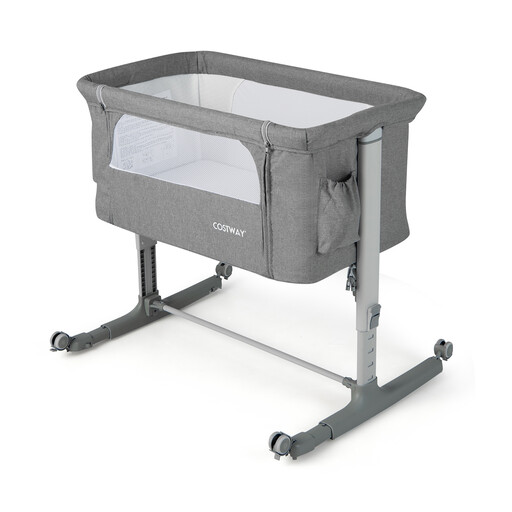
MATCH FOR: The First Few Months & Maximum Proximity
Costway 3-in-1 Baby Bedside Cot with 5 Adjustable Height Positions Breathable Mesh Wheels Light Grey

Costway 3-in-1 Baby Bedside Sleeper

Why This Fits Their Persona: Ideal for parents seeking a flexible co-sleeping solution for the first 0-5 months. The combination of a bedside sleeper, cradle, and bassinet offers high functionality in a small footprint.

How It Avoids the Trap

It bypasses the ergonomics trap with its 5-level height adjustment, which allows it to adapt to almost any parent's bed and saves your back. It's clearly designed for the initial period and doesn't promise unrealistic longevity.

Key Advantage & Pros

3-in-1 functionality; lockable wheels for mobility and safety; breathable mesh panels for good visibility and air circulation.

MATCH FOR: Long-Term Use & Flexibility
roba Fold-Up Portable Baby Crib 60 x 120 cm, Wooden, with Wheels, 2-Way Height Adjustable, Space-Saving, White

roba Fold-Up Crib 60 x 120 cm

Why This Fits Their Persona: Perfect for parents who want a durable solution without sacrificing mobility. Ideal for use at home, at the grandparents', or while travelling, as it folds up to save space.

How It Avoids the Trap

This crib avoids the short-lifespan trap by serving as a full-sized crib usable up to a weight of 40 kg. Its folding function offers a level of flexibility that rigid models lack.

Key Advantage & Pros

Made from solid organic beech wood; 2-level height adjustment; simple folding function for transport and storage; developed according to safety standard DIN EN 12227:2010-12.
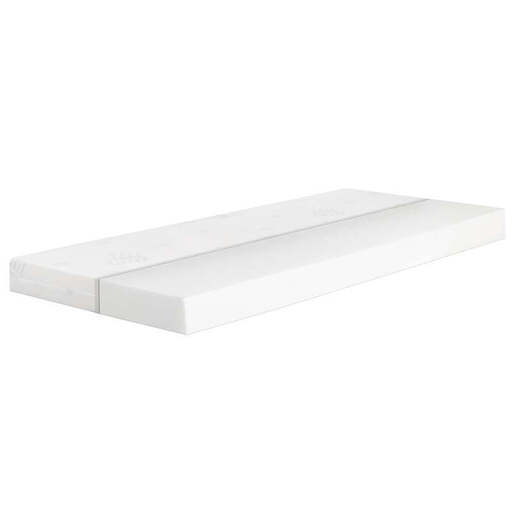
MATCH FOR: The Foundation for Safe Sleep
roba Safe Asleep - Comfort Air Roll Baby Mattress, 70 x 140 cm - High-Quality Jacquard Cover - Perforated Mattress Core - For Baby & Children's Beds

roba Safe Asleep Comfort Air Roll-Up Mattress

Why This Fits Their Persona: For parents who already own a crib frame or refuse to compromise on the sleep environment. The focus here is exclusively on the safety and comfort of the sleeping surface.

How It Avoids the Trap

This mattress directly addresses the danger of a neglected sleeping surface. The perforated core and breathable cover are specifically designed to reduce heat build-up and CO? rebreathing.

Key Advantage & Pros

Point-elastic, perforated foam core; removable and machine-washable Jacquard cover; suitable for allergy sufferers.

Looking for more options?

We've compiled a comprehensive, up-to-date list of products that meet these strict selection criteria and safety requirements.

Frequently Asked Questions (FAQ)

1. How high should a baby crib be?

A height-adjustable crib is ideal. The highest setting is intended for newborns, making it easier for parents to place them in and lift them out. As soon as your child starts to sit up on their own or pull themselves up on the slats, you must lower the sleeping surface to the lowest setting for safety. This prevents the child from climbing out of the crib.

2. When does a full-sized crib make sense?

A full-sized crib, typically in sizes 60x120 cm or 70x140 cm, is a long-term investment. It can generally be used from birth up to the age of three or longer. It's a great choice if you want to skip intermediate steps like a bassinet or a dedicated bedside sleeper. However, keep in mind that it offers less mobility and direct proximity to the parents' bed in the first few months compared to a specialised bedside sleeper.

3. What makes a good breathable baby mattress?

A high-quality breathable baby mattress is characterised by two main features: a core with vertical air channels (perforated foam) and a breathable, removable cover. This combination ensures constant air circulation, wicks away moisture, and helps regulate the baby's sleeping temperature. This contributes to reducing the risk of heat build-up and the rebreathing of exhaled CO?.