
Lieferung heute & morgen

Qualitätsgarantie

Willkommens-Angebote freischalten: KOSTENLOSE Lieferung | Bis zu 80 % RABATT | Kostenlose 30-Tage-JoyPlus-Testphase
App herunterladen
Condensation on windows, a musty smell in the basement, or concerns about mould growth are common signs of excessive humidity in living spaces. An electric dehumidifier can remedy this by actively removing moisture from the air, creating a healthier indoor climate.
However, the selection of models is vast, and the technical specifications can seem overwhelming at first glance. This guide is designed to help you navigate the options. It explains the most important criteria to consider when buying a dehumidifier and presents a selection of units for different needs. The goal is to provide you with an informed basis for your decision.
To find the right appliance, it's helpful to analyse your specific needs. Three key factors are crucial: performance relative to room size, operating noise level, and practical additional features.
The performance of a dehumidifier is measured in litres per day (L/day). This value describes how much water the unit can remove from the air under standardised conditions (usually 30°C and 80% relative humidity).
Manufacturers also typically provide a recommended maximum room size in square metres (m?), which serves as a useful guideline.
The noise level, measured in decibels (dB), is an important factor, especially if you are looking for a dehumidifier for the bedroom or living room.
Many models feature a special sleep or night mode that reduces the fan speed and, consequently, the noise level.
Modern dehumidifiers offer various features that enhance convenience and versatility.
Based on the criteria mentioned, we have compiled a selection of units suitable for various applications.
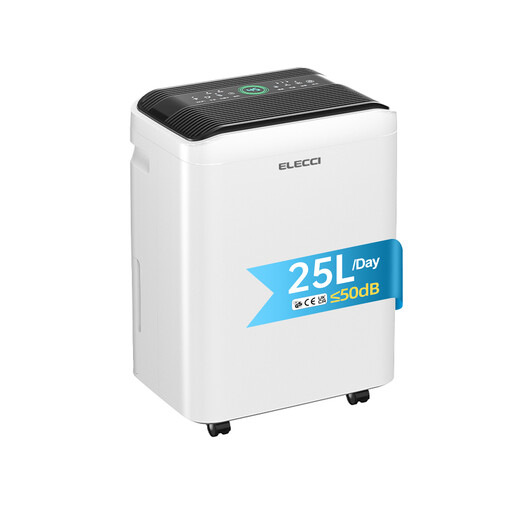
Why it stands out: With a high dehumidification capacity of 25 litres per day and a large 4.8-litre water tank, this model is designed for demanding tasks and large rooms up to 50 m?. The option to connect a drainage hose makes it ideal for unattended, continuous operation.
Pros:
Who is it for? For users who need a powerful solution for large living spaces, damp basements, or to effectively combat humidity and mould.
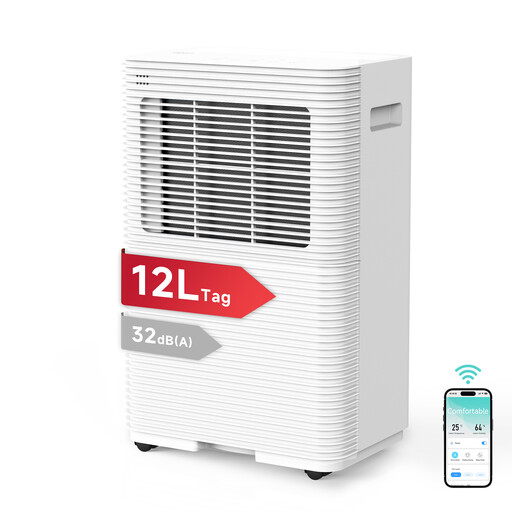
Why it stands out: This model combines smart technology with very quiet operation. At just 32 dB in sleep mode, it is one of the quietest dehumidifiers in its class. Control via the Wi-Fi app provides full command from anywhere.
Pros:
Who is it for? For tech-savvy users and anyone looking for an unobtrusive and quiet dehumidifier for a bedroom, children's room, or small to medium-sized apartment.
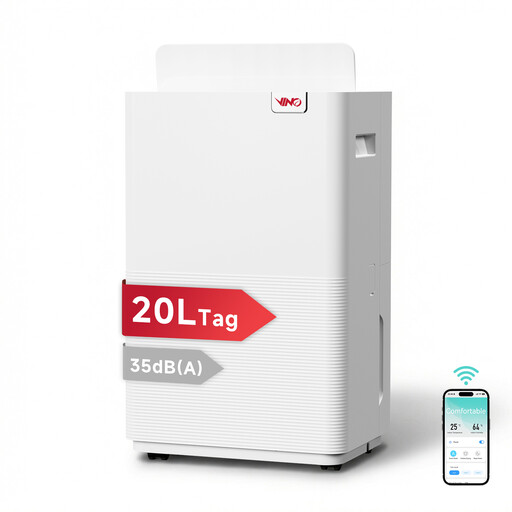
Why it stands out: This unit offers a great balance of performance, noise level, and smart features. With a 20 L/day capacity, it is suitable for rooms up to 40 m?. A special feature is the automatic air flap, which protects the unit from dust when turned off, as well as an internal drying function that prevents mould growth inside the appliance itself.
Pros:
Who is it for? For users seeking a versatile, all-around device for the living room or larger spaces, who value smart operation and low-maintenance durability.
The products presented here cover common use cases. If you haven't found the right appliance for your specific needs, you may find a suitable alternative in our wider selection.
Discover more models in our Electric Dehumidifier category.
1. Does a dehumidifier help against mould? A dehumidifier does not eliminate existing mould, but it removes its breeding ground. Mould fungi need high humidity (usually above 60%) to grow. By lowering the humidity to a level of 40–60%, a dehumidifier can prevent new mould growth and curb its spread.
2. How often do I need to empty the water tank? The frequency depends on the dehumidification capacity, tank size, and the humidity in the room. With high humidity, a 2-litre tank can fill up several times a day. Most units shut off automatically when the tank is full. For low-maintenance operation, a model with a continuous drainage via hose option is recommended.
3. How loud is a dehumidifier in operation? The noise level varies depending on the model and operating mode. Very quiet dehumidifiers for the bedroom operate at under 36 dB, which is equivalent to a whisper. Standard models are between 40 and 50 dB, comparable to a normal conversation. High-performance basement dehumidifiers can be louder. Pay attention to the decibel rating provided by the manufacturer if the unit will be placed in a noise-sensitive area.