
Lieferung heute & morgen

Qualitätsgarantie

Willkommens-Angebote freischalten: KOSTENLOSE Lieferung | Bis zu 80 % RABATT | Kostenlose 30-Tage-JoyPlus-Testphase
App herunterladen
A robot vacuum and mop with a fully automatic station promises the ultimate in convenience: floors that practically clean themselves and weeks of maintenance-free operation. However, the market is flooded with devices whose advertised features often fail to deliver in practice. Before you make a purchase, it's crucial to understand the technical specifications that separate genuine value from mere marketing promises. This guide will help you avoid common pitfalls and find a model that truly meets your needs.
Acquiring an advanced cleaning robot is an investment. However, certain weaknesses in design and function can mean the promised convenience never materialises, leaving you with a device that creates more work than it saves.
To separate the best from the rest, you should closely examine three core parameters. These largely determine the cleaning performance and the degree of automation.
Suction power is measured in Pascals (Pa). While 2,500 to 4,000 Pa may be sufficient for hard floors, higher values are necessary for homes with carpets or pets. A robot vacuum for pet hair should have a suction power of at least 5,000 Pa to remove hair and fine dust even from deep within carpet fibres. The brush system is equally important. Rubberised main brushes or special anti-tangle systems are crucial to minimise the manual removal of hair.
A simple robot vacuum with mopping function is not the same as a self-cleaning robot vacuum. The difference lies in the mechanics:
The station is the heart of convenience. Check for the following features:
Instead of making blanket recommendations, we have identified models tailored to specific user profiles and their living situations.
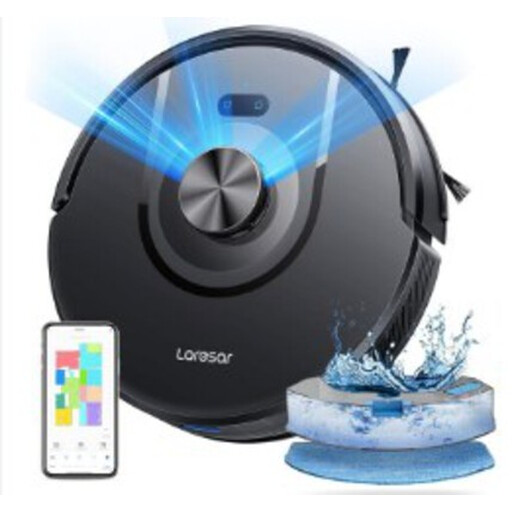
Why This Fits Their Persona: Ideal for users seeking a solid foundation of vacuuming and mopping features without investing in the premium tier. Suitable for apartments with predominantly hard floors.
Avoids the pitfall of poor navigation by using LiDAR technology for precise mapping and route planning, which is not a given in this price range.
Delivers high suction power at 5,000 Pa, making it suitable for pet hair on hard floors. The app control allows for setting up no-go zones.
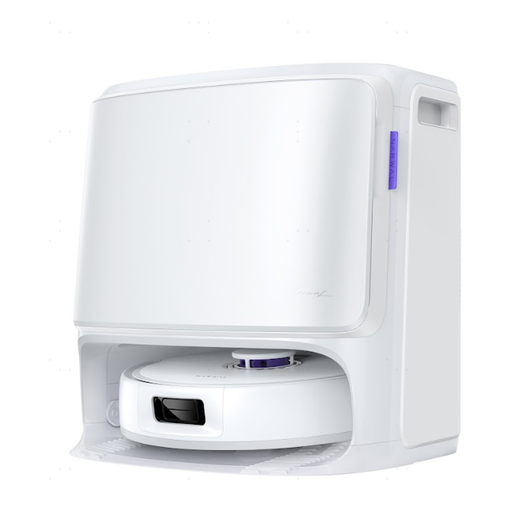
Why This Fits Their Persona: Specifically designed for pet owners whose main challenges are tangled hair in brushes and the need for thorough cleaning of corners and edges.
Directly addresses the pitfall of high-maintenance brushes with a dual anti-tangle system. According to the manufacturer, this reduces the hair tangle rate to nearly 0%, minimising manual cleaning effort.
The combination of 11,000 Pa suction power and a triangular mop design enables thorough cleaning of pet hair on carpets and precise cleaning of 90° corners.
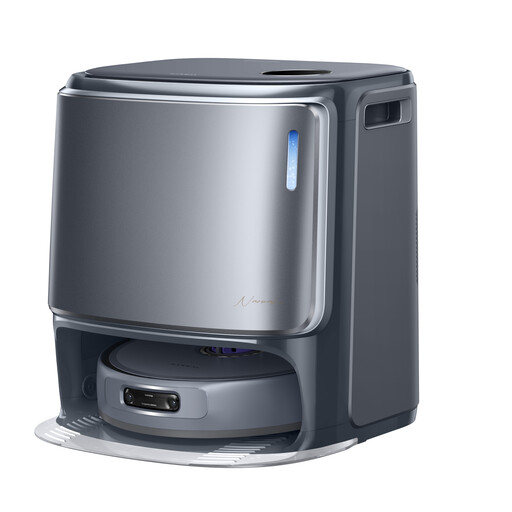
Why This Fits Their Persona: For tech-savvy users in larger households who want a nearly hands-off cleaning solution with advanced features and minimal maintenance.
Solves the problem of a high-maintenance station with a comprehensive system: The mops are washed with hot water and dried, and the dust bag holds dirt for up to 120 days. AI-powered obstacle avoidance with dual RGB cameras reliably prevents collisions.
The combination of 18,000 Pa suction power, an edge-to-corner mopping technology, and advanced AI control offers a superior level of cleaning autonomy and efficiency.
We have compiled a complete, up-to-date list of products that fully meet these strict selection criteria and UK/EU safety regulations.
1. How often does the dust bag in the self-emptying station need to be replaced? The frequency depends on the size of your home, the number of pets, and the general amount of dirt. For most modern devices with bag sizes between 2.5 and 3.5 litres, you can expect a replacement interval of 60 to 180 days. The companion app will typically notify you when a change is needed.
2. Can a robot vacuum with a mopping function damage delicate floors like parquet or laminate? Models with precise water flow control and an automatic mop-lifting feature are designed for such floors. The water volume can be adjusted via the app to prevent oversaturation. Additionally, the hot-air drying in the station ensures that wet mops are not left sitting on the floor. It is still advisable to check the manufacturer's specifications regarding suitability for specific floor types.
3. How well does obstacle avoidance work with cables and small objects? The effectiveness of obstacle avoidance is one of the most important differentiators. While basic models often fail here, advanced devices use a combination of Laser-Navigation (LiDAR), 3D structured light, and RGB cameras. These systems can recognise and actively navigate around objects like shoes, cables, or pet toys, significantly increasing the reliability of the cleaning process.