
Lieferung heute & morgen

Qualitätsgarantie

Willkommens-Angebote freischalten: KOSTENLOSE Lieferung | Bis zu 80 % RABATT | Kostenlose 30-Tage-JoyPlus-Testphase
App herunterladen
Rising summer temperatures can significantly impact concentration in the home office and, most importantly, a good night's rest. A fan provides relief, but many models produce a constant operating noise that is perceived as disruptive, especially in quiet environments. A loud fan, therefore, simply trades one problem for another.
This article serves as a guide. We will introduce a selection of fans designed for quiet operation and explain the key features you should consider when making your choice. Our goal is to provide you with an informed basis for your decision, ensuring a cool and peaceful summer.
To find the right model for your needs, several technical specifications are crucial. These three points will help you objectively evaluate a model's performance and convenience.
The noise level is the most important criterion for a fan in the bedroom. It is measured in decibels (dB). For reference, a whisper is about 30 dB, and a quiet library is around 40 dB. A quiet fan for nighttime use should not significantly exceed 30 dB on its lowest setting. Many modern devices feature a special sleep mode that gradually reduces fan speed and often turns off the display light to avoid disturbing your sleep.
A powerful tower fan is characterised by a high airflow rate, often specified in cubic metres per hour (m?/h) or as wind speed (m/s). High performance ensures fast and effective cooling of the room. To prevent cool air from being concentrated in one spot, an oscillation feature is important. An oscillating tower fan pivots horizontally, distributing the airflow evenly throughout the room. Some models also offer vertical tilt for even more targeted air circulation.
Features like a remote control and a timer significantly enhance user convenience. A tower fan with a remote control allows you to adjust settings like speed, mode, or oscillation conveniently from your bed or desk. A fan with a timer offers the ability to set an automatic shut-off time, for instance, after a few hours once you have fallen asleep. This saves energy and ensures you don't get cold during the cooler morning hours.
Based on the criteria mentioned above, we have compiled a selection of different fan types that cover various requirements and applications.
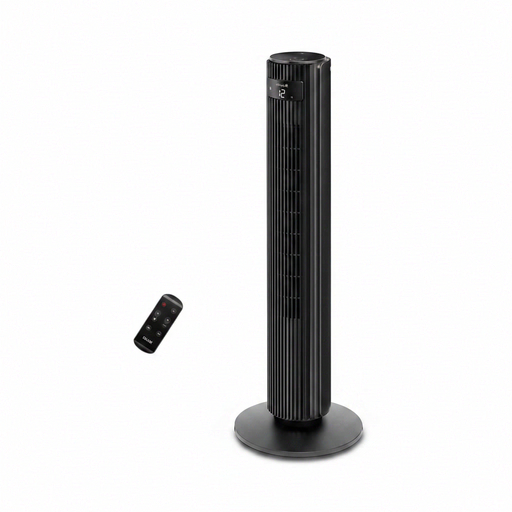
Why It Stands Out: This tower fan from Levoit combines powerful airflow with very quiet operation. Its built-in DC motor enables a high wind speed of up to 7.9 m/s while maintaining a low noise level of just 25 dB in sleep mode. This combination makes it an excellent choice for noise-sensitive environments.
Advantages:
Who It's For: Individuals looking for a powerful yet very quiet fan for the bedroom or living room who value modern features and precise control. The Levoit fan is an option for quality-conscious users.
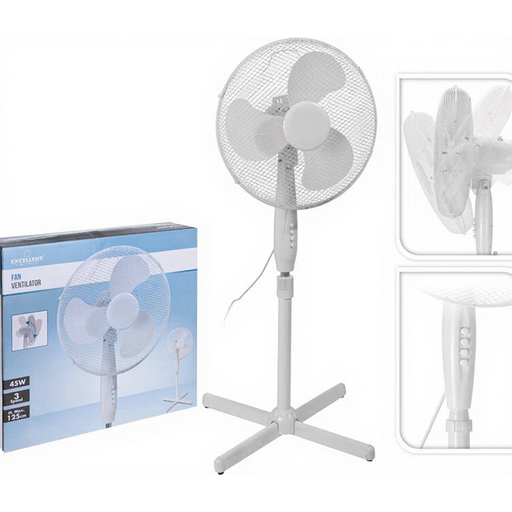
Why It Stands Out: This pedestal fan is a classic and functional solution for room ventilation. With its 45-watt motor and three speed settings, it offers solid cooling performance. Its flexibility, thanks to the adjustable height and tiltable head, makes it a versatile everyday companion.
Advantages:
Who It's For: Users who need a straightforward, effective, and budget-conscious fan for living spaces or the office and can do without digital extras like a remote control or special modes.
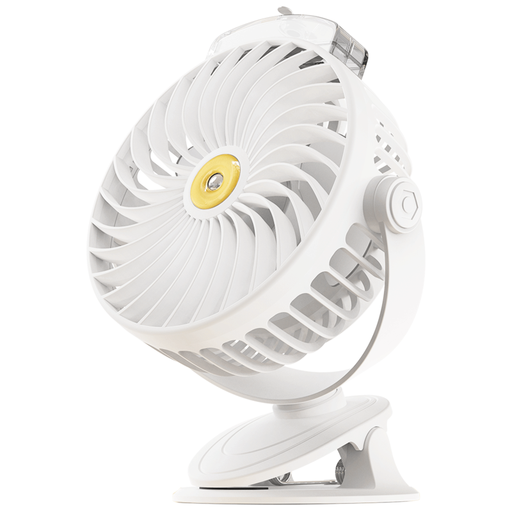
Why It Stands Out: This model stands out for its compactness and versatility. Thanks to its sturdy clip, it can be attached to desk edges, shelves, or bed frames, or used as a freestanding fan. A special feature is its two selectable misting modes, which provide extra refreshment.
Advantages:
Who It's For: Ideal for personal cooling at the workplace, while travelling, or in small rooms. The clip function makes it practical for anyone looking for a targeted, space-saving solution.
For specific requirements, such as targeted cooling for home electronics or high-performance computer components, a different type of fan may be necessary. Discover our selection of high-performance PC fans to ensure the optimal temperature for your devices.
A fan is considered quiet if its operating noise is below 40 decibels (dB) on the lowest setting. Models with levels below 30 dB are perceived as especially quiet and are well-suited for bedroom use, as their noise level is comparable to a soft whisper.
The main difference lies in the design and the method of air circulation. A tower fan has a slim, vertical design and draws air in from the side to blow it out through an elongated opening. This saves space. A pedestal fan uses large rotor blades to generate a wider, often more powerful airflow, but it requires a larger footprint.
Yes, modern fans are designed for extended operation. A fan with a timer offers added safety and convenience, as it automatically shuts off after a preset time. This prevents the device from running all night and helps save energy. It is still recommended to follow the manufacturer's instructions for use and safety.