
Lieferung heute & morgen

Qualitätsgarantie

Willkommens-Angebote freischalten: KOSTENLOSE Lieferung | Bis zu 80 % RABATT | Kostenlose 30-Tage-JoyPlus-Testphase
App herunterladen
The selection of 3D printer filament can be overwhelming. With so many different materials, colours, and properties, it's challenging to identify the right option for your next project. This guide is designed to provide clear direction and help you make an informed decision based on your project's requirements—whether it's a functional prototype or a decorative object.
Before making a choice, there are several technical aspects to consider. These criteria will help you find the filament that best suits your printer and your project.
The choice of material is the most fundamental decision. The most common options have distinct properties:
The filament diameter must perfectly match your 3D printer. Most models on the market use a 1.75 mm diameter. A low diameter tolerance (e.g., ±0.02 mm) is a hallmark of quality, ensuring consistent extrusion and reducing the risk of nozzle clogs. Always check your printer's specifications before purchasing.
The standard size for filament rolls is the 1kg spool, which offers a good balance between quantity and manageability. Neat and even winding on the spool is crucial to prevent the filament from tangling during printing, which can lead to print failures.
Here is a selection of filaments suitable for various applications and experience levels.
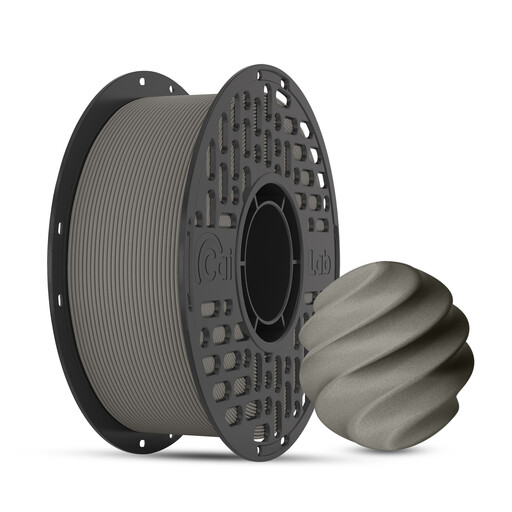
Why it stands out: This PETG Carbon filament is reinforced with short carbon fibres. This infusion gives printed objects exceptional stiffness and a matte, textured surface that effectively hides layer lines.
Benefits:
Who it's for: Advanced users and professionals who need lightweight yet highly durable parts, such as drone frames, brackets, or technical prototypes.
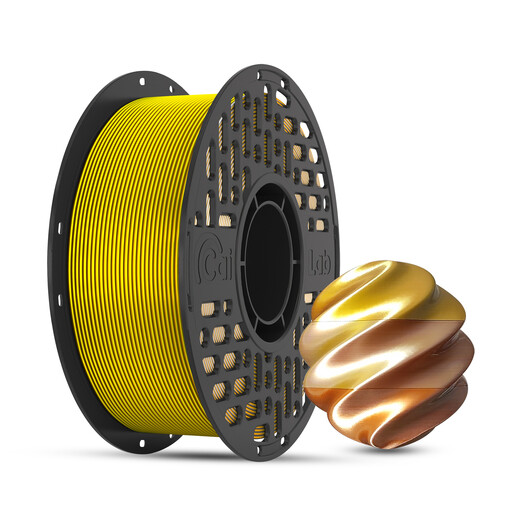
Why it stands out: This Silk PLA combines three colours (Gold, Silver, and Copper) into a single filament strand. Depending on the viewing angle and the model's geometry, it creates a fascinating, iridescent colour gradient that gives every print a unique look.
Benefits:
Who it's for: Creatives, artists, and hobbyists who want to produce decorative objects, figurines, or gifts with a special visual flair.
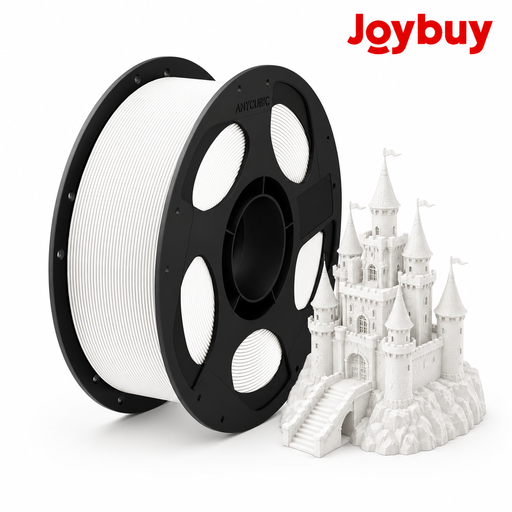
Why it stands out: The Anycubic filament is distinguished by its very tight diameter tolerance of ±0.02 mm. According to the manufacturer, this precision ensures a highly reliable and consistent material feed, which minimises the likelihood of print errors.
Benefits:
Who it's for: Ideal for beginners and for everyday use. It's a reliable all-round material for a wide range of applications, from simple models to detailed prints.
If you're aiming for a special aesthetic for your next project, there are other exciting options besides Silk PLA. For models that need a subtle shimmering effect, a filament with glitter particles could be the right choice.
? Discover our selection of glitter PLA filament
PLA is stiffer and easier to print but is less heat-resistant and more brittle. It is well-suited for decorative objects and prototypes not subjected to mechanical stress. PETG is more flexible, durable, and resistant to chemicals and heat. It is the better choice for functional parts that require a certain level of toughness.
Most filaments, especially PLA and PETG, are hygroscopic, meaning they absorb moisture from the air. Moist filament leads to poor print quality (e.g., bubbling, brittle prints). Therefore, always store your filament spools in a cool, dry place, ideally in a resealable bag with a desiccant (silica gel).
No, not every one. Although 1.75mm is the most common standard for desktop 3D printers, some models use filament with a 2.85 mm diameter. Therefore, always check your printer's technical specifications before buying new 3D printing material to avoid incompatibility.