
Lieferung heute & morgen

Qualitätsgarantie

Willkommens-Angebote freischalten: KOSTENLOSE Lieferung | Bis zu 80 % RABATT | Kostenlose 30-Tage-JoyPlus-Testphase
App herunterladen
A tent that pitches itself in seconds—the promise of a pop-up tent is alluring for camping novices, festival-goers, and families. But the post-purchase reality is often quite different: the supposed 4-person tent turns out to be a cramped sleeping space for two, the first rain shower seeps through the seams, or packing it away becomes a test of patience. Before you make a decision, it's crucial to understand the most common pitfalls that lead to buyer's remorse.
The 3 Most Common Traps When Buying a Pop-Up Tent:
To avoid disappointment, you should base your selection on objective criteria. Three technical features are especially important.
The waterproofness of a tent fabric is measured in millimetres (mm) of hydrostatic head. This value indicates how much water pressure the material can withstand before moisture penetrates.
Ensure that not only the flysheet but also the groundsheet has a high hydrostatic head rating to protect against moisture from below.
Check the floor dimensions carefully. For four people, the width should be at least 240 cm to ensure some level of comfort. At the same time, the pack size is crucial. Most pop-up tents fold down into a large, flat disc. Measure your car's boot or consider the journey to the festival site—a disc with a diameter over 90 cm can be unwieldy. A quick-pitch tent should also be practical to transport.
A frequently underestimated problem is condensation forming on the inside of the tent. Good ventilation is therefore essential. Look for features such as:
A double-wall automatic tent ensures better air circulation between the two layers, significantly reduces condensation, and improves the sleeping climate.
Here are some models tailored to different needs that take the above criteria into account.
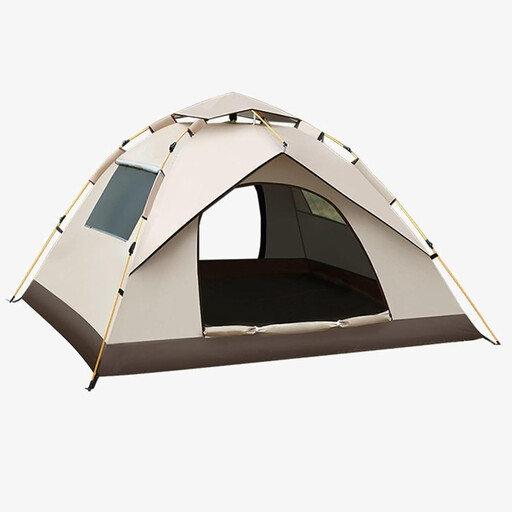
Why This Fits Their Persona: Ideal for users where every second counts. The hydraulic system allows for an extremely fast setup, perfect for arriving at the festival grounds or for a spontaneous weekend trip.
With a stated hydrostatic head of 3,000 mm, this tent offers reliable rain protection that surpasses many basic pop-up models. The two doors and windows improve ventilation.
The key advantage is the automatic hydraulic system for a setup that takes just seconds. The design is conceived as an instant tent and delivers on this promise.
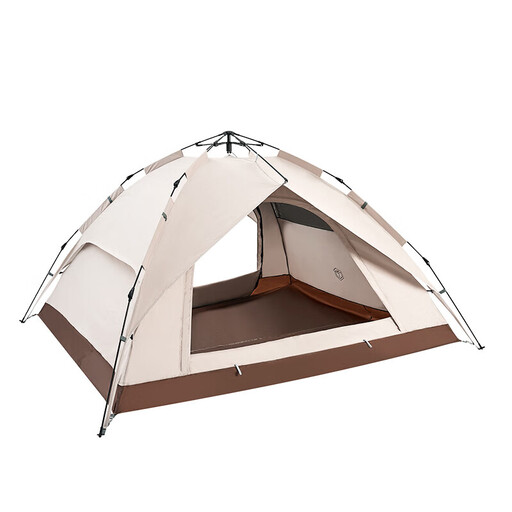
Why This Fits Their Persona: Suitable for small families or couples who value a comfortable interior climate. The double-wall construction is a clear comfort feature for overnight stays.
This model directly addresses the problem of condensation with its double-wall design. With a 3,000 mm hydrostatic head, it is also well-equipped for changeable weather.
The main advantage is the improved insulation and significant reduction in condensation, which greatly enhances sleeping comfort compared to single-wall tents.
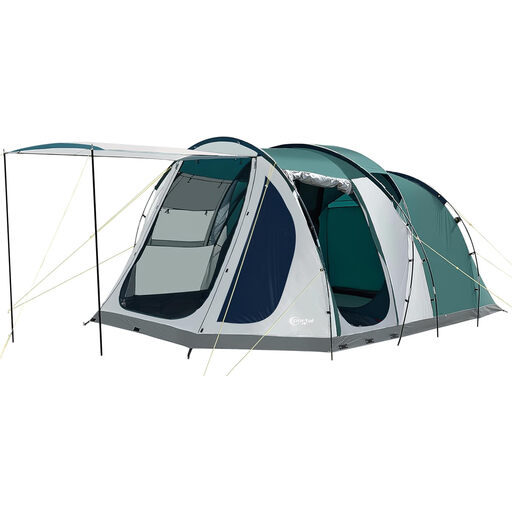
Why This Fits Their Persona: For families or groups who find a 4-person pop-up tent too cramped and are willing to accept a 10-15 minute setup time in exchange for significantly more living space and comfort.
This tent decisively solves the capacity trap by offering a separate living area (5.8 m?) and a sleeping area (7.05 m?). Here, 4 people with gear can actually fit comfortably.
The clear advantage is the enormous amount of space, including standing height (200 cm) and a separate living area. It's not a pop-up tent, but it is a worthwhile alternative for comfort-focused family camping.
We have compiled a complete, up-to-date list of products that fully meet these strict selection criteria and all relevant safety standards.
Waterproofing depends on the hydrostatic head. A rating of 2,000 mm to 3,000 mm is sufficient for most situations in Europe. Look for this value in the product description and for sealed seams to ensure your tent stays dry in the rain.
Although it can seem difficult at first, packing it away usually follows a simple logic: the tent is twisted into a figure "8," and then the two resulting circles are folded on top of each other. It's advisable to watch a tutorial video or practice the process at home before your first trip.
Usually, not comfortably. The "4-person" rating is a technical maximum. For a pleasant camping experience with gear, you should use a 4-person model for 2 to 3 people. If you are camping with four adults, a larger tent (e.g., for 5-6 people) or a tunnel tent with separate storage space is the more practical choice.