
Lieferung heute & morgen

Qualitätsgarantie

Willkommens-Angebote freischalten: KOSTENLOSE Lieferung | Bis zu 80 % RABATT | Kostenlose 30-Tage-JoyPlus-Testphase
App herunterladen
As a Joybuy Product Recommendation Officer, my mission is to provide you with clear and objective information. When choosing an SD card for 4K recording, the sheer volume of technical specs and marketing jargon can be overwhelming. The wrong storage medium can, in the worst-case scenario, lead to missed moments, dropped video recordings, or long waits while transferring data. This guide is designed to help you make an informed decision that meets the demands of your modern camera.
Before you make a decision, it's crucial to understand the technical markings on a memory card. These three criteria are decisive for performance in high-resolution recording.
The Video Speed Class, identifiable by the "V" symbol, indicates the guaranteed minimum sustained write speed. For smooth 4K video recording without dropped frames, this is the most important value. A V30 memory card guarantees a constant write speed of at least 30 MB/s. This is the established standard for most 4K applications, including recording at 60 frames per second (fps) at common bitrates. Cards rated V60 (60 MB/s) or V90 (90 MB/s) offer additional headroom for professional cameras with extremely high data rates.
Manufacturers often advertise high read speeds (e.g., "up to 205 MB/s"). This value is relevant for your post-shoot workflow—that is, how quickly you can transfer your photos and videos from the card to a computer.
However, for recording performance itself, the write speed is what counts. A fast SD card with a high write speed allows the camera's buffer to clear quickly during burst shooting in RAW format. This enables you to capture longer image sequences without interruption. For 4K video, a high and stable write speed prevents the recording from stopping unexpectedly because the card can't process the incoming data fast enough.
The choice of capacity depends directly on your use case. A memory card for photography in RAW format, where a single file can take up 30 MB or more, fills up quickly. Videographers shooting in 4K need even more space.
Modern cameras typically use the SDXC (Secure Digital eXtended Capacity) standard, which supports capacities from over 32 GB up to 2 TB. Ensure your camera is compatible with this standard.
Based on the technical requirements for modern cameras, we have compiled a selection of memory cards that stand out for their performance in 4K videography and demanding photography.
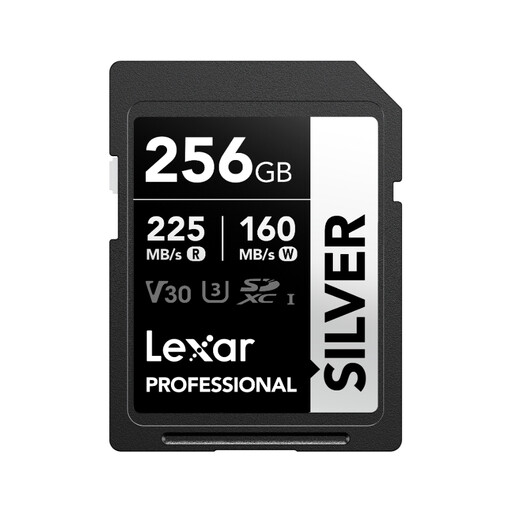
Why it stands out: This card combines a very high capacity with a remarkable write speed for the UHS-I standard. It is designed to push the limits of the SDXC UHS-I interface.
Advantages:
Who it's for: Professional photographers and videographers who produce large amounts of data at events, weddings, or on their travels and prefer a single, reliable card with high capacity and speed.
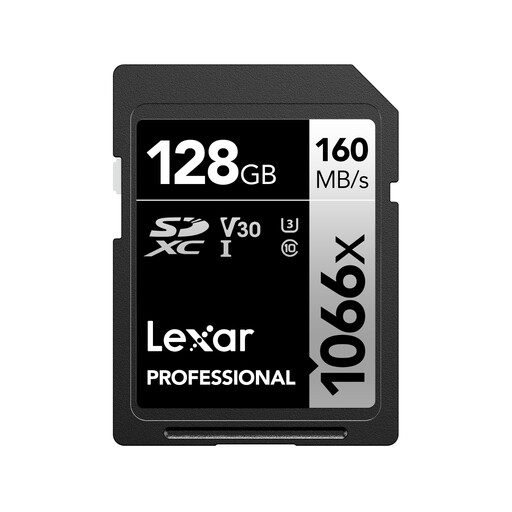
Why it stands out: The Professional 1066x series from Lexar is designed as a rugged workhorse for daily use in DSLR and mirrorless cameras, offering well-balanced performance.
Advantages:
Who it's for: Content creators and ambitious hobbyist photographers looking for a durable and high-performance memory card for their camera that works reliably for both photography and video projects.
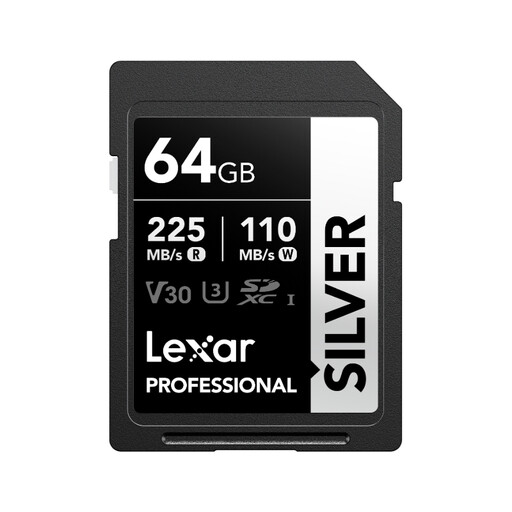
Why it stands out: This model offers the high read speed of the Silver series in a smaller capacity, making it an excellent choice for specific projects or as a fast secondary card.
Advantages:
Who it's for: Photographers who primarily shoot stills and occasionally record 4K video, as well as users who prefer multiple smaller cards over one large one to minimise the risk of data loss from a single card failure.
If the models presented here don't exactly match your requirements, or if you are looking for memory cards for other devices like smartphones, drones, or action cameras, you can find a broader selection in our main category for storage media.
Discover More Mobile Phone Memory Cards
The V30 rating stands for "Video Speed Class 30." It guarantees that the memory card can maintain a minimum sustained write speed of 30 megabytes per second (MB/s). This standard is crucial for ensuring that 4K video is recorded without stutters or sudden stops.
For most cameras that record 4K video with standard compression (e.g., at 24, 30, or 60 fps), a card with a V30 classification (i.e., 30 MB/s) is sufficient. Cameras that record in professional formats with very high bitrates (e.g., All-Intra) may benefit from V60 (60 MB/s) or V90 (90 MB/s) cards to ensure absolutely stable performance.
An SDXC UHS-I card is backwards compatible and works in most modern devices. It can be used in an SDHC-compatible device, provided the device supports the card's capacity. In a camera with a faster UHS-II slot, a UHS-I card will also work, but only at the maximum speed of the UHS-I interface. To leverage the full performance of a UHS-II card, a UHS-II compatible device is also required.