
Lieferung heute & morgen

Qualitätsgarantie

Willkommens-Angebote freischalten: KOSTENLOSE Lieferung | Bis zu 80 % RABATT | Kostenlose 30-Tage-JoyPlus-Testphase
App herunterladen
Planning a camping trip with family or friends builds anticipation for adventures in nature and creating memories together. A key prerequisite for a successful time outdoors is choosing the right shelter. Finding a 5-person tent that offers enough space, comfort, and reliable weather protection can be a challenge given the many options available. This guide is designed to help you make an informed decision by explaining key features and presenting a selection of models for various needs.
To identify the right tent for your needs, you should consider several technical specifications and features. These criteria will help you objectively evaluate a tent's performance and comfort.
A crucial factor for comfortable camping in regions with variable weather is weather resistance. The hydrostatic head rating, measured in millimetres (mm), indicates how waterproof the outer tent (flysheet) and the groundsheet are. According to European standards, a tent is considered waterproof from a hydrostatic head of 1,500 mm. For reliable protection, even during sustained or heavy rain, a rating of 3,000 mm or more is recommended for the flysheet. A waterproof camping tent should ideally also feature sealed seams and a durable, bathtub-style floor to prevent moisture from seeping in from the ground.
For a group tent designed for five people, the interior layout is just as crucial as the raw sleeping footprint.
A 5-person tunnel tent is often a great choice due to its design, as it offers an excellent space-to-weight ratio and creates a lot of usable longitudinal space.
A good ventilation system is essential to minimise condensation buildup inside the tent. Look for sheltered vents in the roof or on the sides, as well as mesh panels on doors and windows. These allow for continuous airflow without letting insects in.
The tent's material affects its durability and suitability for different seasons. Polyester is a common material for flysheets because it is lightweight, UV-resistant, and water-repellent. A sturdy frame made of fibreglass or aluminium provides the necessary stability. Models designed for year-round use, often called 4-season tents, use more robust materials and a sturdier construction to withstand wind and harsh weather.
Based on the criteria mentioned, here are some options suitable for different camping scenarios.
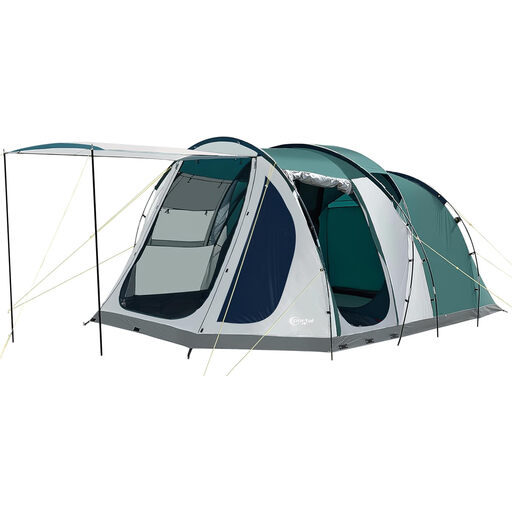
Why it stands out This model is a classic family tent with a tunnel design that meets the key requirements for comfort and weather protection. With a clear division between a 7.05 m? sleeping area and a 5.8 m? living area, it offers a thoughtful layout for families or small groups.
Advantages
Who is it for? This tent is a suitable choice for families and groups of up to five people looking for a spacious and weatherproof tent for car camping. It is well-suited for longer stays at a campsite where comfort and reliable protection from unpredictable weather are priorities.
A large tent isn't always the only solution. Sometimes, specialised or supplementary products are more practical for specific situations.
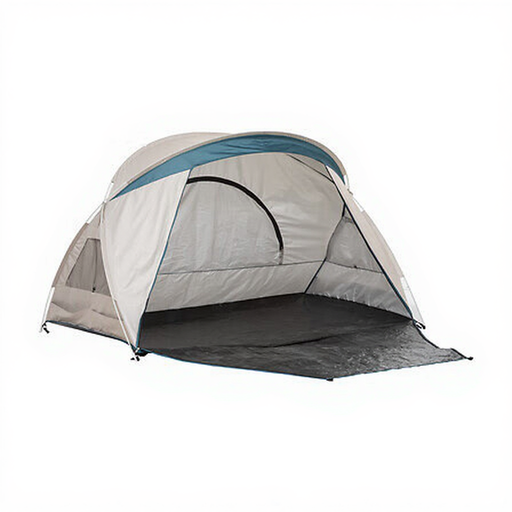
Why it stands out This product is not a camping tent for overnight stays, but a beach shelter. Its main purpose is quick and easy setup to provide protection from the sun and wind during day trips.
Advantages
Who is it for? Ideal for campers who take day trips from the campsite to the beach or lake and need a lightweight, quick-to-pitch sunshade for short stays. It serves as a complement to the main tent.

Why it stands out This one-person tent combines a cot with a tent structure. It is not a solution for a group of five, but it can be a useful addition to create privacy.
Advantages
Who is it for? For groups or families who want to create a separate and comfortable sleeping option for one person alongside their large group tent.
The products presented cover specific use cases. If you are looking for a lightweight and quick-to-pitch solution for sunny days by the water, another category might be more relevant for you.
Looking for a lighter option for the beach? Discover our selection of beach tents.
The hydrostatic head is a unit of measurement for the waterproofness of technical fabrics like tent flysheets. The value indicates how many millimetres of water can rest on a square centimetre of the fabric before moisture penetrates. A higher number means greater waterproofness.
The manufacturer's capacity rating often refers to the maximum number of sleeping spots without luggage. For more comfort, especially on multi-day trips with gear, it is advisable to choose a tent rated for one more person than you need, or to look for a model with a generous vestibule. A footprint of at least 1.5 m? per person plus storage space is a good rule of thumb.
A tunnel tent offers a very large usable interior space for a relatively low weight. Thanks to the steep side walls, very little space is lost. When pitched correctly with the narrow side facing the wind and properly guyed out, tunnel tents are also very wind-stable. Their elongated shape is ideal for dividing the interior into sleeping and living areas.