
Lieferung heute & morgen

Qualitätsgarantie

Willkommens-Angebote freischalten: KOSTENLOSE Lieferung | Bis zu 80 % RABATT | Kostenlose 30-Tage-JoyPlus-Testphase
App herunterladen
Choosing a new hob is a critical decision that impacts the functionality and comfort of your kitchen. A 60 cm induction hob is a popular choice due to its efficiency, speed, and safety. However, the market is flooded with models whose technical specifications and marketing promises often create more confusion than clarity. Before you make a purchase, it's crucial to understand the most common pitfalls that can lead to dissatisfaction and unexpected costs.
As your Joybuy Product Recommendation Officer, I'll help you navigate these hurdles and make an informed choice that perfectly matches your cooking habits and your kitchen's specific setup.
Many buyers focus on the price or on individual, heavily advertised features, overlooking crucial technical details. This often leads to disappointment in daily use.
To avoid the problems mentioned above, you should carefully check three technical aspects. These form the basis for energy-efficient cooking and long-term user satisfaction.
This is the most important technical point. An independent hob is operated and connected separately from the oven. Check the specified total power (in watts or kilowatts):
The standard width of 60 cm usually offers space for four cooking zones. The crucial question is how flexibly they can be used:
Modern induction hobs offer a range of features that make everyday life easier and safer:
Based on the criteria mentioned, we have identified models that offer a suitable solution for different user profiles.
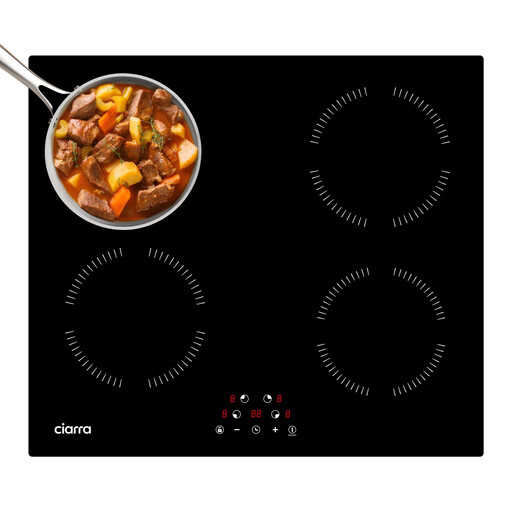
Why This Fits Their Persona: This model focuses on the essential functions for daily cooking. With four zones, 9 power levels, and all key safety features, it provides a solid foundation for households looking for a reliable and uncomplicated solution without paying for rarely used premium features.
The 6000 W power rating is transparent and practical for a 4-zone model. The standard cutout dimensions (560x490 mm) ensure straightforward integration into most kitchen units, avoiding nasty surprises during installation.
Offers a comprehensive safety package including a child lock, residual heat indicator, and automatic pan detection. The intuitive touch control panel allows for easy operation.
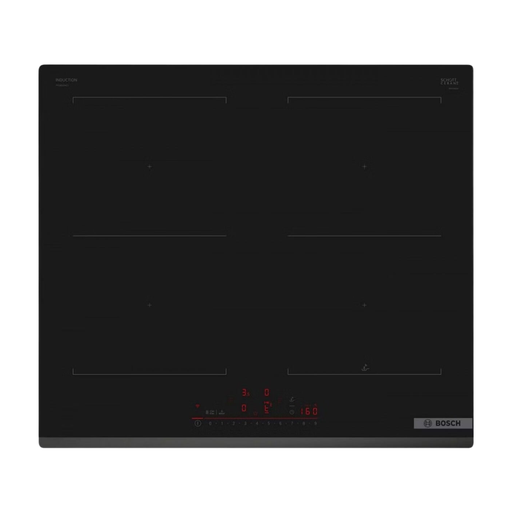
Why This Fits Their Persona: For chefs who regularly use large or specialty cookware like roasters and grill plates, flexibility is key. The CombiZone function and the high total power of 7400 W provide the necessary freedom and power for demanding dishes and creative cooking projects.
This model directly solves the problem of rigid cooking zones. The CombiZone adapts to the size of the cookware and ensures even heat distribution, significantly expanding the kitchen's functionality.
The CombiZone enables the use of large cookware. The PowerBoost function on each zone ensures extremely fast heating. The DirectSelect control panel allows for intuitive and direct selection of power levels.

Why This Fits Their Persona: When multiple dishes are often prepared at the same time, high and flexibly available power is crucial. With 7200 W of total power and a booster function on all four zones, this hob is designed to deliver consistent performance even at full capacity.
This model addresses the power limitation pitfall. By combining high total power with a booster function on each of the four zones, it ensures that cooking speed doesn't suffer, even when cooking for the whole family.
Very high total power of 7200 W. The booster function is available for all four cooking zones, offering maximum flexibility when preparing multiple dishes.
We have compiled a complete, up-to-date list of products that fully meet these strict selection criteria and German safety regulations.
For induction hobs, you need cookware with a ferromagnetic base. You can easily test if your pot or pan is suitable with a magnet: if it sticks to the bottom of the pan, the cookware is induction-compatible. Materials like cast iron, enamelled steel, and special stainless steel alloys generally work without issue. Pure aluminium, copper, or glass are not compatible.
Yes. With induction technology, heat is generated directly in the base of the cookware, rather than by heating the hob surface first. This means very little energy is lost to the surroundings. The efficiency rating is around 90%, whereas it is significantly lower for ceramic hobs (approx. 60%) and gas hobs (approx. 50%). This leads to shorter cooking times and lower electricity consumption.
An independent hob is a built-in induction hob that has its own controls and can be installed and operated separately from an oven. Unlike a hob that is tethered to an oven and controlled by its knobs, an independent model offers maximum flexibility in kitchen planning. For example, you can place it on a kitchen island while the oven is built into a tall cabinet at eye level.