
Lieferung heute & morgen

Qualitätsgarantie

Willkommens-Angebote freischalten: KOSTENLOSE Lieferung | Bis zu 80 % RABATT | Kostenlose 30-Tage-JoyPlus-Testphase
App herunterladen
Constantly dead batteries in remote controls, children's toys, or controllers are not only inconvenient but also a long-term drain on your wallet and the environment. Switching to AA batteries, also known as Mignon batteries, is a sustainable and cost-effective alternative. However, the market offers a wide variety of technologies, capacities, and features.
This guide serves as a point of reference. It explains the key differences between the available models and presents a selection of AA rechargeable batteries to help you make an informed decision for your needs.
Choosing the right battery largely depends on its intended use. Three key criteria will help you identify the best option: technology, capacity, and charge cycles.
The two most common technologies for AA batteries are Nickel-Metal Hydride (NiMH) and Lithium-ion (Li-ion).
A battery's capacity is measured in milliampere-hours (mAh) and determines how long it can power a device before needing to be recharged.
The number of charge cycles indicates how many times a battery can be recharged before its capacity noticeably degrades. A higher number of cycles means a longer lifespan, resulting in greater cost-effectiveness and sustainability. Models with over 1,000 charge cycles are common today and can replace thousands of disposable batteries over their lifetime.
Based on the criteria mentioned, we have compiled a selection of models that cater to different user profiles.
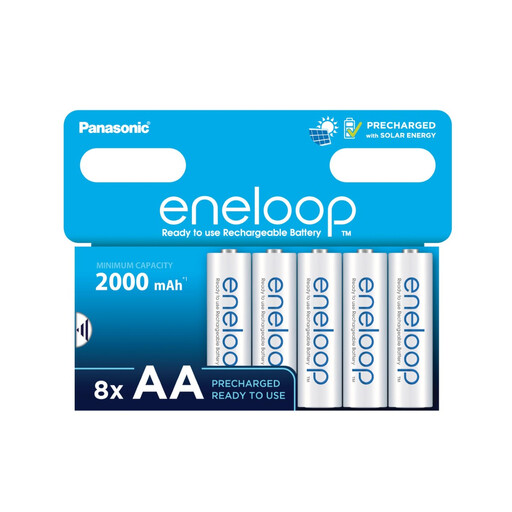
Why this model stands out: The eneloop batteries are renowned for their durability and reliability. According to the manufacturer, they can be recharged up to 2,100 times and have an extremely low self-discharge rate—retaining up to 70% of their original charge even after 10 years in storage.
Advantages:
Who it's for: Users seeking a durable, reliable, and sustainable power solution for a wide range of everyday devices, from TV remotes to game controllers.
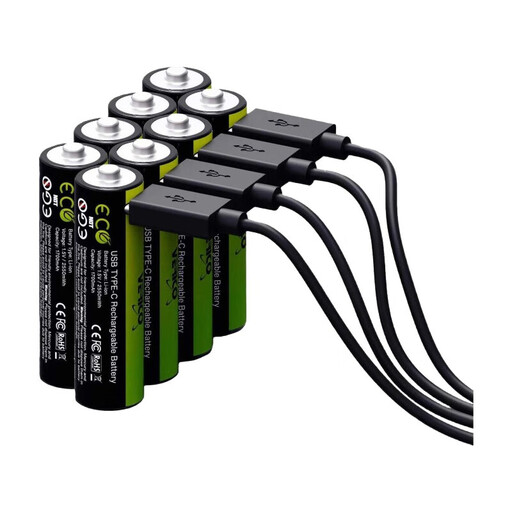
Why this model stands out: The Verico LoopEnergy batteries combine the benefits of Li-ion technology with modern charging convenience. They deliver a constant voltage of 1.5 V and feature an integrated USB-C port, allowing them to be charged with a standard USB power adapter, a power bank, or a laptop.
Advantages:
Who it's for: Tech enthusiasts and users of devices that require a stable 1.5-volt supply. Ideal for anyone who values the convenience of direct charging without an extra charger.
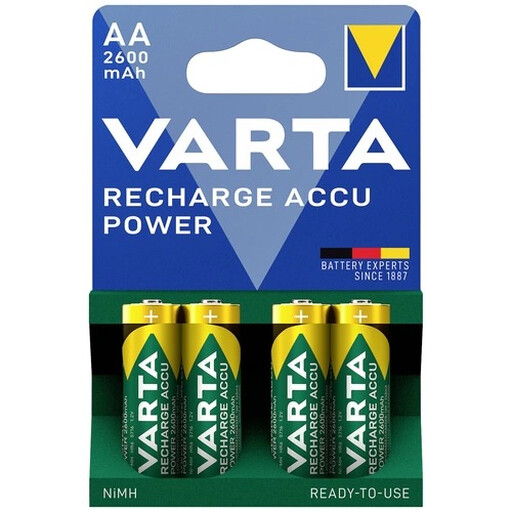
Why this model stands out: With a capacity of 2600 mAh, the Varta batteries from the Recharge Accu Power series are designed for performance. They are perfect for devices with high and constant energy demands and offer low self-discharge thanks to "Ready2Use" technology.
Advantages:
Who it's for: Users who need maximum runtime for power-hungry devices like digital cameras, flash units, baby monitors, or remote-controlled cars.
If the models presented here don't perfectly match your needs, you might find the right solution in our broader selection. Every device has specific power requirements.
? Explore our full range of rechargeable batteries
The nominal voltage of NiMH batteries is 1.2 V, which is sufficient for the vast majority of devices designed for AA batteries. Li-ion batteries maintain their 1.5 V voltage stably until just before they are fully discharged. This can be beneficial for devices that are sensitive to voltage fluctuations and might incorrectly report a low battery level at 1.2 V.
Generally, yes. If a device is designed to run on standard AA disposable batteries, it will usually work with AA rechargeable batteries as well. For very old or highly sensitive equipment, it's a good idea to check the user manual. For devices that explicitly require 1.5 V, Li-ion batteries are an excellent choice.
Store batteries in a cool, dry place at room temperature. Extreme heat or cold should be avoided. For long-term storage, it is often recommended to store the batteries with a partial charge (around 40–70%) rather than fully charged or empty. Always refer to the manufacturer's specific instructions as well.