
Lieferung heute & morgen

Qualitätsgarantie
App herunterladen
Kategorien
The selection of AAA rechargeable batteries, also known as micro batteries, is based on an analysis of technical parameters and the intended application. Instead of single-use batteries, rechargeable AAA batteries offer a more cost-effective and environmentally friendly alternative, especially for devices with high energy demands. The choice of a specific model depends on factors such as chemical composition, capacity, nominal voltage, and additional features like integrated charging ports.
A battery's performance and suitability are determined by its technical specifications. The following criteria are relevant for making an informed purchasing decision.
The most common technologies for rechargeable AAA batteries are Nickel-Metal Hydride (NiMH) and Lithium-Ion (Li-Ion).
NiMH (Nickel-Metal Hydride): This is a well-established technology that often provides the highest capacity ratings, measured in milliampere-hours (mAh). NiMH batteries have a nominal voltage of 1.2 volts. Modern variants are often pre-charged and feature low self-discharge, ensuring they remain ready for use even after extended storage. They are a reliable choice for most standard applications, from toys to remote controls.
Li-Ion (Lithium-Ion): Li-Ion based AAA batteries are a more recent development. Their key feature is a constant 1.5V output voltage, which matches that of single-use alkaline batteries. This can be advantageous for voltage-sensitive devices that might prematurely signal a low battery level with the lower 1.2V of NiMH batteries. Many of these models, such as USB-C batteries, include an integrated charging port, making a separate charger redundant.
Capacity indicates how much energy a battery can store. It is specified in milliampere-hours (mAh) or milliwatt-hours (mWh).
Capacity (mAh) = Capacity (mWh) / Voltage (V). Therefore, a 900mWh battery at 1.5V has a capacity of 600mAh (900 / 1.5).Most devices are designed for the 1.5V of single-use batteries. NiMH batteries with 1.2V work flawlessly in the vast majority of these devices. However, for some specific applications, such as certain medical equipment or high-performance flashlights, the stable 1.5V from Li-Ion batteries can ensure more consistent performance.
Based on technical specifications and practical utility, we present a selection of rechargeable AAA batteries.
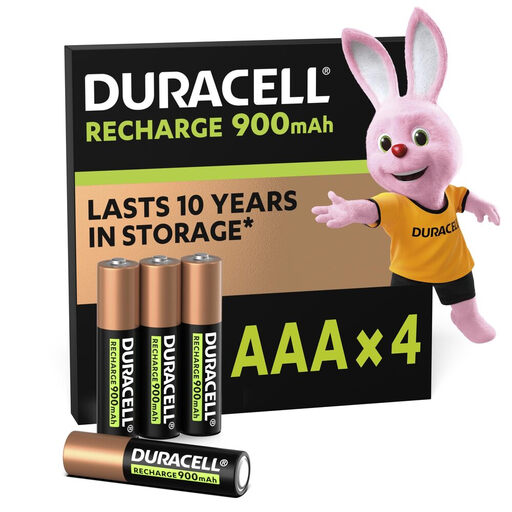
Product Feature Analysis: These NiMH batteries from Duracell offer a high capacity of 900mAh. According to the manufacturer, they are designed for a long life per charge within the Duracell product range. They come pre-charged and retain up to 80% of their charge for 12 months when not in use. The guaranteed 10-year shelf life highlights the product's reliability.
Advantages:
Best Suited For: Users seeking a reliable and long-lasting power solution for high-consumption devices like game controllers, cameras, or high-performance children's toys.
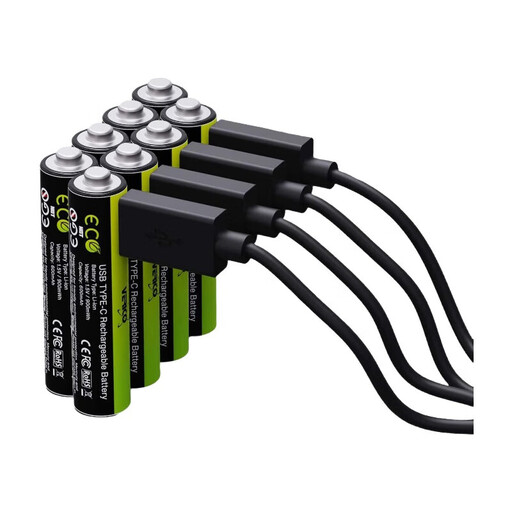
Product Feature Analysis: The VERICO LoopEnergy batteries are based on Li-Ion technology and deliver a constant 1.5V voltage. Their capacity is rated at 900mWh, which corresponds to 600mAh. The standout feature is the integrated USB-C port, which allows for charging without a separate charger. Using the included 4-in-1 cable, four batteries can be charged simultaneously in about 1-2 hours. Protection mechanisms against overcharging, deep discharge, and short circuits are built-in.
Advantages:
Best Suited For: Tech-savvy users who appreciate the convenience of direct charging and prefer a stable 1.5V supply for their devices. Ideal for travel and mobile use.
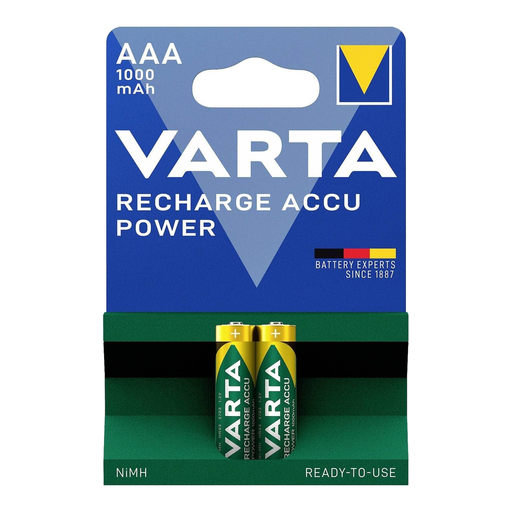
Product Feature Analysis: These NiMH batteries from VARTA are distinguished by their particularly high capacity of 1000mAh. They are designed for maximum runtime in devices with extremely high energy demands. As is common with modern NiMH batteries, they come pre-charged and are ready for immediate use ("Ready to Use"). The standard voltage is 1.2V.
Advantages:
Best Suited For: Users with the highest demands for battery life, especially amateur and professional photographers who need to supply their camera or external flash units with reliable power.
Rechargeable batteries require access to a power source. In situations where charging from the grid is not possible, portable power solutions offer flexibility. A Rechargeable Power Bank can not only charge USB-C batteries directly but also power classic NiMH batteries on the go via a USB charger, making it a valuable addition for mobile independence.
1. What is the difference between NiMH and Li-Ion AAA batteries? The primary difference lies in the cell chemistry, which results in different characteristics. NiMH batteries have a nominal voltage of 1.2V and often offer higher capacities (mAh). Li-Ion batteries deliver a constant 1.5V, matching that of single-use batteries, and frequently include integrated charging electronics like a USB-C port.
2. Can I use AAA rechargeable batteries in any device that requires AAA batteries? In most cases, yes. The 1.2V from NiMH batteries is sufficient for the majority of devices. However, a few particularly voltage-sensitive devices might function better with the constant 1.5V supplied by Li-Ion batteries or single-use batteries. Checking the device's user manual can provide clarity.