
Lieferung heute & morgen

Qualitätsgarantie

Willkommens-Angebote freischalten: KOSTENLOSE Lieferung | Bis zu 80 % RABATT | Kostenlose 30-Tage-JoyPlus-Testphase
App herunterladen
Finding the right air purifier can quickly become overwhelming. Many promise clean air, but not every device delivers on its advertising promises. As a Joybuy Product Recommendation Officer, I see daily which features truly matter and where the most common pitfalls lie. Before you make a decision, you should know the three most common mistakes that lead to dissatisfaction and unnecessary expenses.
To avoid these pitfalls, focus on objective performance data. These three metrics are essential for making an informed decision.
The CADR is the most important independent performance indicator. It is measured in cubic meters per hour (m?/h) and describes how much clean air a device delivers per hour. A higher CADR means faster and more effective air purification.
A multi-stage filtration system is standard for comprehensive purification. Look for these three components:
Modern devices offer convenience features that simplify daily use. A smart air purifier with an auto mode uses particle sensors (e.g., PM2.5) to automatically adjust the fan speed to the current air quality. This saves energy and ensures the device runs only as loud as necessary. Check the decibel ratings for different levels, especially for the sleep mode, which should ideally be below 25 dB.
Here are a few models that represent a considered choice for specific user profiles, based on objective criteria.
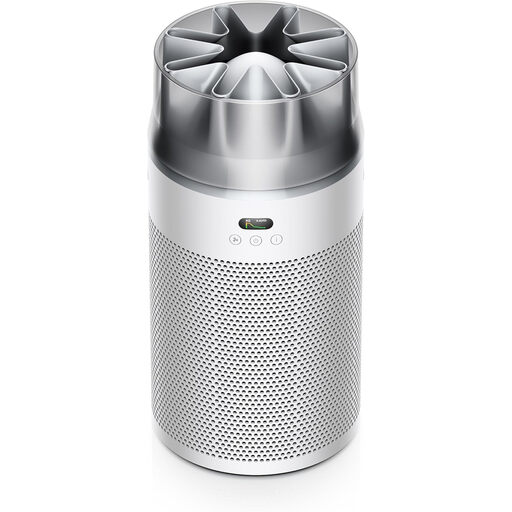
Why This Fits Their Persona: Ideal for users who value high performance, quiet operation, and minimal maintenance in a compact, aesthetic design. The app control and automatic adjustments make it a convenient solution for modern living or office spaces.
Directly addresses the running cost trap: According to the manufacturer, the electrostatic filter lasts up to five years, significantly reducing operating costs. The sleep mode is specified at a very quiet 24 dB.
Combines powerful air circulation for rooms up to 100 m? (at 1 ACH), quiet operation, and a long-lasting filter system. Fully sealed unit.
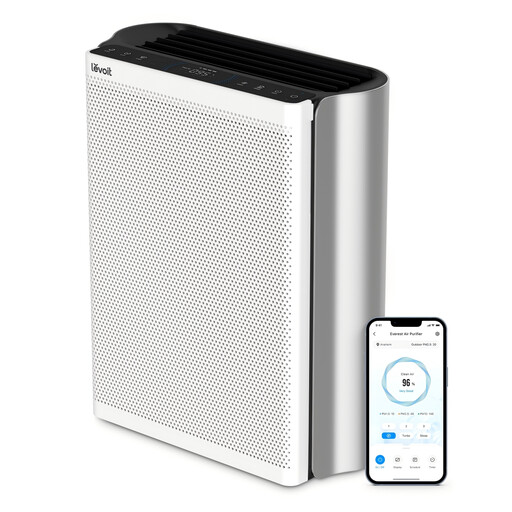
Why This Fits Their Persona: Designed for open-plan living and large rooms where high airflow is essential. Its advanced sensor, which detects PM1.0, PM2.5, and PM10, provides detailed data for health-conscious users.
Provides transparent performance data for large rooms (filters 130 m? twice per hour). The washable pre-filter helps avoid the filter cost trap by extending the life of the main filter.
High purification performance for large areas. The adjustable air outlet (45° to 90°) ensures targeted distribution of clean air instead of just blowing it at the ceiling.
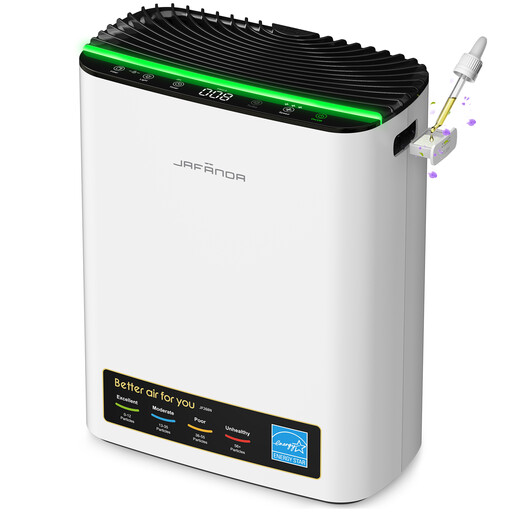
Why This Fits Their Persona: An excellent choice for bedrooms or noise-sensitive environments. The extremely quiet sleep mode and dimmable lights ensure an undisturbed night's rest, while the auto mode efficiently manages air quality.
Solves the noise issue with a specified operating noise of just 20 dB in sleep mode. The PM2.5 sensor and auto mode prevent the unit from running unnecessarily loud and optimize filter life.
Extremely quiet sleep mode and a smart auto mode with a color-coded air quality indicator. The 268 m?/h CADR is well-sized for medium rooms like bedrooms or living rooms.
We've compiled a complete, up-to-date list of products that fully meet these strict selection criteria and rigorous safety standards.
The lifespan of a HEPA filter depends heavily on usage duration and the level of air pollution in your environment. On average, standard HEPA filters need to be replaced every 6 to 12 months. Many modern devices have a filter replacement indicator to remind you. Some models, like certain Dyson units, use longer-lasting filters that, according to the manufacturer, can last for several years, reducing operating costs and waste.
Place the air purifier in the room where you spend the most time, such as the bedroom or living room. For optimal air circulation, the unit should be positioned at least 30 to 50 cm away from walls, furniture, or curtains. Avoid hiding the air purifier in a corner or behind large objects, as this can block the air intake and outlet.
Yes, an air purifier with a HEPA filter is very effective at reducing airborne allergens. It captures fine particles like pet dander, pollen, dust mites, and mold spores that often trigger allergy symptoms. A model with an additional activated carbon filter is also useful for neutralizing unpleasant pet odors. The pre-filter plays an important role by trapping larger hair and lint before they reach the main filter.