
Lieferung heute & morgen

Qualitätsgarantie

Willkommens-Angebote freischalten: KOSTENLOSE Lieferung | Bis zu 80 % RABATT | Kostenlose 30-Tage-JoyPlus-Testphase
App herunterladen
As a Joybuy Product Recommendation Officer, my job is to provide you with clear, factual information so you can make an informed decision. This article serves as a guide to help you choose an air purifier that fits your specific needs.
Whether it's reducing pollen during allergy season, eliminating pet dander, or improving the overall air quality in urban apartments, choosing the right device can make a tangible difference. Here, we will look at the essential features and present a selection of models based on objective criteria.
Selecting a suitable device depends on several technical factors. Here are three key aspects that can simplify your decision.
The CADR (Clean Air Delivery Rate) is one of the most important metrics. It indicates how much clean air a device delivers per hour, measured in cubic metres per hour (m?/h). To ensure effectiveness, the CADR should match the size of the room where the air purifier will be used. A general recommendation is that the air in the room should be completely circulated at least two to three times per hour. A device with a higher CADR will clean the air in a large room faster and more efficiently.
The core of any air purifier is its filter system. Most modern devices use multi-stage filtration:
The noise level is particularly important if the device is to be used in a bedroom or office. A quiet air purifier for the bedroom should have a noise level below 30 decibels (dB) in night mode, which is roughly equivalent to the sound of a whisper.
Additional features can enhance convenience. A smart air purifier with Wi-Fi allows for control via an app, while timer functions and an auto mode that adjusts fan speed based on current air quality simplify operation and optimise energy consumption.
Here is a selection of devices with different specialisations, based on the criteria mentioned above.
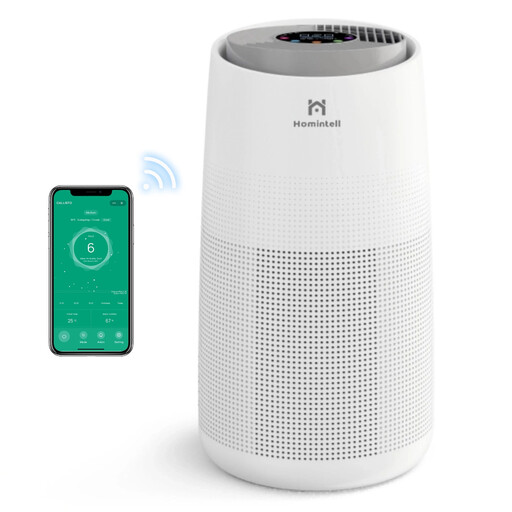
Why it stands out: This model combines solid cleaning performance with comprehensive smart features. The integrated dust sensor automatically adjusts the performance, and the temperature and humidity display provides comprehensive room climate data.
Pros:
Who is it for? Individuals looking for a smart, data-driven solution for medium-sized living rooms or bedrooms who value the convenience of app control.
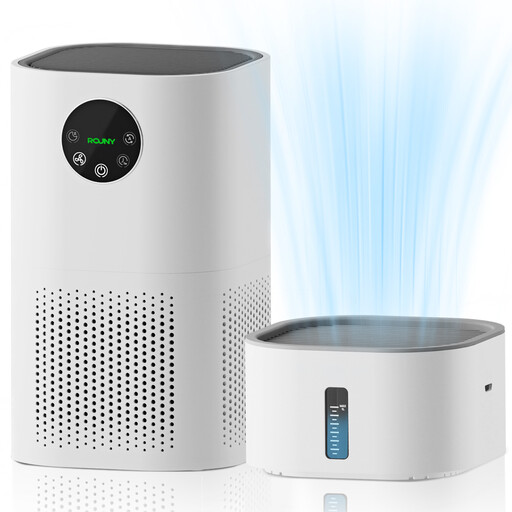
Why it stands out: The combination of air purification and humidification in one device is especially practical during the winter months when dry air from heating systems can irritate mucous membranes.
Pros:
Who is it for? Users living in rooms with dry air who are looking for an all-in-one solution for purification and humidification, especially for bedrooms or offices up to 50 m?.
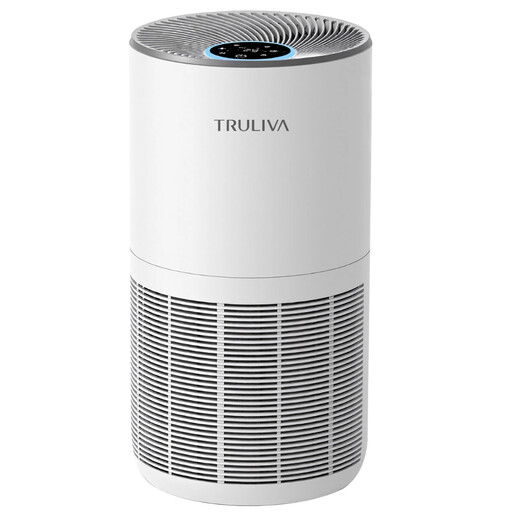
Why it stands out: With a very high CADR and 360° air circulation, this model is designed for the fast and thorough cleaning of larger rooms.
Pros:
Who is it for? Households with large, open-plan living areas, pet owners, or allergy sufferers who need maximum cleaning power for the rapid removal of particles and odours.
If you haven't found the right model for you among these options, or if you are looking for devices with specific filter classes, you can find more models in our category.
? Discover more air purifiers with HEPA-13 filters here
The lifespan of a filter depends on the duration of use and the air quality. Most manufacturers recommend replacing the HEPA and activated carbon filters every 6 to 12 months. Many modern devices feature a filter replacement indicator that automatically reminds you.
An air purifier for allergy sufferers equipped with a HEPA filter can help reduce the concentration of allergens such as pollen, dust mites, and pet dander in the indoor air. By filtering out these particles, indoor exposure can be reduced. However, it is not a medical device and does not replace medical treatment.
For optimal performance, the air purifier should be placed in an area with good air circulation. Maintain a distance of about 30-50 cm from walls and furniture to avoid blocking the air intake and outlet. A central position is ideal in living rooms, while in the bedroom, it can be placed near the bed to ensure clean air in the breathing zone.