
Lieferung heute & morgen

Qualitätsgarantie

Willkommens-Angebote freischalten: KOSTENLOSE Lieferung | Bis zu 80 % RABATT | Kostenlose 30-Tage-JoyPlus-Testphase
App herunterladen
As your Joybuy Product Recommendation Officer, my mission is to provide you with clear and objective information so you can make an informed decision. In this guide, we will focus on the technical features and practical aspects of air purifiers to help you find the right device for your needs—whether it's for reducing allergens, eliminating odours, or generally improving the air quality in your living spaces.
Selecting the right device depends on several technical factors. Here are three key points that should guide your decision.
The most important performance metric of an air purifier is its CADR (Clean Air Delivery Rate). This value, usually specified in cubic metres per hour (m?/h), describes how much clean air the device delivers per hour. To effectively improve air quality, the air purifier should be able to circulate the entire volume of air in a room multiple times per hour.
A general rule of thumb is to choose a device with a CADR (in m?/h) that is at least 2 to 3 times the room's volume (length × width × height). For allergy sufferers or in heavily polluted environments, an air change rate of 4 to 5 times per hour may be beneficial.
The heart of any air purifier is its filter. Most modern devices use a multi-stage system:
An air purifier often runs for many hours, especially at night. A quiet air purifier in the bedroom is therefore essential. Pay attention to the decibel rating (dB) in the lowest operating mode (sleep mode). Values around 20-25 dB are considered very quiet and are nearly inaudible.
A smart air purifier with an app offers added convenience. Features like an automatic mode that adjusts fan speed based on sensor-measured air quality, a timer, or control via a smartphone app or voice assistant can significantly simplify daily use.
Based on the criteria above, we have curated a selection of models that cater to different needs and room sizes.
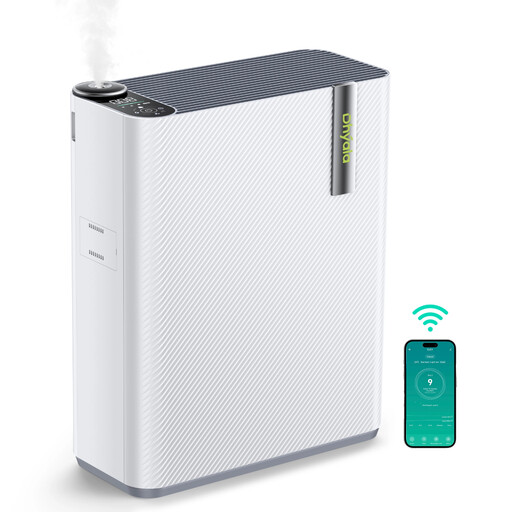
Why This Model Stands Out This model is designed for large and open-plan living areas with a very high CADR of 450 m?/h. The combination of an H13 HEPA filter, app control, and a real-time air quality sensor makes it a powerful and convenient solution.
Benefits at a Glance
Who Is This Device For? Ideal for users with large living rooms, open-concept kitchens, or offices. Its smart controls and automatic mode appeal to tech-savvy individuals who want hassle-free and efficient air purification.
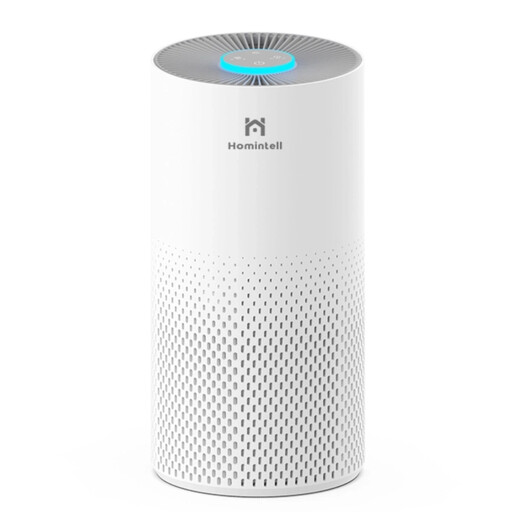
Why This Model Stands Out The Homintell Kilo is a compact and user-friendly device well-suited for smaller rooms. It forgoes complex app functions in favour of intuitive touch controls and useful features like a timer and an ambient light.
Benefits at a Glance
Who Is This Device For? A great choice for bedrooms, children's rooms, or small home offices. Users who prefer a straightforward device without app connectivity and who value excellent value for money will find this a fitting solution.
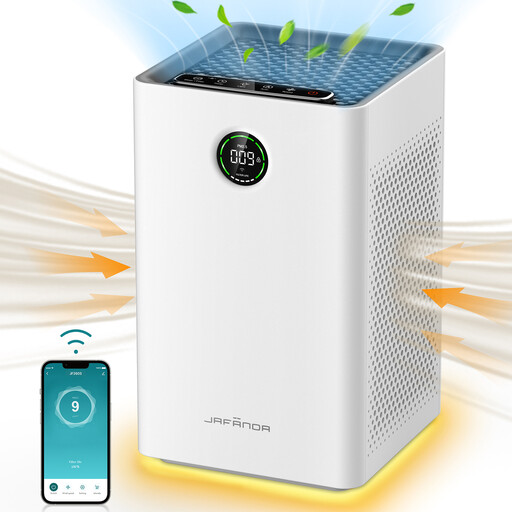
Why This Model Stands Out This model from Jaf?nda offers a balanced combination of performance and intelligent features. With a CADR of 260 m?/h and compatibility with Alexa and Google Assistant, it is a flexible option for medium to large rooms, especially in a smart home.
Benefits at a Glance
Who Is This Device For? Perfect for users looking for a powerful air purifier for pet hair and dust for their living room or bedroom and who want to seamlessly integrate it into their existing smart home ecosystem.
The effectiveness of an air purifier is directly dependent on the condition of its filters. Regular replacement according to the manufacturer's instructions is crucial to ensure consistently high purification performance. Many devices indicate when a filter change is necessary.
You can find a selection of compatible replacement filters for various models in our Air Purifier Filters category.
1. How often do you need to change the HEPA filter in an air purifier? The lifespan of a filter heavily depends on the duration of use and the level of air pollution at its location. Generally, most manufacturers recommend a replacement every 6 to 12 months. Some devices have a built-in filter replacement indicator that automatically reminds you.
2. Does an air purifier help with allergies? An air purifier with a HEPA filter is designed to filter very small particles from the air. This includes common allergens such as pollen, dust mites, pet dander, and mould spores. By reducing these particles in the indoor air, it can help to reduce respiratory stress.
3. Where is the best placement for an air purifier? Ideally, place the air purifier in the room where you spend the most time, such as the bedroom or living room. Ensure there is enough free space around the unit (approx. 30–50 cm) to allow air to circulate without obstruction. Avoid placing the device in a corner, behind furniture, or curtains.