
Lieferung heute & morgen

Qualitätsgarantie

Willkommens-Angebote freischalten: KOSTENLOSE Lieferung | Bis zu 80 % RABATT | Kostenlose 30-Tage-JoyPlus-Testphase
App herunterladen
By: Joybuy Product Recommendation OfficerDate: 2026-07-04
Pollen season, household dust, or pet hair can significantly impact the quality of life in your home. For individuals with allergies, clean indoor air is not a matter of comfort, but a necessity. An air purifier for allergy sufferers can help by filtering allergens like pollen, dust particles, and pet hair from the air, creating a more comfortable indoor environment.
This article serves as a guide to help you make an informed decision. It explains the key features to look for when choosing a model and presents a selection of units with different specialities to simplify your choice.
Selecting the right device depends on your individual needs. Three key criteria can help you narrow down the options: filter technology, room size, and additional features.
The core of any air purifier is its filtration system. For allergy sufferers, an air purifier with a HEPA filter (High-Efficiency Particulate Air) is particularly important. These filters are capable of removing at least 99.97% of airborne particles as small as 0.3 microns. This includes the most common allergy triggers:
Many devices combine the HEPA filter with a pre-filter, which traps large particles like hair and lint, and an activated carbon filter, which neutralises odours and volatile organic compounds (VOCs).
The effectiveness of an air purifier is largely determined by its CADR (Clean Air Delivery Rate). This value indicates how much clean air the unit delivers per hour (measured in cubic metres per hour, m?/h). To find the right performance level, you should know the size of the room where the unit will primarily be used.
A general recommendation is to choose a model with a CADR sufficient to circulate the air in the room at least two to four times per hour. Consequently, an air purifier for large rooms requires a significantly higher CADR than a device for a small bedroom.
Modern air purifiers offer a range of features that enhance user convenience. A smart air purifier with an auto mode automatically adjusts the fan speed based on the measured air quality. An air purifier with app control allows for remote operation and the scheduling of cleaning cycles via your smartphone.
The noise level is a crucial factor, especially for use in the bedroom. A quiet air purifier for the bedroom should have a dedicated sleep mode that reduces the operating noise to a minimum (often below 30 dB) to avoid disturbing your sleep.
Based on the criteria mentioned, we have compiled a selection of units suitable for different requirements and room sizes.
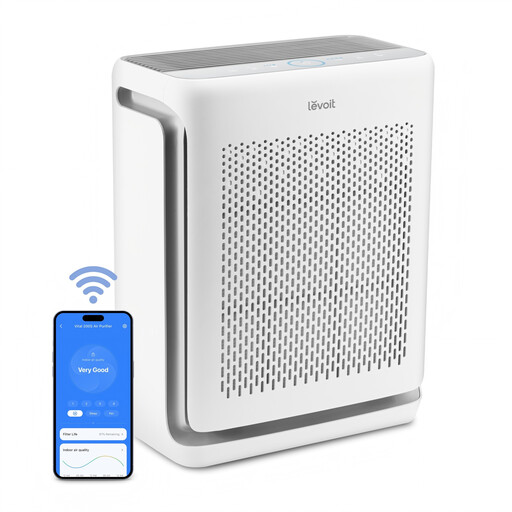
Why this model stands out: The Levoit Vital 200S Pro is specifically tailored to the needs of pet owners. It features a wide, U-shaped air inlet that efficiently captures pet hair without clogging. The washable pre-filter simplifies maintenance, while the special Pet Mode specifically targets odours and dander.
Pros:
Who it's for: This model is a great choice for people with pets or for users seeking a powerful air purifier for pet hair and other allergens in large living rooms or bedrooms.
View the Levoit Vital 200S Pro
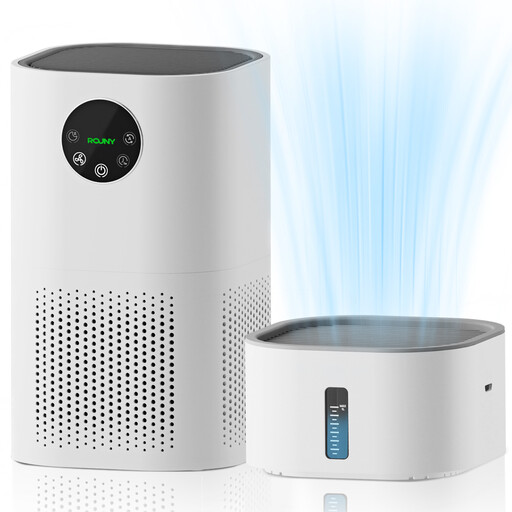
Why this model stands out: The ROUNY 2-in-1 combines air purification and humidification in a single device. This is particularly beneficial during the winter months when dry air from heating can further irritate mucous membranes.
Pros:
Who it's for: Ideal for users who want to not only reduce allergens but also regulate humidity in small to medium-sized rooms, such as a bedroom or nursery.
View the ROUNY 2-in-1 Combo Unit
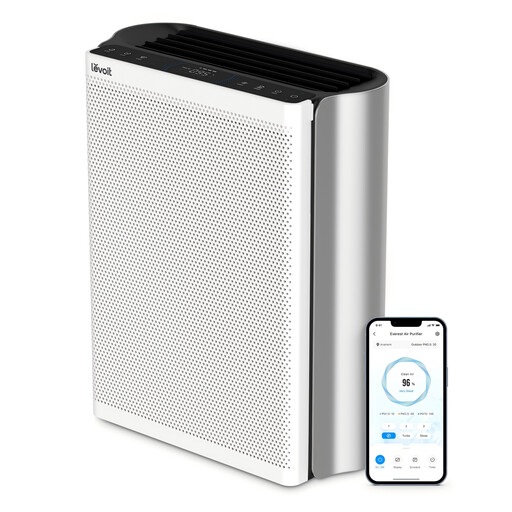
Why this model stands out: The Levoit EverestAir is designed for purifying very large areas. Its advanced 3-channel laser dust sensor monitors PM1.0, PM2.5, and PM10 particles in real time. A special feature is the adjustable air outlet, which allows for targeted distribution of clean air.
Pros:
Who it's for: This model is aimed at users with very large, open-plan living areas who are looking for a high-performance air purifier for dust and pollen and value detailed air quality data and smart features.
The models presented here already cover a wide range of use cases. However, if you want to compare more devices or filter by specific features, you can find a larger selection in our main category.
Discover our full range of HEPA Filter Air Purifiers.
1. How often does the filter in an air purifier need to be changed? The lifespan of a HEPA filter depends heavily on usage duration and the level of air pollution. As a rule, manufacturers recommend a replacement every 6 to 12 months. Many modern devices have a filter change indicator on the unit or in the app that notifies you in a timely manner. Pre-filters are often washable and should be cleaned regularly.
2. Where is the best place to position an air purifier? Place the unit on a flat, stable surface with sufficient clearance (at least 30-50 cm) from walls, furniture, and curtains. This ensures optimal air circulation, as air can be drawn in and expelled without obstruction. Avoid blocking the air inlet or outlet.
3. Does an air purifier also help with pet odours? Yes, models equipped with an activated carbon filter can effectively reduce odours. Activated carbon has a porous structure that absorbs odour molecules, gases, and volatile organic compounds (VOCs) from the air. For pet owners, a unit with a combination of HEPA and activated carbon filters is therefore highly recommended.