
Lieferung heute & morgen

Qualitätsgarantie

Willkommens-Angebote freischalten: KOSTENLOSE Lieferung | Bis zu 80 % RABATT | Kostenlose 30-Tage-JoyPlus-Testphase
App herunterladen
Published on: 2026-07-10 By: Joybuy Product Recommendation Officer
Pollen season, household dust, or pet hair can compromise the air quality within your home. For allergy sufferers, asthmatics, or pet owners, home can quickly become a place where symptoms like sneezing, itchy eyes, or breathing difficulties disrupt daily life. An air purifier for allergy sufferers can be a valuable addition to help reduce the concentration of allergens in your indoor air.
My name is Joybuy, and as your Product Recommendation Officer at Joybuy, my mission is to provide you with objective information. This article is designed to help you understand how air purifiers work and identify the right features for your needs.
Before making a decision, it's helpful to understand some technical basics and key features. The following points are particularly important when selecting a device.
The core component of any air purifier is its filtration system. For allergy sufferers, an air purifier with a HEPA filter is especially relevant. HEPA stands for "High-Efficiency Particulate Air". According to European standards, these filters must remove at least 99.95% of particles between 0.1 and 0.3 micrometres from the air. This includes pollen, dust mites, mould spores, and pet dander.
Many models use a multi-stage system:
The effectiveness of an air purifier is highly dependent on the size of the room. A crucial metric here is the CADR (Clean Air Delivery Rate). It is measured in cubic metres per hour (m?/h) and describes how much clean air the device delivers per hour.
As a rule of thumb, the CADR should be sufficient to circulate the air in the room completely at least two to four times per hour. Check the manufacturer's specifications for the recommended room size (in m?) and compare it with the room where the device will be primarily used, whether it's a quiet air purifier for the bedroom or a powerful model for large living areas.
Since an air purifier often runs for many hours, its operating noise is an important factor. The noise level is measured in decibels (dB). Models with a dedicated sleep mode operate particularly quietly (often under 30 dB), which is equivalent to the sound of a whisper, and they dim or turn off the display lights.
A smart air purifier offers additional convenience. Features like app control allow you to operate the device remotely, create schedules, or monitor air quality in real-time. An automatic mode, which adjusts the fan speed based on readings from particle sensors, ensures efficient and needs-based operation. For pet owners, a special Pet Mode can be beneficial, as it is specifically designed to remove pet hair and odours.
Based on the criteria above, we have compiled a selection of models that are suited for different applications due to their specific features.
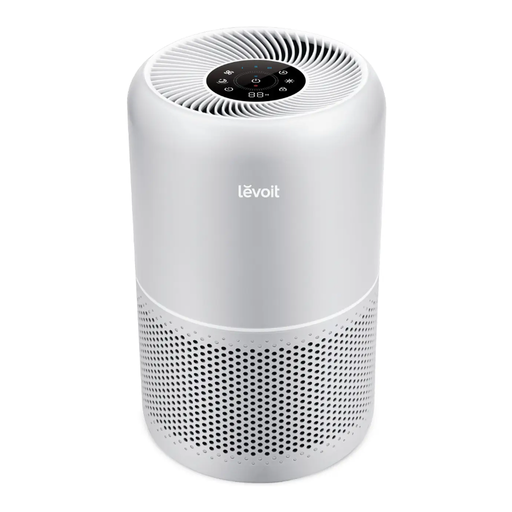
What sets it apart: The Levoit Core 300S Pro is a compact and intelligent device well-suited for bedrooms and living rooms. Its laser particle sensor monitors PM2.5 concentration in real-time and adjusts performance accordingly in Auto Mode. It can be controlled both on the unit and via the VeSync app.
Pros:
Who it's for: This model is an excellent choice for tech-savvy users looking for a smart, quiet solution for medium-sized rooms who value automatic, sensor-driven purification.
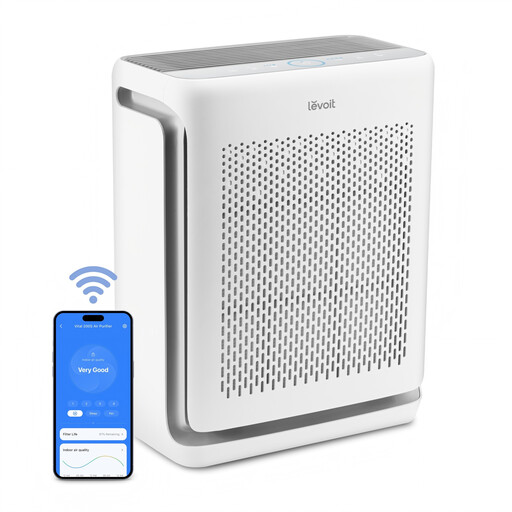
What sets it apart: The Vital 200S Pro was developed with a focus on the needs of pet owners. It features a special Pet Mode, a washable pre-filter, and a U-shaped air inlet that optimises the intake of pet hair and prevents clogging. With a CADR of 416 m?/h, it is also suitable for larger rooms.
Pros:
Who it's for: Ideal for households with dogs or cats that need a powerful air purifier for pet hair and the associated allergens and odours.
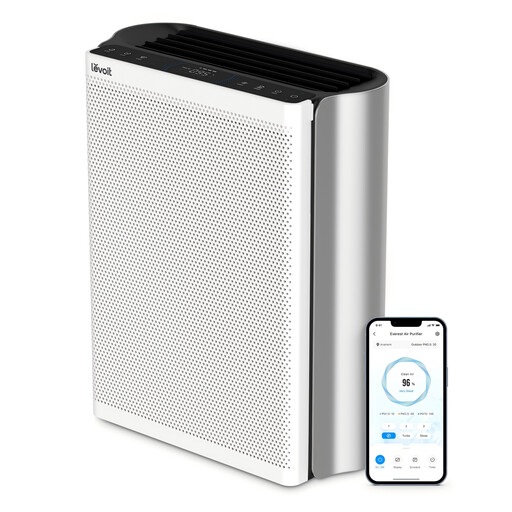
What sets it apart: The EverestAir is a high-performance model designed for very large rooms. Its advanced 3-channel laser sensor detects not only PM2.5 fine dust but also smaller (PM1.0) and larger (PM10) particles. A special feature is the adjustable air outlet, which allows for targeted distribution of purified air.
Pros:
Who it's for: This device is aimed at users with large, open-plan living areas or lofts who require maximum purification performance and detailed air quality monitoring.
If the models presented don't exactly meet your requirements, or if you'd like to compare devices for different room sizes and with other feature sets, we invite you to explore our entire range.
Explore more models in our Air Purifier and Cooler Unit category
The lifespan of a HEPA filter depends heavily on usage duration and the level of air pollution. On average, a replacement is recommended every 6 to 12 months. Most modern devices have a filter replacement indicator that informs you on the unit or via an app when a change is needed. A washable pre-filter should be cleaned every 2 to 4 weeks, depending on the level of use.
An air purifier can alleviate the symptoms of a pet hair allergy by filtering the triggers from the air. Allergic reactions are often caused not by the hair itself, but by dander, saliva, and other proteins that cling to the hair. An air purifier with a HEPA filter is capable of effectively removing these tiny particles from the indoor air, thereby reducing the allergen load.
For optimal air circulation, the device should be placed on a flat surface with at least 15 to 30 cm of clearance from walls, furniture, or curtains. The air intake and outlet must not be blocked. Place the unit in the room where you spend the most time, such as the bedroom or living room.