
Lieferung heute & morgen

Qualitätsgarantie

Willkommens-Angebote freischalten: KOSTENLOSE Lieferung | Bis zu 80 % RABATT | Kostenlose 30-Tage-JoyPlus-Testphase
App herunterladen
As a pet owner, you know the joy an animal companion brings into your home. At the same time, you're also familiar with the challenges: floating pet hair that settles on furniture and clothing, fine dust, and odours that aren't always pleasant. For people with pet allergies, exposure to allergens like dander can significantly impact their quality of life.
A suitable air purifier can be an effective solution here, helping to keep your indoor air cleaner and fresher. This guide is designed to help you understand how these devices work and make an informed decision based on objective criteria and your household's needs.
Choosing the right device depends on several technical factors. Instead of being swayed by marketing promises, it's wise to focus on the following three core aspects.
The heart of any effective air purifier for allergy sufferers is its filtration system. For eliminating pet allergens, a HEPA air purifier is especially important. HEPA stands for “High-Efficiency Particulate Air.” A True HEPA filter can, according to European standards, remove at least 99.95% (ISO 29463) or 99.97% (US standard) of all airborne particles between 0.1 and 0.3 micrometres in size. This includes:
For neutralising odours, an additional activated carbon filter is crucial. It traps the gaseous molecules responsible for unpleasant smells, making it a vital component in an air purifier for odours.
The CADR (Clean Air Delivery Rate) indicates how much clean air a device delivers per hour. This value is typically measured in cubic metres per hour (m?/h). To determine the right performance for your room, the air purifier's CADR should be sufficient to completely circulate the entire room's air at least two to four times per hour.
A simple rule of thumb: Room Volume (Length × Width × Height in m) × 2 = Recommended Minimum CADR in m?/h
A device with insufficient power for a large room will not achieve the desired effect.
An air purifier often runs around the clock. Therefore, a quiet air purifier is a key requirement, especially for the bedroom or living room. The noise level is measured in decibels (dB). Models with a sleep mode that operates below 30 dB are considered exceptionally quiet.
A smart air purifier offers added convenience. Features like an auto mode, which adjusts fan speed based on the measured air quality, or app control can significantly simplify daily use.
Based on the criteria above, we have compiled a selection of models that are well-suited for households with pets due to their specific features.
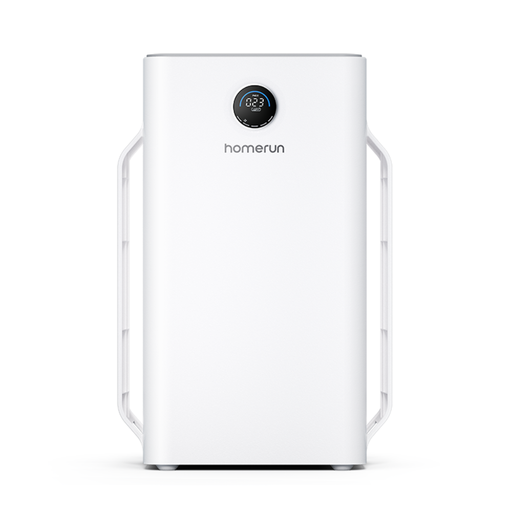
Why This Model Stands Out: The homrunPET D1 was specifically designed for the needs of pet owners. Its design, featuring a U-shaped air duct, is engineered to efficiently capture pet hair. The combination of a HEPA filter and an activated carbon filter ensures comprehensive air purification from particles and odours.
Advantages:
Who Is It For? For pet owners looking for a discreet, quiet, and safe air purifier for cat hair and dog hair for living rooms or bedrooms up to 40 m?.
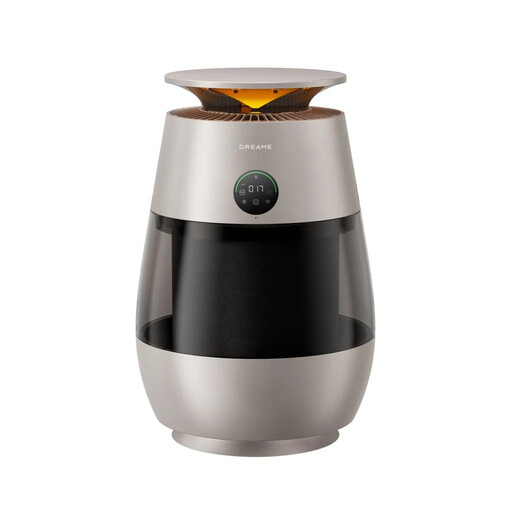
Why This Model Stands Out: The Dreame Pet Air Purifier takes it a step further with its 360° high-pressure air circulation system, specifically designed to capture cat hair. A transparent hair collection bin makes the cleaning progress directly visible. Additional interactive features turn the device into a multifunctional piece of furniture for cat lovers.
Advantages:
Who Is It For? Ideal for cat owners seeking an all-in-one solution that not only purifies the air but also offers interactive elements and a resting spot for their cat. Suitable for rooms up to 55 m?.
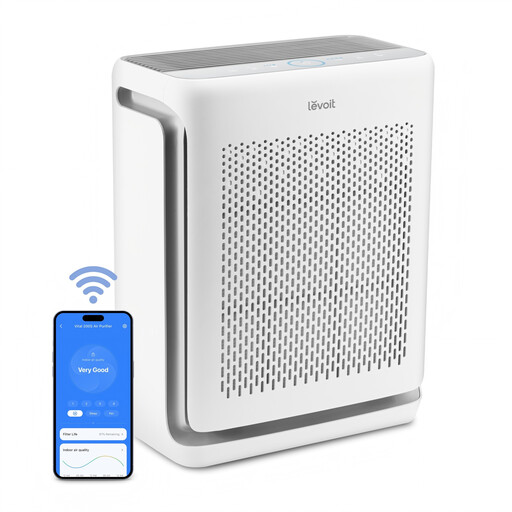
Why This Model Stands Out: The Levoit Vital 200S Pro is engineered for performance in large rooms. With a high CADR of 416 m?/h, it can clean the air in an 88 m? room twice per hour. Its special U-shaped air inlet is optimised to efficiently capture pet hair without clogging.
Advantages:
Who Is It For? For pet owners who need a powerful solution for large spaces and value smart control options and easy maintenance.
The models featured here offer specific solutions for different needs. If you want to compare more devices or search for other features, you can find a broader selection in our comprehensive Air Purifiers category to find the perfect model for your home.
1. How often should the filter be changed in an air purifier for pet hair? The replacement frequency for the air filter for pet hair depends heavily on the intensity of use, the number of pets, and the specific model. As a general rule, combination HEPA and activated carbon filters should be replaced every 6 to 12 months. Many devices feature a filter replacement indicator. Pre-filters are often washable and should be cleaned approximately every two to four weeks.
2. Does an air purifier really help with pet odours? Yes, models equipped with an activated carbon filter are very effective at neutralising odours. The porous structure of the activated carbon traps odour-causing molecules from the air, resulting in a fresher indoor climate.
3. Where is the best place to position an air purifier for pet hair? Place the unit in the room where your pets spend the most time, such as the living room or bedroom. Ensure there is enough space around the device (typically 20–30 cm) for air to flow in and out unobstructed. Placing it on a level, solid surface is also important.