The selection of fruit spreads on supermarket shelves can be overwhelming. For a classic like apricot jam, in particular, there are countless varieties that differ in fruit content, sweetness, and consistency. As your Joybuy Product Recommendation Officer, my role is to provide you with objective and factual information. This guide will help you understand the various product features and make an informed purchasing decision that aligns with your personal preferences.
What to Look For When Buying Apricot Jam
To find the right apricot jam, it's helpful to be familiar with a few basic criteria. These characteristics provide insight into the product's quality and flavour profile.
1. Fruit Content and Terminology
The terms 'marmalade', 'jam' ('Konfitüre'), and 'fruit spread' are regulated by EU directives and the German Jam Ordinance (Konfitürenverordnung).
- Extra Jam (Konfitüre Extra): This designation guarantees a higher fruit content. For apricot 'Extra Jam', a minimum of 45 grams of fruit per 100 grams of the final product is required. A higher fruit content generally results in a more intense flavour.
- Fruit Spread (Fruchtaufstrich): This term is not strictly regulated and is often used for products that deviate from the standard, for example, by having a very high fruit content (over 50%) or using alternative sweeteners. An organic fruit spread also uses ingredients from organic farming.
- Marillenmarmelade: In Austria and parts of Southern Germany, 'Marille' is the common name for apricot. A 'Marillenmarmelade' is therefore identical in content to an apricot jam.
2. Sugar Content and Ingredients
The sugar content affects not only the sweetness but also the shelf life and consistency.
- Standard Jams: According to regulations, the total sugar content here must be at least 55%.
- Reduced-Sugar Jam: Many manufacturers offer versions with a lower sugar content. These products often contain more fruit and appeal to consumers who prefer a less sweet alternative. Check the nutritional information table to compare the exact sugar content per 100 grams.
- Ingredient List: A short and straightforward ingredient list (e.g., apricots, sugar, lemon juice, gelling agent pectin) is often an indicator of a traditional production method.
Top Apricot Jam Selections
Based on objective product characteristics such as ingredients, fruit content, and nutritional values, we have compiled a selection of different apricot jams. This overview is intended to highlight the diverse profiles of the products available.
Schwartau Velvet Apricot 270g
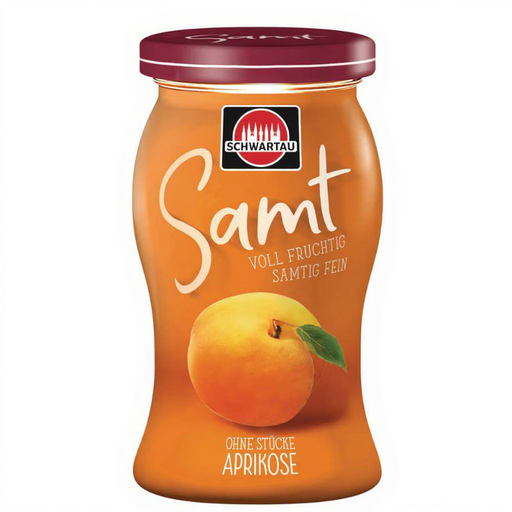
- What makes this product stand out: This fruit spread is distinguished by its exceptionally fine, velvety consistency with no fruit pieces. It is made with a 50% fruit content and its flavour is rounded out with lemon juice concentrate. Pectin is used as the gelling agent.
- Objective Features:
- Smooth, piece-free texture.
- 50 g of fruit per 100 g of product.
- Sugar content of 48.2 g per 100 g.
- Made in Germany.
- Who is this product for? Ideal for those who prefer a completely smooth, spreadable jam without any pieces, such as for children or for refining sauces and pastry fillings.
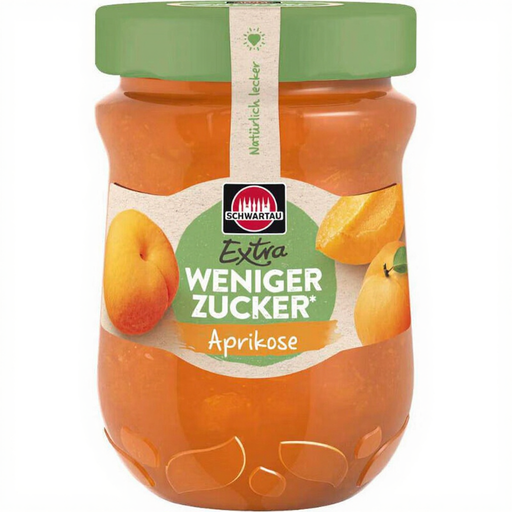
- What makes this product stand out: According to the manufacturer, this jam contains 30% less sugar compared to conventional apricot jams. With a 50% fruit content and a chunky consistency, it delivers an intense fruit experience. The product is suitable for vegan and gluten-free diets.
- Objective Features:
- Reduced sugar content of 36.5 g per 100 g.
- 50 g of fruit per 100 g of product.
- No added sweeteners, preservatives, colourings, or flavourings.
- Chunky consistency.
- Who is this product for? A great choice for health-conscious buyers and families looking for a reduced-sugar jam with a high fruit content and natural flavour.
Bonne Maman Apricot Preserves 370g
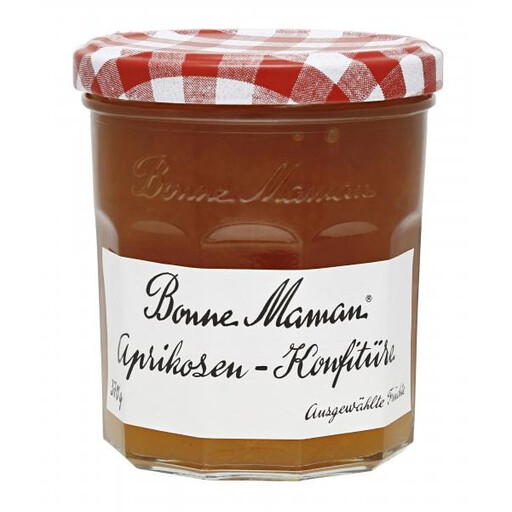
- What makes this product stand out: This preserve is made according to a traditional French recipe. It combines apricots, sugar, brown cane sugar, and lemon juice concentrate. The fruit content is 50 g per 100 g.
- Objective Features:
- Made in France.
- Uses brown cane sugar in addition to regular sugar.
- Sugar content of 59 g per 100 g.
- 50 g of fruit per 100 g of product.
- Who is this product for? For lovers of classic, sweet preserves who value a traditional recipe and the characteristic flavour created by the combination of different types of sugar.
Alnatura Organic Apricot Fruit Spread 420g
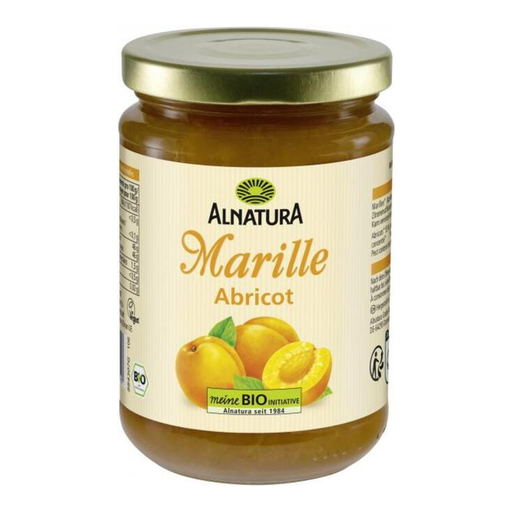
- What makes this product stand out: This organic fruit spread has the highest fruit content in this selection at 55%. All agricultural ingredients are from organic farming (AT-BIO-301). The product is vegan, vegetarian, and lactose-free.
- Objective Features:
- Certified organic.
- High fruit content of 55%.
- Sugar content of 46 g per 100 g.
- Beet sugar from organic farming is used as a sweetener.
- Who is this product for? The right choice for consumers who prefer an organic fruit spread with a very high fruit content and ingredients from organic agriculture. Ideal on breakfast toast, but also for pancakes or yoghurt.
Want to Explore More Options?
The products featured here already cover a broad spectrum, from velvety-smooth to organic and reduced-sugar. If you are looking for other varieties or special flavours, you will find an even larger selection in our category.
? Discover more apricot fruit spreads here
Frequently Asked Questions
What is the difference between marmalade, jam, and fruit spread?
In the EU, the term 'marmalade' is legally reserved for products made from citrus fruits. What is colloquially called 'marmalade' in German is usually a 'jam' ('Konfitüre'), made from one or more types of fruit, or 'extra jam' ('Konfitüre Extra'), which has a higher fruit content. 'Fruit spread' is a non-legally defined term, often used for products with different recipes, such as a particularly high fruit content or alternative sweeteners.
How high should the fruit content be in an apricot jam?
The EU Jam Directive stipulates a minimum of 35 g of fruit per 100 g for 'jam'. For 'extra jam', the minimum is 45 g. Many high-quality products, including those presented here, offer a fruit content of 50% or more. A higher fruit content often correlates with a more intense, fruitier flavour.
How do I properly store apricot jam after opening?
After opening, the jar should always be kept tightly sealed in the refrigerator. Always use a clean spoon to prevent contamination with bacteria or yeast. This will keep the fruit spread fresh and enjoyable for longer. Follow the manufacturer's instructions on the label.


