
Lieferung heute & morgen

Qualitätsgarantie

Willkommens-Angebote freischalten: KOSTENLOSE Lieferung | Bis zu 80 % RABATT | Kostenlose 30-Tage-JoyPlus-Testphase
App herunterladen
The selection of kids' art supplies can be overwhelming. Parents, grandparents, and educators often face the challenge of finding products that not only foster creativity but are also safe and age-appropriate. The sheer volume of materials, brands, and promises makes it difficult to keep track and make an informed decision.
This article serves as your guide. As a Joybuy Product Recommendation Officer, I've made it my mission to filter through market information and provide you with practical, objective advice. Here, you'll find a carefully curated selection of products and useful criteria to help you find the right craft supplies for your needs during your next purchase.
Before you decide on a product, there are a few fundamental aspects to consider. These criteria will help you better assess the quality and suitability of craft materials.
Safety is the top priority, especially for products intended for young children. A key indicator of safe toys within the EU is the CE marking. It signals that the product meets current European health and safety requirements. Additionally, pay attention to the manufacturer's information on ingredients. Products declared as "water-based," "solvent-free," or "dermatologically tested" offer an extra layer of safety, particularly when painting with children.
The manufacturer's age recommendation is a crucial factor. For toddlers aged two and up, finger paints or thick wax crayons are suitable as they are easy to grip and do not contain small, swallowable parts. For older children and school-aged kids, more complex materials like a school watercolour set or detailed craft kits for kids are appropriate. Products like Fimo modelling clay require fine motor skills and adult supervision when hardening in the oven, which is why they are typically recommended for children aged eight and older.
Consider the surface you plan to get creative on. Are you looking for paints for paper, cardboard, or canvas? Or do you need special fabric paints to decorate textiles like T-shirts or tote bags? For three-dimensional projects, modelling clays are ideal. Clearly defining the intended use narrows down the selection effectively and ensures the material delivers the desired results.
Here, we present a selection of products that stand out for their specific features and applications.
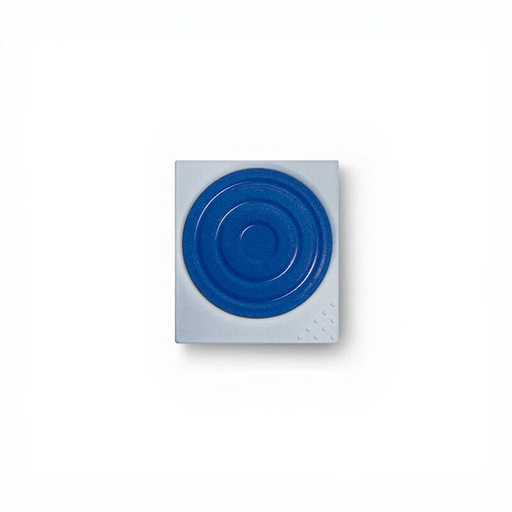
What Makes It Stand Out The Lamy Colour Bowl is more than just a simple paint box. It was designed to introduce young artists to the fundamentals of colour theory. The lid serves not only as a cover but also as an integrated mixing palette. A special feature is its reference to Johannes Itten's colour wheel, which encourages experimental colour mixing and fosters a basic understanding of colour harmony. The paint pans are individually replaceable and available in up to 24 shades.
Advantages
Who Is It For? This set is an excellent choice for school-aged children getting their first experience with watercolours, as well as for adult hobby artists looking for a compact and well-designed set. It supports art education and encourages independent creative work.
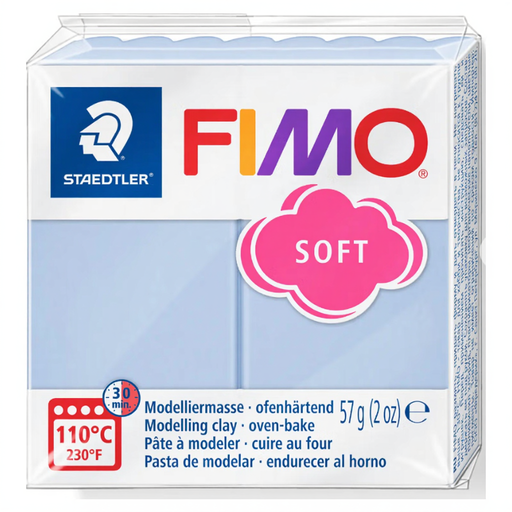
What Makes It Stand OutFimo modelling clay from STAEDTLER is a classic in the world of oven-hardening polymer clay. The "Soft" version is particularly soft and easy to knead, making it ideal for beginners and children. The practical division into eight portions makes dosing and mixing colours simple. The resealable packaging ensures the material stays soft for a long time.
Advantages
Who Is It For? FIMO Soft is aimed at crafting beginners, hobby artists, and older children (under supervision) who want to model jewellery, figures, or decorative objects. Its ease of use lowers the barrier to entry for creative 3D projects.
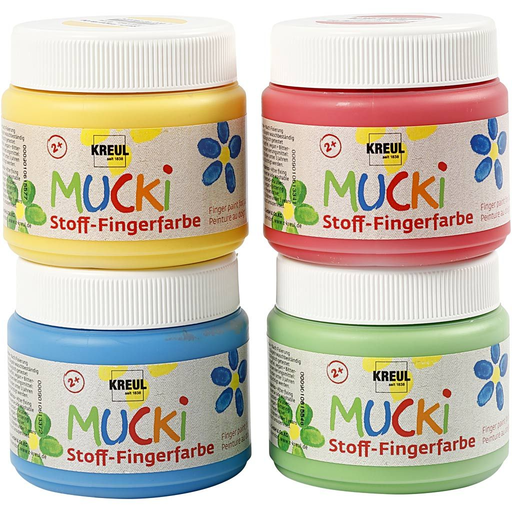
What Makes It Stand Out These fabric paints were developed especially for the little ones. According to the manufacturer, C.Kreul GmbH & Co. KG, the water-based paints are dermatologically tested, vegan, and free from parabens, gluten, lactose, and nuts. They are suitable for light and dark cotton fabrics (or blended fabrics with up to 20% synthetic fibre content) and allow children aged two and up to paint directly on textiles with their hands.
Advantages
Who Is It For? Mucki Fabric Finger Paints are ideal for families with toddlers, kindergartens, schools, and therapeutic settings. They offer a safe and straightforward way to gain initial artistic experiences on fabric while also promoting sensory perception.
The products featured cover various creative areas. If you are specifically looking for certain colour shades, like those in some of our recommendations, or wish to browse more craft supplies, you can find an expanded selection of creative products in our blue paint category.
1. What should I pay special attention to with art supplies for toddlers? For toddlers (under 3 years), safety and non-toxicity are paramount. Look for the CE marking, the manufacturer's age recommendation, and labels like "non-toxic" or "water-based." Products should not contain any small, swallowable parts. Finger paints and thick, break-resistant crayons are often a good choice.
2. From what age is Fimo modelling clay suitable? Most manufacturers recommend Fimo modelling clay for children aged 8 and older. This is because the material requires fine motor skills and must be heated in an oven to harden. This step must be performed and supervised by an adult.
3. How do you make fabric paints permanent? To make fabric paints wash-proof, they must be "fixed" after drying. The exact process varies by manufacturer. Typically, you let the paint dry completely (often for 24 hours). Then, the textile is ironed for a few minutes on the reverse side or with a cloth in between (usually at a cotton setting). Alternatively, some paints can be fixed in an oven at a specific temperature and duration. Always follow the instructions on the product.