
Lieferung heute & morgen

Qualitätsgarantie

Willkommens-Angebote freischalten: KOSTENLOSE Lieferung | Bis zu 80 % RABATT | Kostenlose 30-Tage-JoyPlus-Testphase
App herunterladen
A warning light on your dashboard can mean anything from a simple service reminder to a complex system failure. To identify the cause quickly and precisely, a car diagnostic tool is an indispensable piece of equipment. However, the market offers a bewildering variety of models—from simple handheld scanners to professional-grade workshop systems.
This guide serves as an objective reference. We will introduce different functional classes and present a selection of devices to help you find the right tool for your specific needs—whether you are a private car owner, an ambitious DIY enthusiast, or a professional mechanic.
Choosing the right device depends on your goals. Do you just want to read and clear fault codes, or do you need advanced functions for maintenance and repair work? The following criteria will help you decide.
A basic OBD2 scanner usually focuses on the engine control unit. More comprehensive diagnostic tools offer access to nearly all of a vehicle's electronic systems, including ABS, Airbag (SRS), transmission, air conditioning, and comfort electronics.
Also, pay attention to the range of available service functions. The most common and useful ones include:
The functionality of a diagnostic tool can be divided into several levels:
Modern vehicles increasingly use new communication protocols for faster and more comprehensive data transmission. CAN FD (Flexible Data-Rate) and DoIP (Diagnostics over Internet Protocol) are often essential for diagnosing newer models from manufacturers like GM, BMW, Volvo, or Jaguar/Land Rover. A future-proof workshop diagnostic tool should support these protocols.
Based on the criteria mentioned, we have compiled a selection of devices that cover different requirement profiles.
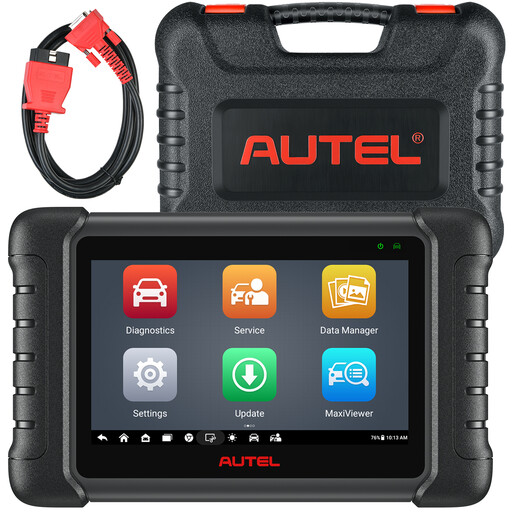
Why It Stands Out: The Autel MX808S offers a range of functions that goes far beyond simply reading fault codes. With its bidirectional control and a wide array of service functions, it bridges the gap between DIY devices and professional workshop systems. Operation via the 7-inch touchscreen tablet is intuitive, and the hardware (Android 11, 4 GB RAM) ensures smooth performance.
Advantages:
Who Is It For? Ideal for ambitious DIY enthusiasts and small to medium-sized workshops looking for a powerful all-round device with advanced diagnostic capabilities and good vehicle coverage.
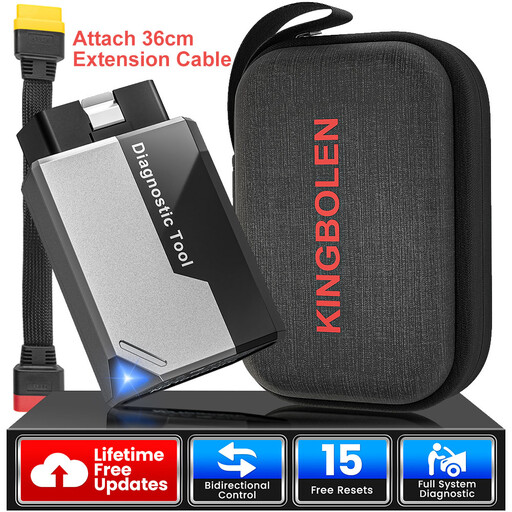
Why It Stands Out: The KINGBOLEN Ediag Elite is a compact Bluetooth adapter that turns a smartphone or tablet into a full-fledged diagnostic tool. Its main advantage lies in the lifetime free updates for 15 service functions and complete system diagnostics. This makes it a cost-effective solution for long-term use.
Advantages:
Who Is It For? Perfect for private car owners and DIY users who need a flexible, mobile, and budget-friendly all-makes diagnostic tool that does more than just read fault codes.
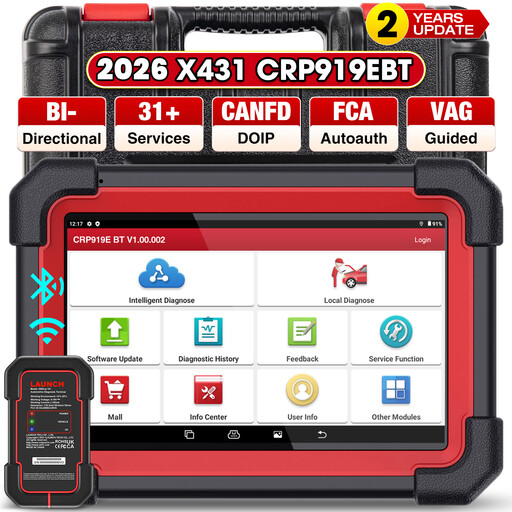
Why It Stands Out: The LAUNCH CRP919E BT is a professional diagnostic tool designed for demanding workshop use. It combines OE-level system diagnostics with advanced functions like ECU coding. Support for modern protocols CAN FD and DoIP, as well as wireless diagnostics via the DBScar VII VCI adapter, make it a powerful and future-proof tool.
Advantages:
Who Is It For? This device is aimed at professional car workshops and experienced technicians who need a workshop diagnostic tool with maximum diagnostic depth, broad vehicle coverage, and future-proof technology.
The models presented here cover a wide spectrum, but the market offers many other specialized solutions. If you are looking for alternative models or devices with different focuses, you can find a larger selection in our main category.
? Explore our full range of OBD2 diagnostic tools
A simple OBD2 scanner is typically limited to the engine control unit and can read and clear emissions-related fault codes (P-codes). A professional diagnostic tool, on the other hand, can access all control units installed in the vehicle (ABS, airbag, transmission, etc.), display live data, perform service functions, and often offers advanced features like active tests (bidirectional control) or ECU coding.
Yes, the service reset function is a standard feature on most modern diagnostic tools. This allows you to reset the service indicator in your vehicle yourself after an oil change or inspection. However, it is important to check compatibility with your specific vehicle model and year of manufacture before purchasing, as support can vary.
Bidirectional control means that the diagnostic tool can not only receive data from the vehicle (read) but also send commands to the control units. This allows you to specifically actuate individual components to test their function. For example, you can turn on the radiator fan, activate the fuel pump, or move a power window without having to remove the parts. This is a crucial feature for fast and efficient troubleshooting.