
Lieferung heute & morgen

Qualitätsgarantie

Willkommens-Angebote freischalten: KOSTENLOSE Lieferung | Bis zu 80 % RABATT | Kostenlose 30-Tage-JoyPlus-Testphase
App herunterladen
Choosing a baby carrier can be a daunting task for new parents. The market is saturated with a vast array of models, and marketing promises often make the decision even more difficult. However, an unsuitable carrier is not just impractical; it can lead to discomfort for both your child and you. As a Joybuy Product Recommendation Officer, I'm here to help you understand the essential criteria and navigate the common pitfalls.
Before we dive into the key features, let's look at the most common mistakes that lead to dissatisfaction and unnecessary expense.
To avoid making the wrong choice, you should evaluate three core technical parameters. These form the foundation for safety, comfort, and long-term usability.
The most critical feature of an ergonomic carrier is its ability to support the spread-squat posture, also known as the M-Position. In this position, the baby's knees are higher than their bottom, and their thighs are gently spread apart. The carrier's seat panel should extend from one knee pit to the other to facilitate this. At the same time, the baby's back should be able to maintain a natural, gentle curve (the C-shape), especially for newborns. This relieves pressure on their still-developing spine.
A comfortable baby carrier distributes the child's weight evenly across the wearer's hips and shoulders, rather than concentrating the entire load on the shoulders. Look for the following features:
The material should be breathable, durable, and free of harmful substances. Cotton is often an excellent choice. Look for certifications like OEKO-TEX. Adjustability is equally important: a good baby carrier should offer seamless adjustments to fit both the growing child and the wearer. Check the specified weight range (e.g., 3.5 kg to 20 kg / 8 lbs to 45 lbs) to ensure the carrier offers long-term usability. Sturdy buckles and safety clasps are, of course, non-negotiable.
Instead of making a blanket recommendation, we've selected models tailored to the specific profiles and requirements of different parents.
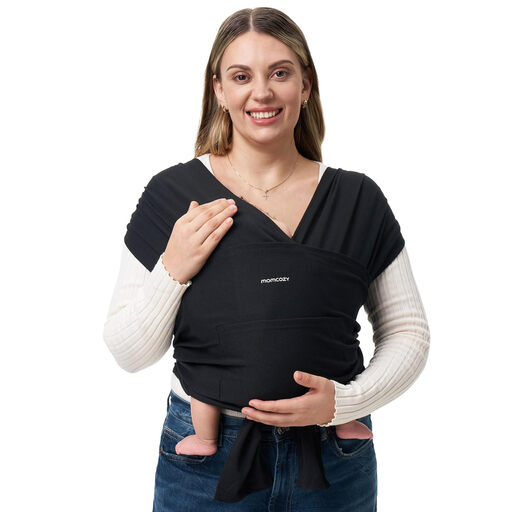
Why This Fits Their Persona: Ideal for the first few months of life, when closeness and correct posture for the newborn are top priorities. The stretchy fabric provides a snug, perfect fit and is exceptionally easy to use.
This sling sidesteps the "one-size-fits-all" pitfall by being specifically designed for the needs of infants (from 3.6 kg / 8 lbs), ensuring optimal C-shape spinal support.
OEKO-TEX 100 certified, breathable cotton-blend fabric. The dual-ring closure system allows for quick, knot-free adjustments.
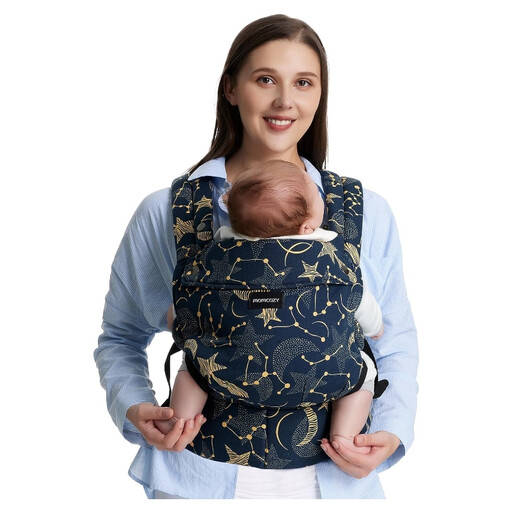
Why This Fits Their Persona: Perfect for parents who plan to babywear frequently and for extended periods, prioritising their own back health. Also an excellent gift for parents who maintain an active lifestyle.
This model directly addresses the pitfall of overlooked wearer comfort. Its ergonomic three-point support system, featuring an EVA panel for lumbar support, actively relieves strain on the lower back.
Supports the baby's M- and C-positions and is designed for a wide weight range from approx. 3.2 kg to 20 kg (7 to 45 lbs). The 100% cotton material is machine-washable.
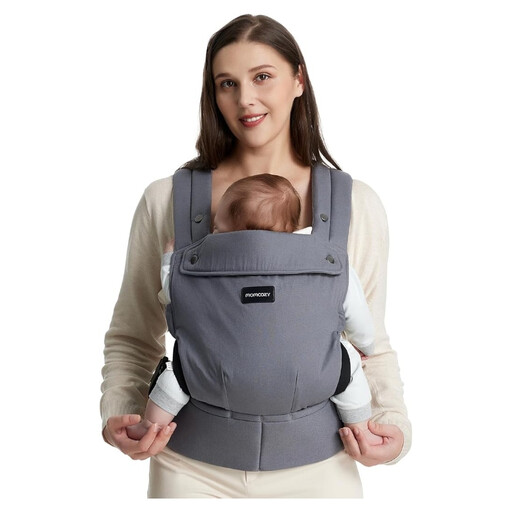
Why This Fits Their Persona: For parents seeking a straightforward, quick-to-use front carrier for daily tasks, whether it's running errands or doing chores around the house.
This model dispels the notion that ergonomics must be complicated. It combines the correct M-Position for the baby with a simple buckle system that makes it fast and secure to put on.
Offers the same ergonomic benefits and lumbar support as other Momcozy models but in a streamlined design. Its ease of use makes it a dependable companion for daily life.
A baby carrier also makes a wonderful and practical baby shower gift. We've curated a full list of products that meet these strict selection criteria.
1. When can I start using a baby carrier for my newborn? Most ergonomic carriers can be used from a minimum weight of about 3.2 to 3.5 kg (7 to 8 lbs). The crucial factor is that the carrier provides excellent head and neck support, as newborns cannot yet hold their heads up independently. The seat panel must also be adjustable to a narrow setting to prevent overspreading their hips. Models with an integrated newborn insert or specialised wraps are often the best choice for this stage.
2. What does "ergonomic baby carrier" really mean? An ergonomic carrier supports the baby's natural posture. Specifically, this means their legs are in the spread-squat (M-Position), their back is gently curved (C-shape), and the baby is seated on their bottom within the carrier, not dangling by their crotch. The carrier safely supports the child without exerting pressure on their hip joints or spine.
3. How do I ensure the baby carrier is comfortable for me? Make sure the waistbelt sits firmly on your hip bones to transfer the weight effectively. The shoulder straps should be snug but not dig in. Many wearers find that crossing the shoulder straps provides better comfort. A baby carrier with lumbar support can further enhance comfort for your lower back. Experiment with different settings until you feel an even weight distribution with no pressure points.