
Lieferung heute & morgen

Qualitätsgarantie

Willkommens-Angebote freischalten: KOSTENLOSE Lieferung | Bis zu 80 % RABATT | Kostenlose 30-Tage-JoyPlus-Testphase
App herunterladen
As a Joybuy Product Recommendation Officer, I see countless options available to expectant parents every day. A baby carrier promises closeness to your child and free hands in your daily life—a combination many find indispensable. But the market is overwhelming, and not every model lives up to its claims. Misleading promises often lead to purchases you later regret because the carrier is uncomfortable or isn't good for your child.
This guide will help you identify the crucial features and avoid common purchasing pitfalls. We focus on the facts so you can make an informed decision.
Many parents invest in a baby carrier only to find it gathering dust in a closet. This is often due to design flaws that only become apparent with use. Here are the three most common problems:
To avoid the problems mentioned above, you should check three key aspects before buying. These form the foundation for safety and comfort.
An ergonomic baby carrier is designed to support your baby's natural posture. Look for two key features:
To ensure you can use the carrier comfortably for extended periods, weight distribution is crucial.
The choice of material and the specified weight class determine when and for how long you can use the carrier.
Based on the criteria above, we have identified a few models suitable for different user profiles.
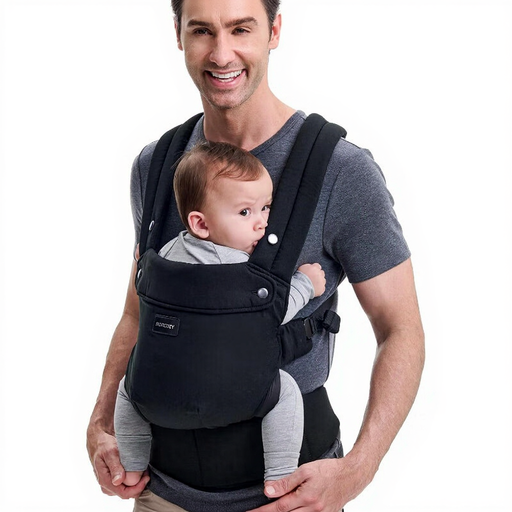
Why it's a good fit: This 100% cotton model is a solid all-rounder for daily use. It's designed to be easy to handle, making it ideal for parents who need a hassle-free solution for running errands or doing chores around the house.
The design explicitly supports the ergonomic M-position and the C-shape of the spine. The crossed straps and lumbar support counteract the pitfall of poor weight distribution.
A good balance of comfort for both parent and child, thanks to the lumbar support and soft cotton. Suitable for a wide weight range (approx. 3.2 kg to 20 kg / 7 lbs to 44 lbs).
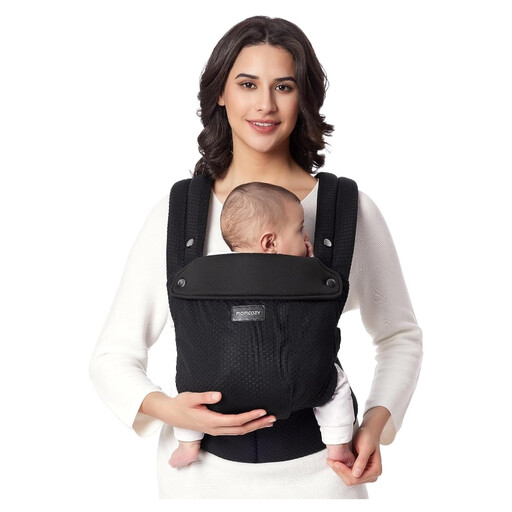
Why it's a good fit: For parents who don't want to give up babywearing in warm weather. The mesh fabric ensures maximum air circulation, making it a lightweight, breathable option for summer outings.
This model directly addresses the pitfall of unsuitable material. The breathable mesh fabric prevents overheating, a common problem with standard carriers in the summer.
Maximum breathability thanks to mesh fabric and a cooling neck material, while still maintaining ergonomic features and comfort for the parent.
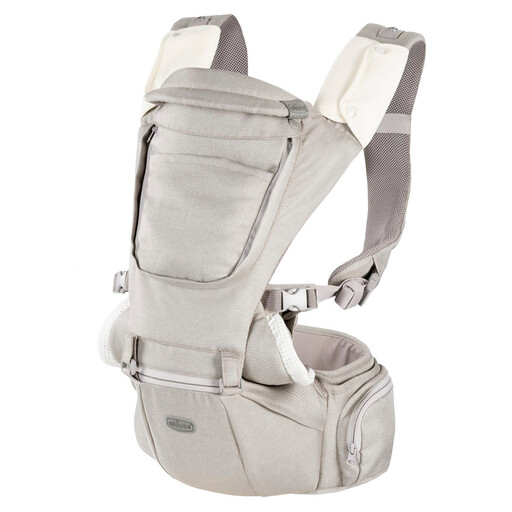
Why it's a good fit: This 3-in-1 system is designed for parents looking for a versatile solution. It can be used as a complete carrier, a standalone hip seat to relieve arm strain, or a soft carrier without the base, adapting to different situations and the child's age.
The rigid base of the hip seat ensures optimal weight distribution and relieves the wearer's back, preventing the pitfall of back pain. The design is recognized as hip-healthy by the International Hip Dysplasia Institute.
Highly versatile with a 3-in-1 system offering 8 different carrying configurations. The separate hip seat is practical for short carrying periods or for support during breastfeeding.
We have compiled a complete, up-to-date list of products that meet these strict selection criteria and current safety regulations.
Most structured baby carriers are suitable for babies starting from a weight of about 3.5 kg (approx. 7.7 lbs) and a certain height. Some models require a special newborn insert for the first few weeks to provide adequate head and neck support. Always check the manufacturer's specifications for minimum weight and age. A baby carrier for newborns should hold the child snugly against your body and stabilize their head.
You can primarily identify an ergonomic baby carrier by its panel—the fabric part between the child's legs. It should be wide enough to support the baby's thighs from one knee to the other. This ensures the spread-squat position (M-position). Additionally, the baby's back should be able to remain slightly rounded (C-shape) and not be forced straight by a rigid back panel.
Some carriers offer the option to carry the baby facing forward. However, this position should only be used for short periods and only after the child can securely hold their own head up and is curious about their surroundings. It's also crucial here that the panel is wide enough to allow for an ergonomic posture and that the child isn't dangling by the crotch. In the forward-facing position, the child cannot snuggle into the wearer if they become overstimulated, so it is unsuitable for sleeping or very young babies.