
Lieferung heute & morgen

Qualitätsgarantie

Willkommens-Angebote freischalten: KOSTENLOSE Lieferung | Bis zu 80 % RABATT | Kostenlose 30-Tage-JoyPlus-Testphase
App herunterladen
A baby's skin is significantly thinner and more sensitive than an adult's. Choosing the right baby cream can quickly become overwhelming given the sheer volume of products and advertising claims. Many parents invest in products that don't suit their child's skin type or contain unnecessary ingredients. This guide will help you understand the essential criteria and avoid common purchasing pitfalls.
Before we dive into the selection criteria, it's important to know the most common misconceptions that often lead to poor purchasing decisions.
To make the right choice, you should focus on three objective parameters instead of marketing messages.
The INCI (International Nomenclature of Cosmetic Ingredients) list is your most important tool. Look for proven, gentle active ingredients:
You should avoid products with perfume (fragrance), essential oils (which can be irritating), mineral oils (e.g., Paraffinum Liquidum), and harsh preservatives like parabens. A short, understandable ingredient list is often a good sign of a well-formulated natural baby care product.
Clearly distinguish between the different types of baby creams to meet the specific needs of the skin.
Look for the "dermatologically tested" label. This confirms that the product's compatibility has been tested on human subjects under medical supervision. The texture is also important: a face cream should be lightweight, while a protective cream for the body can be richer. A baby oil is excellent for massage or as a bath additive, but it does not replace the protective and moisturizing function of a cream.
Here are some product recommendations tailored to different requirements and skin types.
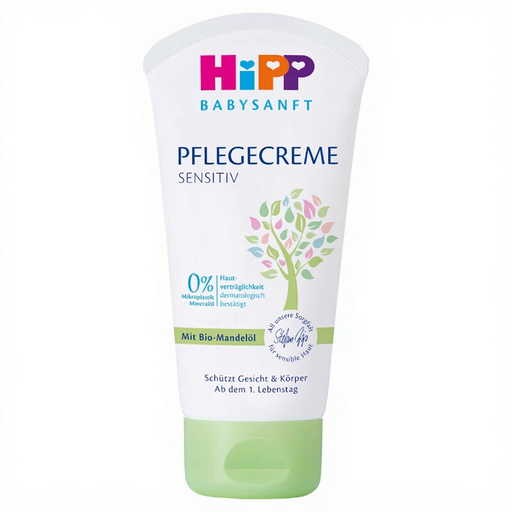
Why This Fits Their Persona: Ideal for the daily care routine for normal to sensitive skin. The cream is suitable for face and body, absorbs quickly, and offers excellent value for money as a basic essential.
The formula deliberately avoids mineral oil, parabens, and microplastics. It focuses on proven nourishing ingredients like organic almond oil and panthenol, without burdening the skin with unnecessary additives.
Fast-absorbing, non-greasy texture. Also suitable for the care of skin prone to eczema.
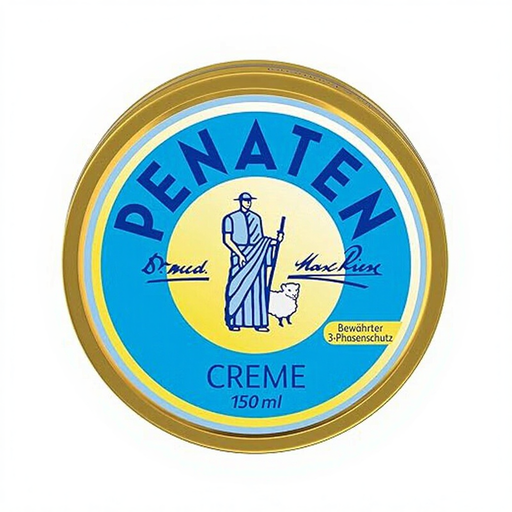
Why This Fits Their Persona: A classic for the diaper area that forms a long-lasting, visible protective barrier. Ideal for parents seeking a proven and reliable solution for diaper rash and redness.
This product serves a clearly defined purpose (diaper rash protection) and is not designed as a universal moisturizer. The formula with zinc oxide, lanolin, and panthenol is purpose-built and effective.
Forms a thick, water-repellent protective layer. According to the manufacturer, its 3-phase protection soothes the skin and helps redness subside.
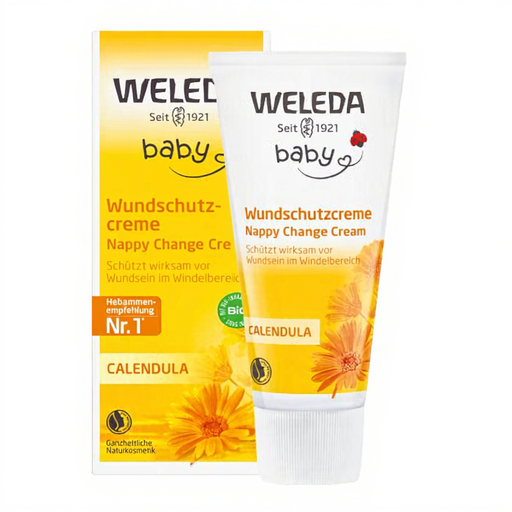
Why This Fits Their Persona: Perfect for parents who value certified natural cosmetics and ingredients from organic farming. The cream combines diaper rash protection with natural care for the sensitive diaper area.
The term "natural" is backed by a natural cosmetics certification. The transparent ingredient list with organic calendula and chamomile is free from synthetic additives.
Soothes irritated and red skin with medicinal plant extracts. Provides reliable protection against wetness thanks to lanolin and zinc oxide.
We have compiled a complete, up-to-date list of products that meet these strict selection criteria and safety requirements.
1. How often should you apply baby cream? The frequency of application depends on the cream's purpose. A diaper rash cream should be applied to clean, dry skin in the diaper area at every diaper change to maintain a constant protective barrier. A moisturizing cream for the face and body can be used once or twice daily, or as needed—for example, after a bath—to keep the skin supple.
2. How do I recognise a good diaper rash cream for babies? An effective diaper rash cream typically contains zinc oxide, which binds moisture and forms a protective layer on the skin. Additionally, soothing ingredients like panthenol or calendula extract are beneficial. Ensure the cream is fragrance-free to minimise the potential for irritation in the already sensitive diaper area.
3. Can I use baby oil instead of baby cream?Baby oil and baby cream serve different functions. An oil is ideal for baby massage, as a gentle bath additive, or for cleaning the diaper area. When applied to damp skin, it helps to lock in moisture. A cream, on the other hand, actively provides moisture and, depending on its formulation, forms a protective layer. For daily moisturizing or targeted diaper rash protection, a cream is often the more suitable choice.