
Lieferung heute & morgen

Qualitätsgarantie

Willkommens-Angebote freischalten: KOSTENLOSE Lieferung | Bis zu 80 % RABATT | Kostenlose 30-Tage-JoyPlus-Testphase
App herunterladen
A baby play ball is more than just a simple toy. It serves as a fundamental tool for promoting sensory and motor development during the first months and years of life. Depending on its design, such a ball can specifically stimulate grasping, touching, crawling, and hand-eye coordination. The selection of the right model depends on specific criteria such as material properties, age rating, and the intended educational purpose. This guide analyses the key parameters for your purchasing decision.
The decision to buy a baby play ball should be based on an analysis of objective features. The following criteria are relevant for your selection.
Material composition is a primary safety factor, as babies often explore toys with their mouths.
All toys sold in the EU must comply with the EN 71 standard, which regulates toy safety. Check the product labelling for relevant certifications.
The functionality of a play ball should match the child's current developmental stage.
Beyond basic motor skill development, various balls offer specific learning incentives.
Based on an analysis of product specifications and functional design, we present three models that cover different developmental needs.
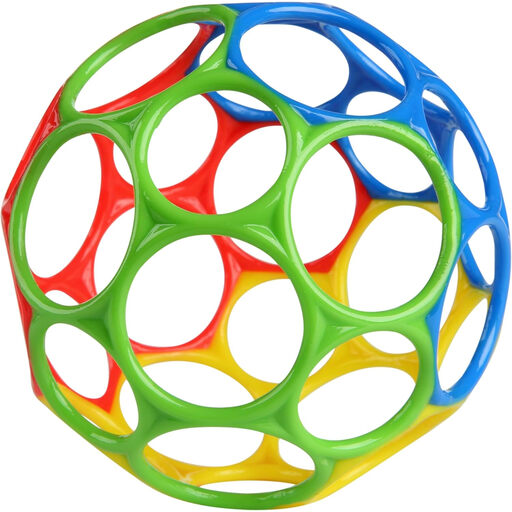
Why we recommend this product: The Oball Classic is distinguished by its patented design featuring 32 large finger holes. This structure makes it exceptionally easy for even newborns with an uncoordinated grasping reflex to grip and hold the ball. Weighing only 23 grams, it doesn't strain the baby's arm muscles.
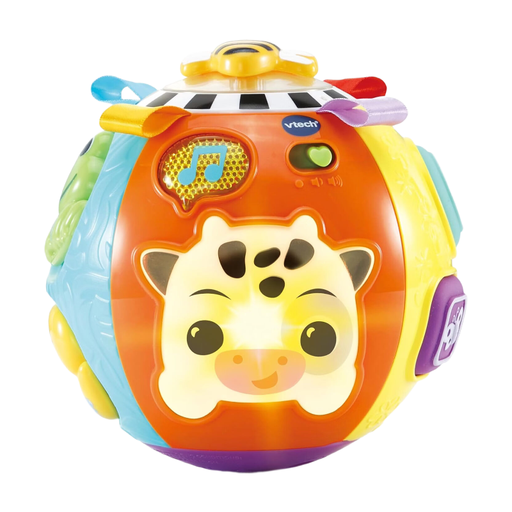
Why we recommend this product: The VTech Baby's Explorer Ball is an interactive baby learning toy that combines motor, sensory, and cognitive stimuli. Five different surface textures promote the sense of touch, while interactive buttons, songs, and melodies train auditory perception. Its design is engineered to encourage the child to crawl.
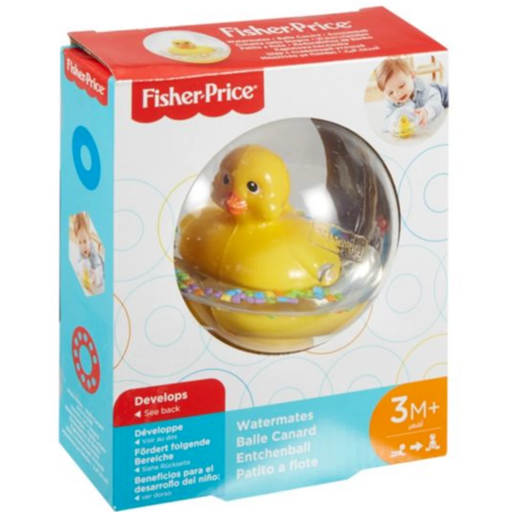
Why we recommend this product: This ball from Fisher-Price combines the function of a play ball with a visual stimulus. Inside the transparent sphere, a duck floats in colourful confetti, which stimulates the child's visual tracking and curiosity. As the ball is waterproof, it is perfectly suited as a bath toy ball.
The models featured here offer a glimpse into the variety of play balls available. If you are looking for other designs, materials, or specific functions, you can find a wider selection in our Baby Balls category.
1. From what age is a baby play ball useful? A simple, lightweight clutch ball can be offered from birth (0+ months) to encourage the innate grasping reflex. More complex models with electronic functions or those that encourage crawling are typically suitable from around 6 months of age.
2. What should I look for in the material of a clutch ball? The material should be durable, saliva-resistant, and free from harmful substances. Look for labels such as "BPA-free" and "phthalate-free." The toy should comply with the European safety standard EN 71. The surface should be easy to clean, as babies frequently put the ball in their mouths.
3. How do I properly clean a baby play ball? Most plastic and silicone balls can be cleaned with a damp cloth and mild soap. Always follow the manufacturer's instructions. Electronic balls must not be submerged in water; their surface should only be wiped clean. Waterproof balls, like a bath toy ball, can be fully cleaned under water.