
Lieferung heute & morgen

Qualitätsgarantie

Willkommens-Angebote freischalten: KOSTENLOSE Lieferung | Bis zu 80 % RABATT | Kostenlose 30-Tage-JoyPlus-Testphase
App herunterladen
Baby toys should be suitable for your child’s age, safely made and genuinely useful in everyday life. The requirements can vary considerably between a grasping toy, teething ring, musical toy for babies, stacking toy and larger products such as ride-on cars or rocking horses. Attractive packaging or the label ‘educational toy’ alone tells you little about whether a toy is suitable.
A toy labelled ‘from 6 months’ won’t automatically suit every child of that age. Motor skills matter too: can your baby grasp safely, sit up or even walk yet? Small parts, removable accessories and battery compartments may be unsuitable for younger children. So check the age recommendation on the packaging against how your child will actually use the toy.
Lights, melodies and lots of buttons can be interesting, but they’re not necessarily more useful than a simple toy that develops motor skills. For musical toys for babies, check the volume, how easy the toy is to use and whether it can be cleaned. A grasping toy or stacking toy may be more suitable at certain stages of development, when your child wants to grasp, turn, sort or stack things independently.
Plush, wood and plastic all need different care. With a baby soft toy, check whether you can remove the electronic component and whether the cover is washable. For wooden toys, look out for splinters, loose joints and damaged paintwork. Even a product that looks sturdy should be checked regularly.
First, check the recommended age group and all the warnings. Toys with small parts are often unsuitable for children under three if those parts could be swallowed. This also applies to accessories such as bottles, dummies, toy figures and connecting pieces.
For toys that encourage active movement, such as climbing blocks, ride-on cars or rocking horses, a stable, level surface and adult supervision are essential for safe use. Follow the manufacturer’s instructions and use protective gear if specifically recommended.
Look for clear information about materials, rounded edges and securely attached parts. EN 71 sets out European requirements for toy safety, including mechanical and physical properties, flammability and the migration of certain substances. A standards reference doesn’t replace checking the individual product, but it is an important factor to consider.
For wooden toys, FSC certification can indicate that the wood comes from responsibly managed sources. However, it doesn’t by itself mean that a toy is suitable for teething. Use wooden products that the manufacturer says are not intended for chewing accordingly.
Electronic baby toys often need AAA batteries. Check whether batteries are included, how the battery compartment is secured and whether you can adjust the volume to a suitable level. Washable fabrics are practical for everyday use, but electronic components must be removed before washing.
Measure the space available before you buy. A large rocking horse or a set of climbing blocks needs a clear area and somewhere safe to store it. For use on the go, compact, lightweight products with fastening straps are generally more practical than bulky play stations.
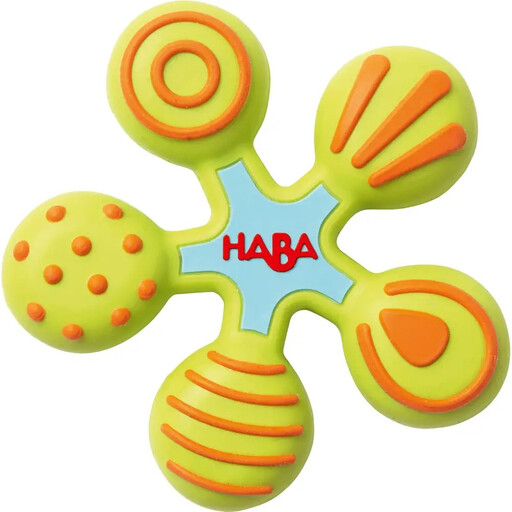
Why this product suits this profile: This compact grasping toy is a good choice for families looking for a simple toy to develop motor skills in babies from six months.
It does away with complicated electronics and offers a range of textures to explore instead. Remember to follow the age recommendation and supervision guidance.
Silicone, approx. 8 × 8 cm, and stated to be dishwasher-safe; suitable from 6 months.
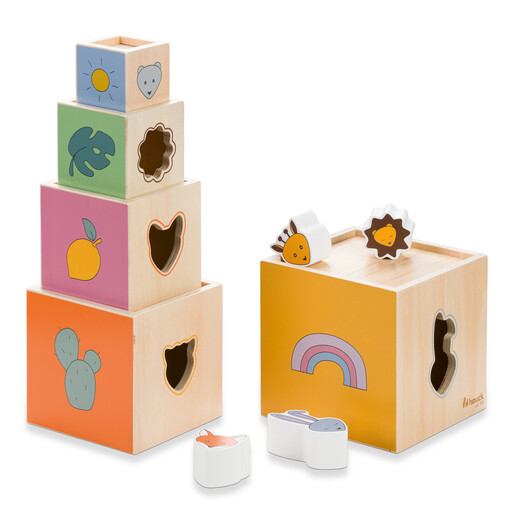
Why this product suits this profile: This wooden toy is for families looking to combine sorting and stacking with space-saving storage.
The product information specifies FSC-certified wood and clearly states that the pieces are not intended for chewing or teething.
Suitable from 12 months; the cubes can be stacked and sorted, then nested together for storage.
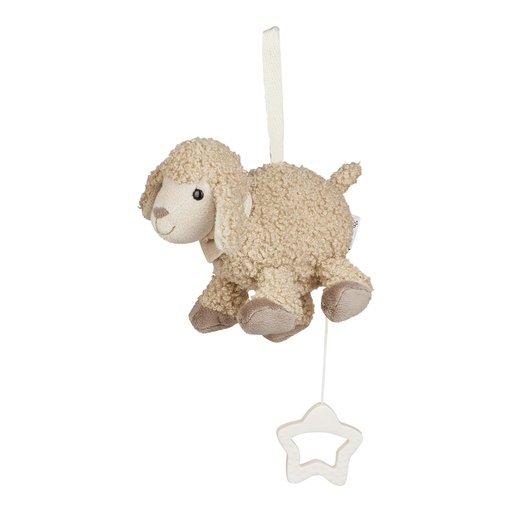
Why this product suits this profile: Designed for use from birth, this musical toy makes a thoughtful baby gift and a handy companion when you’re out and about.
The musical mechanism can be removed using the safety zip. According to the product information, this means the soft toy can be washed at 40 °C.
No batteries needed; fastening straps are included for attaching it to a pushchair, car seat or baby carrier.
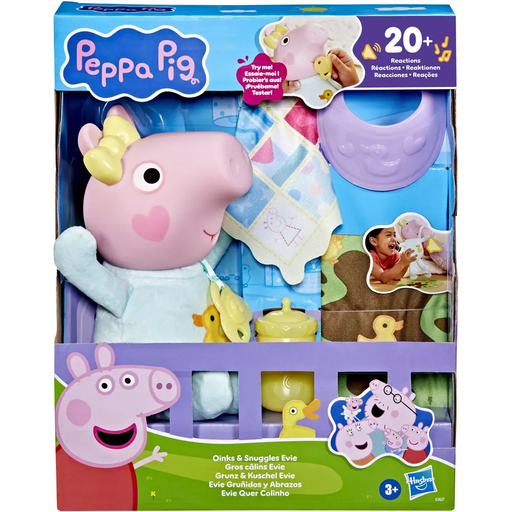
Why this product suits this profile: The Peppa Pig Evie soft toy is designed for children aged three and over who enjoy imaginative play with a familiar character.
The clear age recommendation of three and over helps distinguish it from toys for babies. Check the accessories and battery compartment regularly.
More than 20 sounds activated by touch, according to the product description; two AAA batteries and accessories such as a play mat and blanket are included.
We’ve put together a complete, regularly updated list of products that meet these strict selection criteria and fully comply with the safety regulations in force in the EU.
For newborns, choose simple, lightweight products without loose small parts, such as a musical toy with secure fastenings or a soft baby toy. Use toys outside the sleeping area and don’t leave them unattended in the cot. Always follow the manufacturer’s specific age and safety recommendations.
That depends on your child’s development and the toy itself. A grasping toy is mainly used during the early stages of learning to grasp, while stacking toys and educational toys often become more appealing from the first year onwards. Adaptable products, such as a 2-in-1 rocking toy, may be used across several age groups, as long as each configuration is approved for the child’s age.
Batteries are the main ongoing cost for toys with lights and music. Check the battery type, what’s included and whether the toy has an automatic shut-off function. Toys without electronics, such as wooden toys, teething rings and classic stacking toys, don’t need batteries. Whatever the price, check all toys for cracks, loose parts and wear before each use.