
Lieferung heute & morgen

Qualitätsgarantie

Willkommens-Angebote freischalten: KOSTENLOSE Lieferung | Bis zu 80 % RABATT | Kostenlose 30-Tage-JoyPlus-Testphase
App herunterladen
As a Joybuy Product Recommendation Officer, I see every day how parents excitedly anticipate their child's first steps. A baby walker seems like the ideal support for this milestone. However, the market is flooded with models whose promises often don't hold up in practice. Before you make a decision, it's crucial to understand the common pitfalls that can lead to a bad buy.
Many parents invest in a baby walker only to find that it creates more problems than it solves. The three most common sources of error are:
A well-considered choice based on objective criteria protects against such disappointments and ensures the walker is a safe and beneficial aid for your baby.
To make an informed decision, you should be guided by verifiable product features, not marketing promises. Two areas are of central importance here.
Your child's safety is the top priority. A good baby walker, often referred to as a baby walking aid, must be stable and not tip over easily. Look for the following features:
Besides stability, the material and thoughtful functionality are crucial for whether the walker will provide long-term enjoyment as a learning-to-walk toy.
Based on the criteria above, we have identified several models that are well-suited for different needs and profiles.
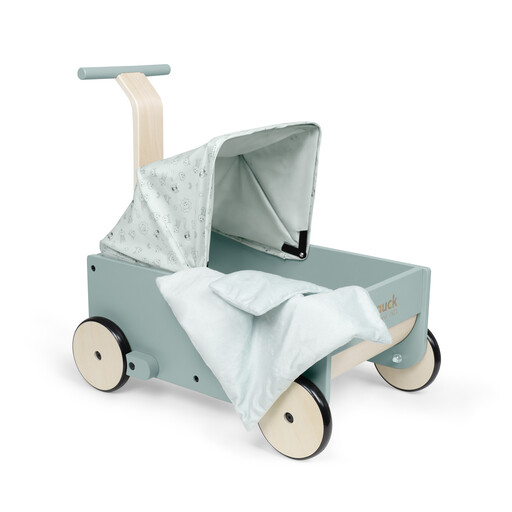
Why This Fits Their Persona: Ideal for families looking for a durable, multifunctional toy with timeless charm. The walker not only serves as a walking aid for babies but also later as a doll pram for role-playing.
The individually adjustable braking system prevents the walker from rolling too fast. This allows the speed to be precisely adapted to the child's progress.
Made from FSC-certified wood from sustainable forestry. Rubber-coated wooden wheels ensure quiet rolling and protect floors.
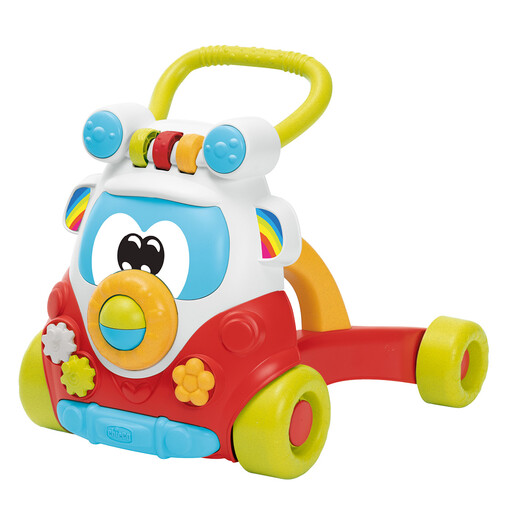
Why This Fits Their Persona: Perfect for curious children who want to train their fine motor skills in addition to walking. The vintage van-style design offers high play value.
The integrated activity centre is purely mechanical. It doesn't distract with excessive electronic stimuli but actively promotes hand-eye coordination and logical thinking.
The four large wheels and wide frame ensure high stability. Its 2-in-1 function as a walker and activity centre offers long-lasting value.
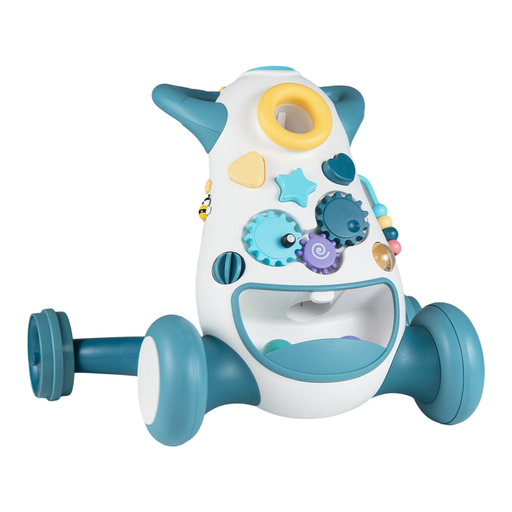
Why This Fits Their Persona: A great choice for parents whose main focus is a controlled and safe introduction to walking. The speed control provides security during the initial phase.
This model directly addresses the problem of uncontrolled speed. The rear wheels feature a dial for speed control with two settings (fast/slow).
The stable triangular structure provides excellent tip-over protection. The rounded corners and non-toxic material ensure the child's safety.
We have compiled a comprehensive, up-to-date list of products that meet strict selection criteria and safety regulations.
A baby walker is intended for children who can already sit up independently and pull themselves up on furniture. This is typically around 9 to 12 months of age. It is not suitable for newborns or children who are not yet showing signs of trying to stand.
A good brake should increase the rolling resistance of the wheels, but not lock them completely. Ideally, the resistance should be continuously variable or adjustable in several stages. This allows you to adapt the speed to your child's learning progress—more resistance for the first wobbly attempts, less for more advanced walkers.
Plastic baby walkers can usually be wiped down with a damp cloth and mild soapy water. For wooden models, be sure to use only a damp (not wet) cloth to prevent the material from swelling. Avoid aggressive cleaning agents, as toddlers tend to put toys in their mouths.