A child's first wobbly steps are an unforgettable milestone. As a parent or grandparent, you want to support this crucial developmental stage in the best and, above all, safest way possible. A baby walker can be a valuable aid, but the market is vast and can quickly become overwhelming. What material is best? Which features are genuinely useful? This guide is designed to help you make an informed decision by presenting objective criteria and a selection of thoughtfully designed models for 2026.
What to Look for When Choosing a Walking Aid
Before you decide on a model, there are several fundamental aspects crucial for the toy's safety and long-term value.
1. Stability and Safety Systems
The most important feature of a walking aid is its resistance to tipping over. A wide wheelbase and a low centre of gravity are key contributors to stability. Some models also offer an adjustable braking system. This allows you to adapt the wheels' rolling resistance to your child's motor skills. In the beginning, when the child is still unsteady on their feet, a stronger braking effect can prevent the walker from rolling away and provide more support. Rubberised wheels also protect your floors and reduce noise.
2. Material and Craftsmanship
Baby walkers are primarily made from wood or plastic.
- Wood: Models like a classic wooden doll's pram are often particularly robust and durable. Look for rounded edges and a non-toxic finish. FSC-certified wood also indicates that it comes from sustainable forestry.
- Plastic: Plastic walkers are typically lighter and easier to clean. It's important to look for "BPA-free" and "phthalate-free" labels to ensure no harmful plasticisers are present in the material.
3. Multifunctionality and Educational Value
A 2-in-1 baby walker or a grow-with-me toy offers added value long after the first steps are taken. Many models double as an activity and motor skills centre. They can function as a ride-on car for ages 1 and up, a small transporter for toys, or come equipped with integrated sorting and stacking games. Such a learn-to-walk toy not only promotes gross motor skills but also cognitive and fine motor abilities. A Montessori toy for one-year-olds often features clear shapes and functions that encourage the child to explore and organise independently.
Our Selection: Recommended Baby Walkers for 2026
Here is a selection of models that stand out for their design and functionality.
Chicco 3in1 Panda
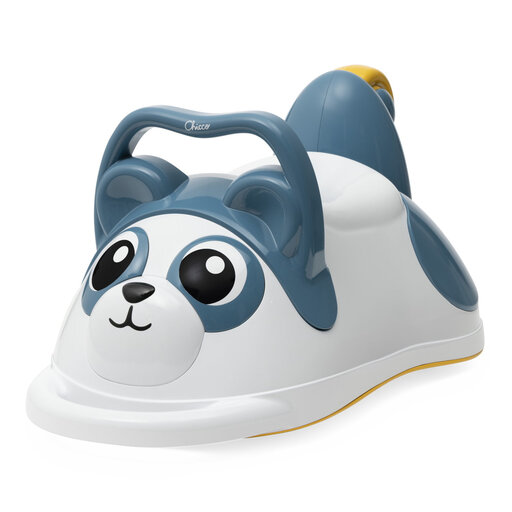
- What makes it stand out: The Chicco Panda is a prime example of a grow-with-me toy. It accompanies children through three stages: first as a stable ride-on car for ages 1 and up, then as a Montessori-inspired sorting station with storage, and finally, from around 18 months, as a wheelbarrow that encourages pushing and transporting.
- Advantages:
- 3-in-1 Functionality: Adapts to developmental stages from 12 to 36 months.
- Montessori Approach: The storage compartment encourages organising and sorting items.
- Easy Conversion: The configurations can be changed without complex assembly.
- Material: Made of polypropylene, stated by the manufacturer to be BPA-free and phthalate-free.
- Who it's for: Parents looking for a versatile and long-lasting solution that not only supports learning to walk but also fosters creative and independent play beyond that stage.
hauck 2-in-1 Doll and Baby Walker
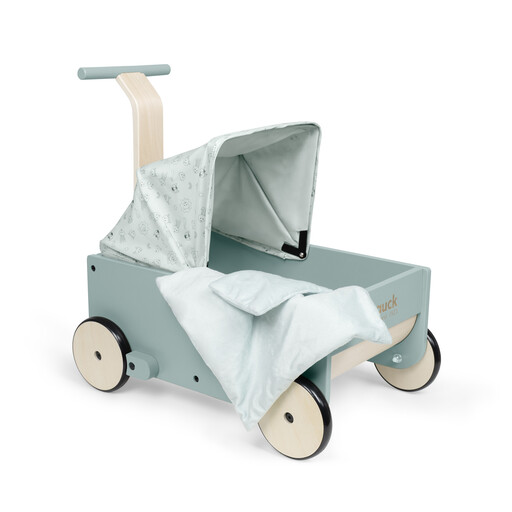
- What makes it stand out: This push-along wagon for toddlers from hauck combines a classic baby walker function with that of a doll's pram. Its special feature is the individually adjustable braking system, which adapts the walker to the child's walking ability.
- Advantages:
- Adjustable Braking System: Increases safety during the initial phase of learning to walk.
- Adjustable Handle: The push handle height is adjustable from 45 to 49 cm.
- Quiet and Floor-Friendly: The rubber-coated wooden wheels ensure quiet rolling.
- Sustainable Material: Made from FSC-certified wood, which stands for responsible forest management.
- Who it's for: Families who prefer a traditional wooden doll's pram and value the safety of an adjustable braking system, as well as sustainable materials.
A Look Ahead: Rictor C8 Piggy Electric Kids' Scooter
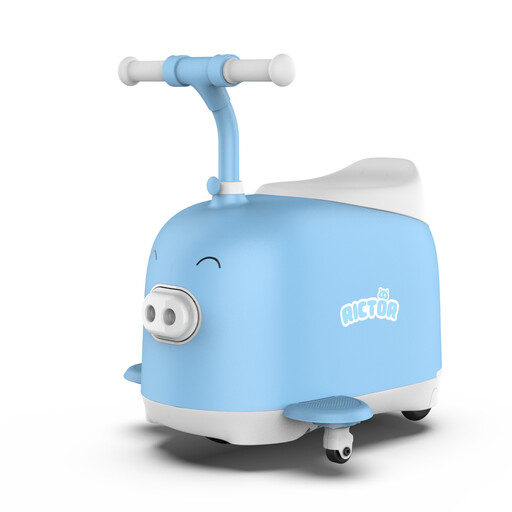
- What makes it stand out: This model is not a baby walker, but an innovative electric scooter for children aged 5 to 12 years. It represents the next step in mobility development and is an interesting option for older siblings or for the future. Its 5-wheel anti-tip system and low centre of gravity are designed for maximum stability.
- Advantages:
- Focus on Safety: A stable 5-wheel system and app-adjustable speed limits (5, 10, or 15 km/h).
- Foldable Design: Easy to transport and store compactly.
- Interactive Modules: Magnetic attachments for bubbles or music provide additional fun.
- High Load Capacity: Suitable for a weight of up to 60 kg.
- Who it's for: Parents of children aged 5 and up who are looking for a safe, technologically advanced electric scooter that can be controlled via an app.
Looking for More Ideas?
Every child's development is unique, and so is the choice of the right toy. If you haven't found the perfect fit among our recommendations or simply want to browse further, discover our wide selection of magical childhood toys.
Frequently Asked Questions (FAQ)
When is a baby walker useful?
A baby walker becomes useful when a child starts to pull themselves up on furniture and takes their first sideways steps. This typically happens around 10 to 12 months of age. It should be used as a toy to push and hold onto, not as a device a child is placed inside.
What are the key features to look for in a baby walker?
The three most important criteria are:
- Safety: High stability against tipping, rounded edges, and ideally, an adjustable braking system.
- Material: Toxin-free materials (e.g., FSC-certified wood or BPA-free plastic).
- Functionality: A model that grows with your child or offers additional play incentives provides greater and longer-lasting value.
Are wooden or plastic baby walkers better?
Both materials have their advantages. Wood is often more durable, heavier (which can increase stability), and is considered more sustainable. Plastic is lighter, often more colourfully designed, and very easy to clean. The decision depends on your personal priorities regarding durability, weight, and design.


